
There is nothing quite like biting into a perfectly cooked scallion pancake. The shatteringly crisp exterior gives way to a wonderfully chewy, layered interior, bursting with the fresh, aromatic flavor of green onions. For years, I chased that perfect restaurant-quality texture in my own kitchen. This recipe is the culmination of that quest, delivering reliably flaky and delicious scallion pancakes every single time. It’s more than just a recipe; it’s a guide to mastering this iconic Chinese flatbread, promising an appetizer or snack that will disappear in minutes.
Table of Contents
Table of Contents
Why You’ll Love This Recipe
The secret to the incredible texture in this recipe lies in a traditional Chinese technique.
My method incorporates a special oil-flour paste, known as yóu sū yóu.
This paste creates a more stable and effective barrier between the delicate dough layers than just oil alone.
The yóu sū yóu ensures a more uniform fat distribution, which fries up into distinct, separate layers, giving you that ultimate flaky and crispy texture you crave.
This technique is the key to achieving authentic, laminated Chinese flatbreads at home.
You will get incredibly satisfying results that taste just like they came from your favorite restaurant.
Ingredients Needed
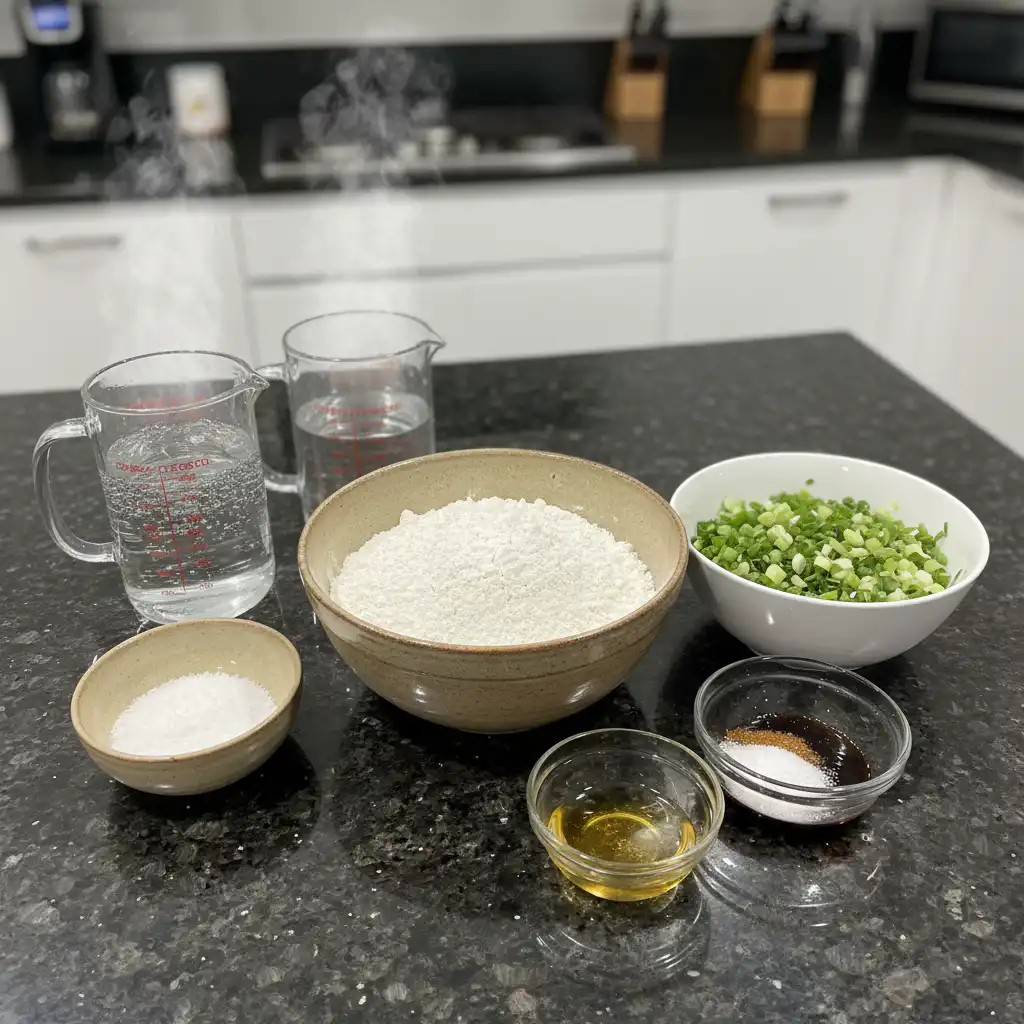
2 3/4 cups all-purpose flour
1 cup hot water
2 cups minced green onions, ramps, etc
1 tablespoon salt
Sesame oil for brushing, about 2 to 3 tablespoons
Peanut or other vegetable oil for frying
Ingredient Notes & Substitutions
Green Onions: While classic scallions are perfect, feel free to experiment with other alliums. Tender garlic chives add a mild garlicky bite, while seasonal wild ramps offer a more pungent, unique flavor. Finely chopped chives also work beautifully.
Flour: Standard all-purpose flour is the ideal choice for this recipe. Its protein content provides the perfect balance of structure and tenderness when making a hot water dough.
Oils: For frying, I recommend peanut oil for its high smoke point and authentic flavor common in Chinese cuisine. Rendered lard is another fantastic option for exceptional crispiness. If you prefer a neutral taste, any high-heat vegetable oil will work well.
Hot Water: Using hot, just-boiled water is crucial. It denatures some of the gluten proteins in the flour, resulting in a dough that is exceptionally soft, pliable, and easy to roll out, contributing to the final chewy interior.
How to Make Crispy Scallion Pancakes
This process is all about creating layers. By incorporating the yóu sū yóu paste, we guarantee an extra flaky result that sets this recipe apart.
Prepare the Hot Water Dough
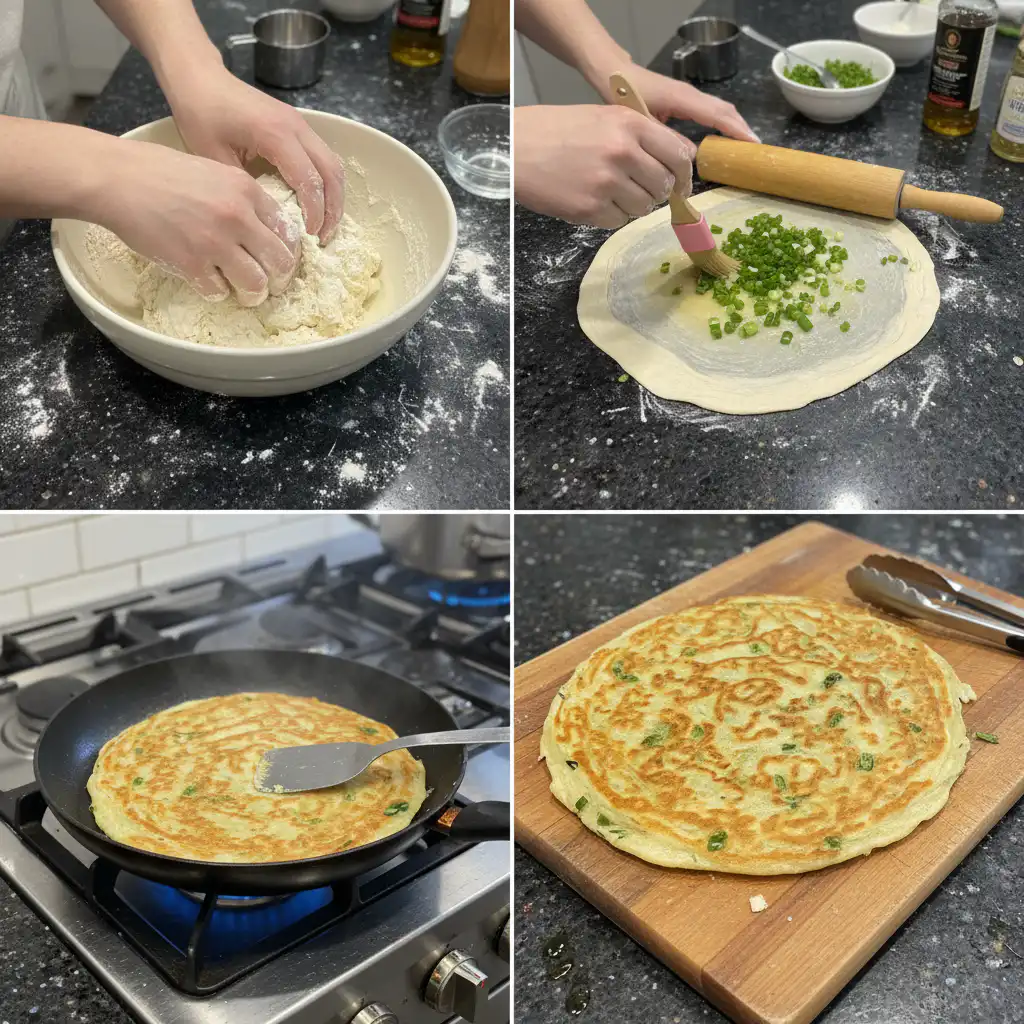
First, put the flour in a large bowl and mix in the salt. Create a well in the center of the flour.
Bring the water to a full boil, then carefully turn off the heat. Once the water stops bubbling, pour it directly into the well.
Use a fork to stir the flour and water together until it forms a shaggy mass. The dough will look rough at this point.
Once it’s cool enough to handle, turn the dough out onto a clean surface. Knead the mass for about 3 to 5 minutes until it becomes a smooth and elastic dough.
Place the dough into a plastic bag or wrap it tightly in plastic wrap. Let the dough rest for at least 30 minutes, or up to 2 hours, to allow the gluten to relax.
Create the Yóu Sū Yóu and Shape the Layers
While the dough rests, prepare the oil-flour paste. In a small, heatproof bowl, combine 3 tablespoons of all-purpose flour with 3 tablespoons of hot vegetable or peanut oil. Stir until it forms a smooth, spreadable paste. Set this aside.
After resting, take the dough out and cut it into four equal pieces. Place three pieces back into the plastic bag to prevent them from drying out.
On a lightly oiled work surface, like the back of a baking sheet, roll out one piece of dough into a thin, rough rectangle.
Lightly paint the entire surface of the dough with sesame oil. Now, spread a thin, even layer of the yóu sū yóu paste over the sesame oil.
Sprinkle about a half teaspoon of salt over the paste, then generously sprinkle the minced scallions, leaving a small half-inch border on all sides.
Starting from the longer side, roll the dough into a tight log. Gently pinch the ends of the log closed to seal in the scallions and prevent them from spilling out.
Slice the log in half. Take one half and roll it tightly into a coil, resembling a snail’s shell. Tuck the loose end underneath and flatten the coil gently with the palm of your hand.
If using a tortilla press, place the flattened snail between two squares of plastic and press it into a thin disc, about 1/8 to 1/4 inch thick. Alternatively, use a rolling pin to achieve the same thickness.
Pan-Fry to Perfection
Heat about a tablespoon of peanut or vegetable oil in a large sauté pan over medium-high heat. The oil should be hot and shimmering before you add the pancake.
Carefully place one pancake into the hot oil. Fry for about 2 minutes per side, until it becomes golden brown with crispy spots.
I like to fry and press each pancake as I go, keeping the finished ones warm in a tortilla warmer or on a baking sheet in a 200°F oven. If you are a beginner, it may be easier to roll out all your pancakes first before you begin frying.
Serve the hot, crispy pancakes immediately on their own or with your favorite dipping sauce.
Prep Ahead, Freezing & Reheating Your Scallion Pancakes
One of the best things about scallion pancakes is how well they can be prepared in advance.
Freezing Uncooked Pancakes
To freeze uncooked pancakes, first shape and flatten all of your dough snails into discs. Place them in a single layer on a parchment-lined baking sheet and flash-freeze for about one hour until firm.
Once solid, transfer the frozen discs to a freezer-safe bag or container. Be sure to place a small square of parchment paper between each pancake to prevent them from sticking together. They can be stored in the freezer for up to 3 months.
You can cook them directly from frozen. Simply pan-fry as instructed, adding an extra minute or two per side to ensure they cook through.
Reheating Cooked Pancakes
To bring cooked scallion pancakes back to their crispy glory, avoid the microwave. The best method is to pan-fry them in a lightly oiled skillet over medium heat for 1-2 minutes per side until hot and crisp.
You can also reheat them in an oven or air fryer at 350°F for about 3-5 minutes. This will help dry out any moisture and restore that delightful crunch.
Storage
Store leftover cooked scallion pancakes in an airtight container in the refrigerator for up to 3 days. Separate layers with paper towels to absorb excess moisture.
Pro Tips & Troubleshooting for Perfect Scallion Pancakes
With a few expert tips, you can guarantee flawless scallion pancakes every time.
Pro Tips for Flaky Perfection
Use a Tortilla Press: A tortilla press is a game-changer for getting uniformly thin and tender pancakes with minimal effort. It applies even pressure, making the process quick and consistent.
Choose the Right Frying Oil: While any vegetable oil works, using peanut oil or traditional lard adds a subtle, authentic flavor and helps achieve an exceptionally crispy exterior due to their properties at high heat.
Don’t Skip the Rest: Letting the hot water dough rest is non-negotiable. This period allows the gluten to relax, making the dough much easier to roll thinly without springing back, which is essential for a tender final product.
The Yóu Sū Yóu Secret: I can’t stress this enough. The oil-flour paste is the key to creating those countless, whisper-thin layers. It provides a richer lamination than oil alone, ensuring maximum flakiness.
Common Mistakes to Avoid
Tough Dough: If your dough feels tough or hard to roll, it likely needs more resting time. The hot water helps, but a full 30-minute rest is crucial for a pliable, tender dough.
Scallion Spillage: If your scallions are spilling out during rolling or frying, make sure you are pinching the ends of the dough log firmly before coiling it into a snail. This traps the filling inside.
Soggy Pancakes: Soggy pancakes are usually the result of the cooking oil not being hot enough. Ensure your oil is shimmering before adding the pancake. Also, do not overcrowd the pan, as this will lower the oil temperature.
Lack of Flakiness: If your pancakes aren’t flaky, you may not have rolled the dough thin enough or applied the yóu sū yóu paste and sesame oil generously enough. A thin layer of fat is what separates the dough layers.
Serving & Storage Suggestions
Scallion pancakes are incredibly versatile and can be enjoyed in many ways, especially with a great dipping sauce or alongside quick and easy soups.
Creative Dipping Sauce Recipes
Classic Ginger-Soy Dip: Combine 1/4 cup soy sauce, 2 tablespoons rice vinegar, 1 teaspoon grated fresh ginger, and 1 teaspoon of sesame oil. This is a timeless, savory pairing.
Spicy Sichuan Dip: Mix 3 tablespoons soy sauce, 1 tablespoon black vinegar, 1 tablespoon chili oil, and 1/2 teaspoon of ground Sichuan peppercorns for a numbing, spicy kick.
Sweet and Savory Garlic Dip: Whisk together 2 tablespoons soy sauce, 1 tablespoon honey or maple syrup, 1 minced garlic clove, and a pinch of red pepper flakes.
Serving Ideas & Pairings
These pancakes are a fantastic appetizer on their own, fresh from the pan. They also serve as a wonderful side dish for many Chinese and Asian recipes. Try them alongside a savory fish stir-fry, a flavorful tofu noodle stir-fry, Chinese braised mushrooms, or light and fresh Chinese lettuce cups. For a quick meal, I love to pair them with simple boiled shrimp and a side of dipping sauce.
Conclusion
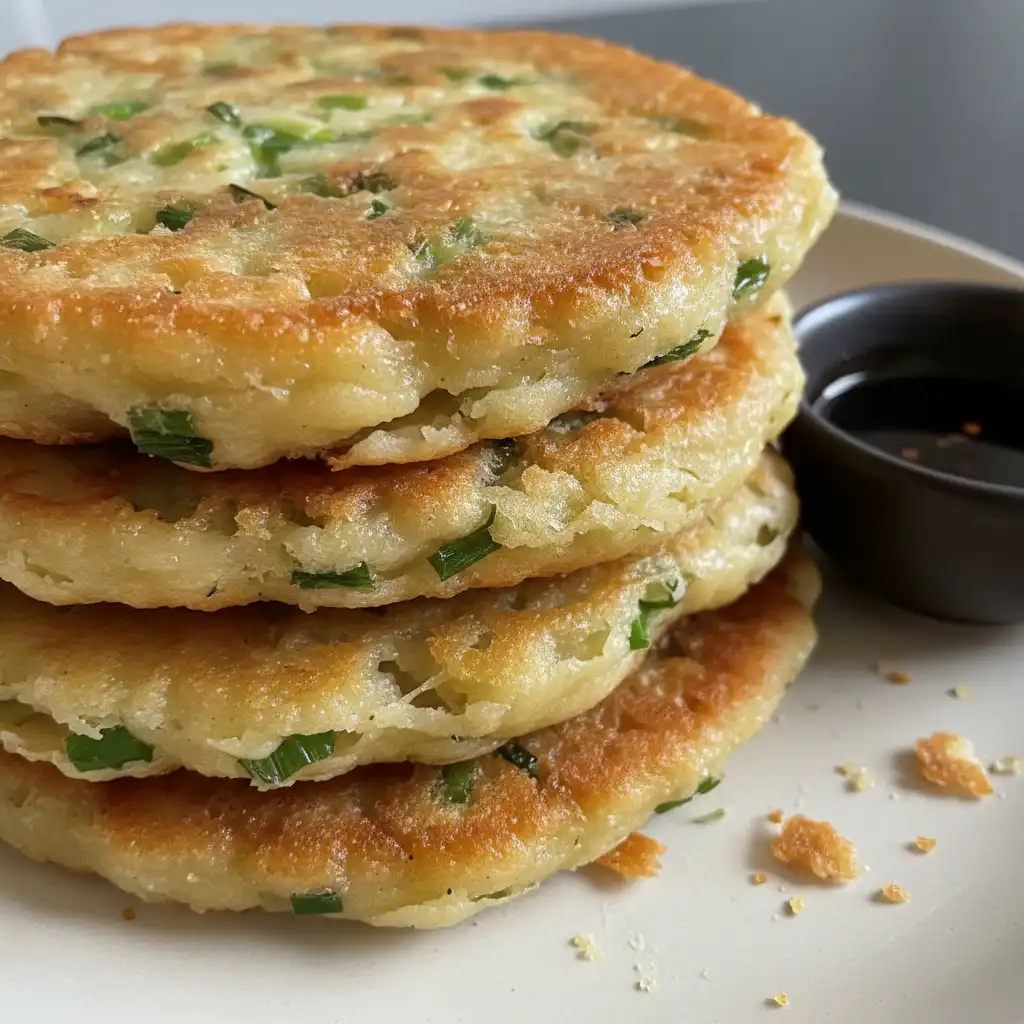
Mastering homemade scallion pancakes is a deeply rewarding kitchen project. The real magic of this recipe is the traditional yóu sū yóu technique, which transforms a simple flatbread into a multi-layered masterpiece of texture. That contrast between the crispy, golden-brown exterior and the soft, chewy, onion-laced interior is truly special. With these detailed steps and tips, you have everything you need to recreate this restaurant favorite at home. I hope you enjoy the process and the delicious results.
FAQ: Your Scallion Pancake Questions Answered
What is the secret to making crispy and flaky scallion pancakes?
The secret is twofold: using a hot water dough for a chewy interior and, most importantly, spreading a thin layer of a traditional oil-flour paste (yóu sū yóu) inside the layers before rolling. This paste creates a better barrier than oil alone, resulting in superior flakiness and crispiness when fried.
What are the best dipping sauces to serve with scallion pancakes?
A classic sauce is a mix of soy sauce, rice vinegar, and a bit of grated ginger or sesame oil. For something spicier, a chili oil or Sriracha-based dip works wonderfully. You can also try a sweet and savory sauce with soy sauce, honey, and minced garlic.
Can I freeze scallion pancakes, and how do I reheat them?
Yes, they freeze beautifully. Shape the raw pancakes, flash-freeze them on a baking sheet, then store them in a freezer bag with parchment paper between each one. Cook them directly from frozen, adding a couple of extra minutes to the cooking time. Reheat cooked pancakes in a lightly oiled pan or an air fryer to restore their crispness.
What are common mistakes to avoid when making scallion pancakes?
The most common mistakes are not letting the dough rest long enough (which makes it tough), not using enough oil or paste between layers (which reduces flakiness), and frying in oil that isn’t hot enough (which makes them soggy). Also, be sure to pinch the ends of the dough log to keep the scallions from spilling out.
How do different types of green onions affect the flavor of the pancakes?
Standard green onions (scallions) provide a classic, mild onion flavor. Garlic chives add a distinct garlicky note, while wild ramps (when in season) offer a more pungent, intense onion and garlic taste. Any of these alliums create a delicious pancake, just with a slightly different aromatic profile.
What is hot water dough and why is it used for scallion pancakes?
Hot water dough is made by mixing flour with just-boiled water. The heat denatures some of the flour’s gluten proteins, which limits gluten development. This results in a dough that is very soft, tender, and easy to roll out, creating the signature chewy-but-not-tough texture of a perfect scallion pancake.
Flaky Scallion Pancakes: The Ultimate Crispy & Chewy Chinese Flatbread Recipe
Ingredients
Equipment
Method
- First, put the flour in a large bowl and mix in the salt. Create a well in the center of the flour.
- Bring the water to a full boil, then carefully turn off the heat. Once the water stops bubbling, pour it directly into the well.
- Use a fork to stir the flour and water together until it forms a shaggy mass. The dough will look rough at this point.
- Once it’s cool enough to handle, turn the dough out onto a clean surface. Knead the mass for about 3 to 5 minutes until it becomes a smooth and elastic dough.
- Place the dough into a plastic bag or wrap it tightly in plastic wrap. Let the dough rest for at least 30 minutes, or up to 2 hours, to allow the gluten to relax.
- While the dough rests, prepare the oil-flour paste. In a small, heatproof bowl, combine 3 tablespoons of all-purpose flour with 3 tablespoons of hot vegetable or peanut oil. Stir until it forms a smooth, spreadable paste. Set this aside.
- After resting, take the dough out and cut it into four equal pieces. Place three pieces back into the plastic bag to prevent them from drying out.
- On a lightly oiled work surface, like the back of a baking sheet, roll out one piece of dough into a thin, rough rectangle.
- Lightly paint the entire surface of the dough with sesame oil. Now, spread a thin, even layer of the yóu sū yóu paste over the sesame oil.
- Sprinkle about a half teaspoon of salt over the paste, then generously sprinkle the minced scallions, leaving a small half-inch border on all sides.
- Starting from the longer side, roll the dough into a tight log. Gently pinch the ends of the log closed to seal in the scallions and prevent them from spilling out.
- Slice the log in half. Take one half and roll it tightly into a coil, resembling a snail’s shell. Tuck the loose end underneath and flatten the coil gently with the palm of your hand.
- If using a tortilla press, place the flattened snail between two squares of plastic and press it into a thin disc, about 1/8 to 1/4 inch thick. Alternatively, use a rolling pin to achieve the same thickness.
- Heat about a tablespoon of peanut or vegetable oil in a large sauté pan over medium-high heat. The oil should be hot and shimmering before you add the pancake.
- Carefully place one pancake into the hot oil. Fry for about 2 minutes per side, until it becomes golden brown with crispy spots.
- I like to fry and press each pancake as I go, keeping the finished ones warm in a tortilla warmer or on a baking sheet in a 200°F oven. If you are a beginner, it may be easier to roll out all your pancakes first before you begin frying.
- Serve the hot, crispy pancakes immediately on their own or with your favorite dipping sauce.