
There is something truly irresistible about the combination of sweet raspberries and tangy lemon. This classic pairing takes center stage in my latest creation, a sophisticated twist on the beloved lemon bar. Imagine a dessert that offers familiar comfort with an elevated gourmet touch. My ultimate raspberry lemon bars recipe is designed to deliver just that. You will learn to bake decadent treats with a crisp crust, a gooey filling, and a zesty tartness that brightens every bite. Get ready to master a dessert that is both easy to follow and filled with expert insights, ensuring perfect results every time.
Table of Contents
Table of Contents
Why You’ll Love This Recipe
This recipe for raspberry lemon bars stands out with its unique twist: a brown butter shortbread crust kissed with a hint of almond extract. Browning the butter intensifies its flavor through the Maillard reaction, introducing nutty, complex notes that elevate the shortbread. This simple step transforms a standard crust into something truly special, providing a rich, deep foundation for the fruit layers.
The touch of almond extract is carefully balanced to complement the bright raspberries and zesty lemon without overpowering them. It adds a subtle depth and sophistication, enhancing the overall sensory experience. This thoughtful addition creates a more complex and elegant flavor profile, offering a gourmet experience compared to standard lemon bars.
You will find these raspberry lemon bars are impressively decadent, making them perfect for special occasions. Yet, they are simple enough to whip up for an everyday treat. The recipe achieves a perfect balance of sweet and tart, and the result is a truly decadent dessert that will quickly become your go-to favorite for a crisp crust and a gooey filling.
Ingredients Needed
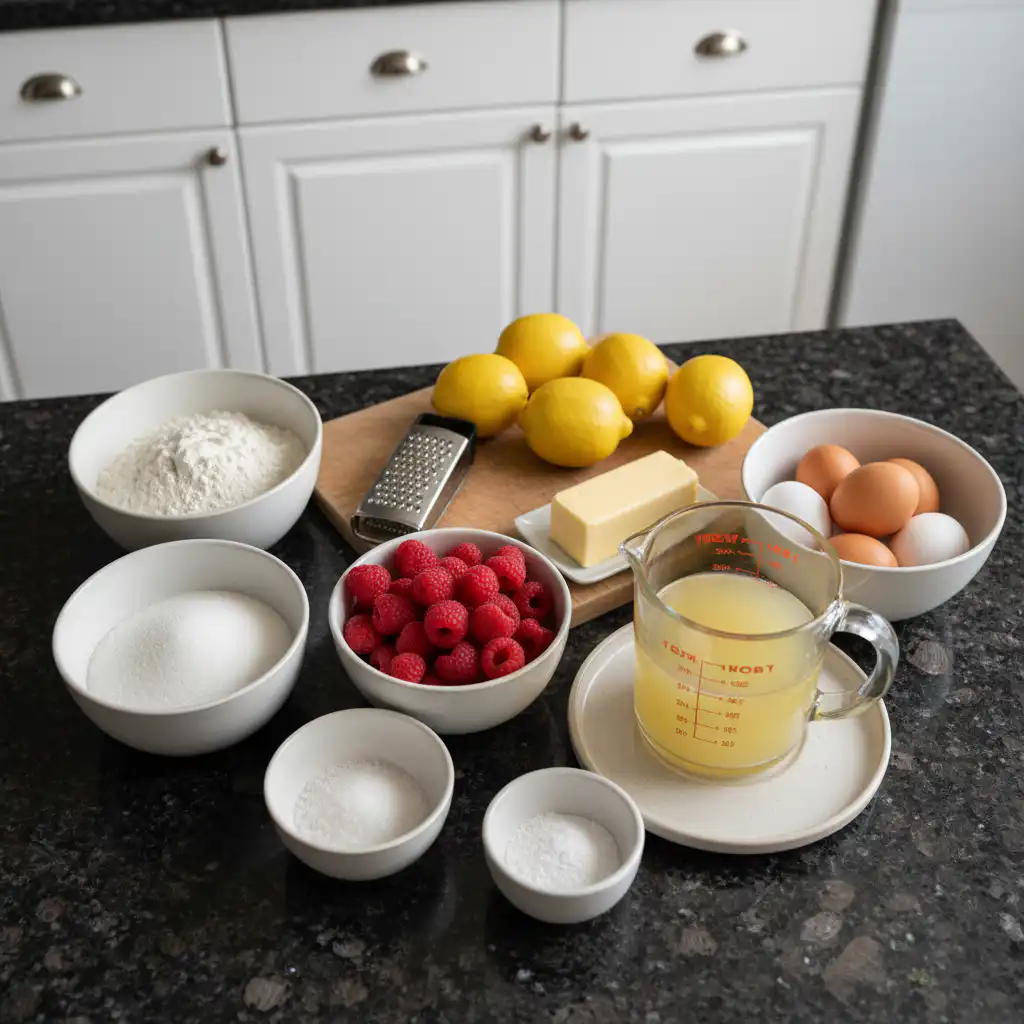
- 8 ounces unsalted butter, at room temperature (1 cup)
- ½ cup granulated sugar
- 2 cups all-purpose flour
- ¼ teaspoon kosher salt
- 1 teaspoon lemon zest, grated
- 2 tablespoons granulated sugar
- ¼ cup lemon juice
- 2 teaspoons cornstarch
- 1 cup raspberries
- 7 large eggs
- 3 cups granulated sugar
- 2 tablespoons lemon zest, grated
- 1 cup lemon juice, freshly-squeezed
- 1 cup all-purpose flour
- powdered sugar, Confectioners’ sugar for dusting
Ingredient Notes & Substitutions
Butter: For the perfect crisp crust, I always recommend using unsalted butter. This gives you full control over the salt content in your baking. The unique brown butter crust in this recipe involves a gentle browning process that brings out incredible nutty notes, transforming the flavor dramatically, much like it does in a rich brown butter banana bread.
Lemons: For optimal flavor and juice yield, select lemons that feel heavy for their size and have thin, smooth skin. Meyer lemons offer a slightly sweeter, less acidic citrus note if you are looking for a subtle variation in your raspberry lemon bars.
Raspberries: You can use either fresh or frozen raspberries for the puree. If using frozen, there is no need to thaw them first. Just be aware that frozen raspberries might release a bit more liquid, so you might need to cook the puree a minute or two longer to achieve the desired thick consistency.
Flour: All-purpose flour provides the structure for both the shortbread crust and helps to set the lemon filling. If you need a gluten-free option, a good quality 1:1 gluten-free all-purpose flour blend can be used, though the texture might vary slightly.
Dietary Adaptations: To make these raspberry lemon bars low-fat or dairy-free, you can substitute the dairy butter with a good quality plant-based margarine or solid coconut oil. Ensure your chosen substitute is suitable for baking.
Pan Size: This recipe is designed for a standard 9×13-inch baking pan. If you use a different size, you may need to adjust baking times. A smaller pan will result in thicker bars that require more baking time, while a larger pan will produce thinner bars that bake more quickly.
How to Make Raspberry Lemon Bars
Prepare the Brown Butter Shortbread Crust
First, preheat your oven to 350°F. Lightly spray a sturdy 9×13-inch baking pan with cooking spray. I recommend using a glass baking pan or metal baking pan for best results, as flimsy pans can lead to issues like a floating crust.
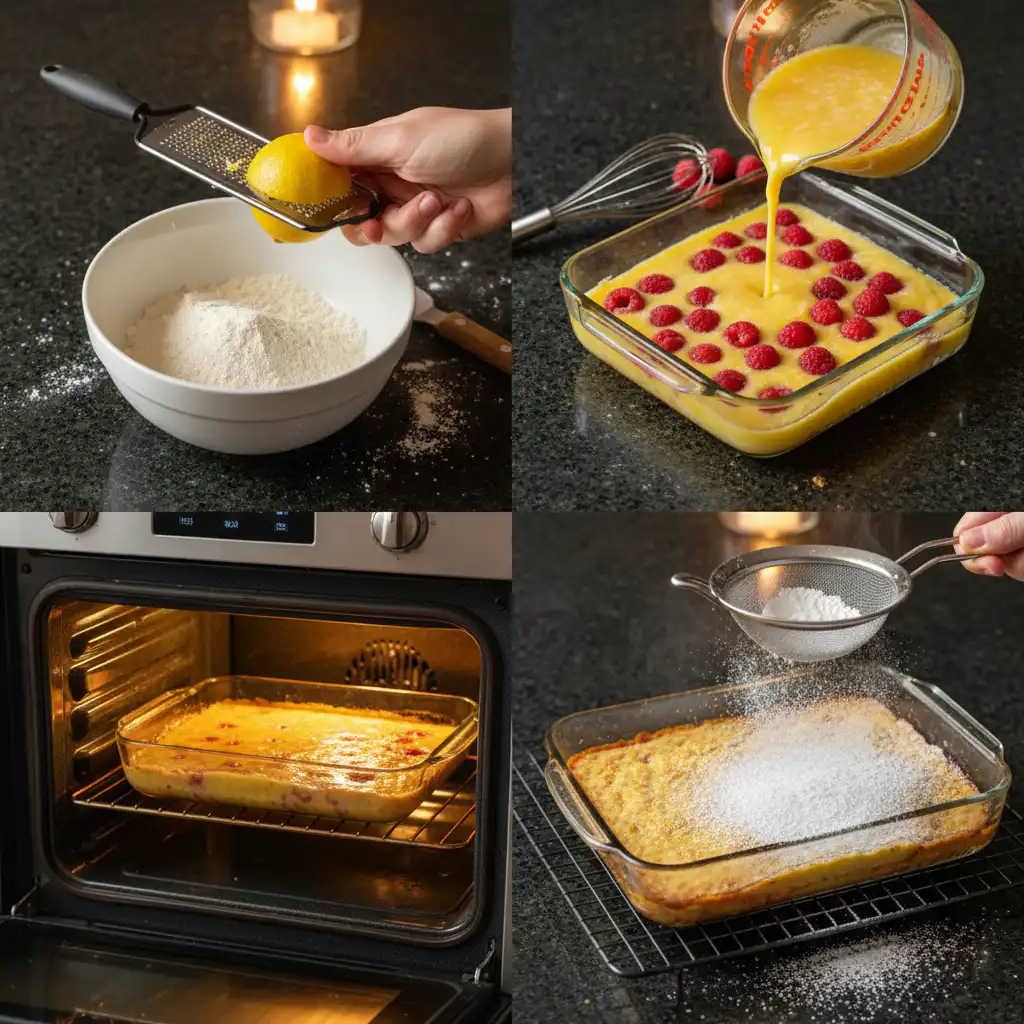
In a mixer fitted with a paddle attachment, cream the butter and sugar together on medium speed for about 2 minutes until the mixture is light in color and fluffy. This creaming butter technique incorporates air, contributing to a tender crust. Add the lemon zest and mix for a few seconds until just combined.
In a separate bowl, whisk together the all-purpose flour and kosher salt. With the mixer on low speed, gradually add the flour mixture to the butter mixture until just mixed, about 1 minute. Be careful not to overmix, which can develop gluten too much and lead to a tough crust.
Transfer the dough onto a lightly floured board and gather it into a ball. Then, press it evenly into the prepared baking pan using your fingers. This ensures a uniform base for your raspberry lemon bars.
Chill the dough in the pan for 15 minutes. This chilling dough step helps prevent the crust from shrinking and ensures a crisp crust. Bake the crust for 15 to 20 minutes, until it is very lightly browned around the edges. Keep a close eye on it. Cool the crust in the baking sheet on a wire rack for about 30 minutes, until the dough is slightly firm. Keep your oven heated to 350°F.
Create the Raspberry Puree
In a small saucepan, combine the 2 tablespoons of granulated sugar, ¼ cup lemon juice, and 2 teaspoons of cornstarch. Whisk them together until smooth. Add the fresh or frozen raspberries to the saucepan.
Cook over medium heat, whisking constantly. The raspberries will break down, and the puree will thicken. Continue cooking until the puree comes to a rolling bubble and is thick enough to densely coat the back of a spoon, about 6 minutes. This cooking puree step is crucial for achieving the right consistency for your raspberry lemon bars.
Carefully strain the hot thickened puree through a fine-mesh strainer, discarding any seeds. This step creates a beautifully smooth raspberry component for your gooey filling. Set the strained puree aside at room temperature until it is ready to be used.
Prepare and Bake the Lemon Filling
To make the luscious lemon filling, whisk together the 7 large eggs, 3 cups of granulated sugar, 2 tablespoons of lemon zest, and 1 cup of all-purpose flour in a large bowl until just combined. Gradually add the 1 cup of freshly-squeezed lemon juice and whisk until the mixture is smooth and homogenous. This careful emulsification ensures a silky filling.
Pour the lemon filling mixture evenly over the cooled, baked crust. Now, for the artistic part: carefully drop about tablespoon-sized spoonfuls of raspberry puree around the entire surface of the lemon mixture. You are creating pools of raspberry goodness.
Quickly drag a toothpick across the surface, gently swirling the raspberry puree into the lemon filling to create beautiful, eye-catching patterns. You can drag in straight lines, figure eights, or small circles for different effects. Do not overmix the swirls, or the colors will blend too much.
Carefully transfer the baking pan to the preheated oven. Bake for 30-35 minutes, or until the filling is set in the center. The edges should appear firm, but the very center should have a slight jiggle, not be completely firm. This indicates the custard setting is complete without overbaking.
Once baked, remove the pan from the oven and let the raspberry lemon bars cool completely to room temperature on a wire rack. This is a critical step for allowing the layers to set properly and preventing the gooey filling from oozing when cut. Refrigerating the bars will further firm them up.
Finish and Serve
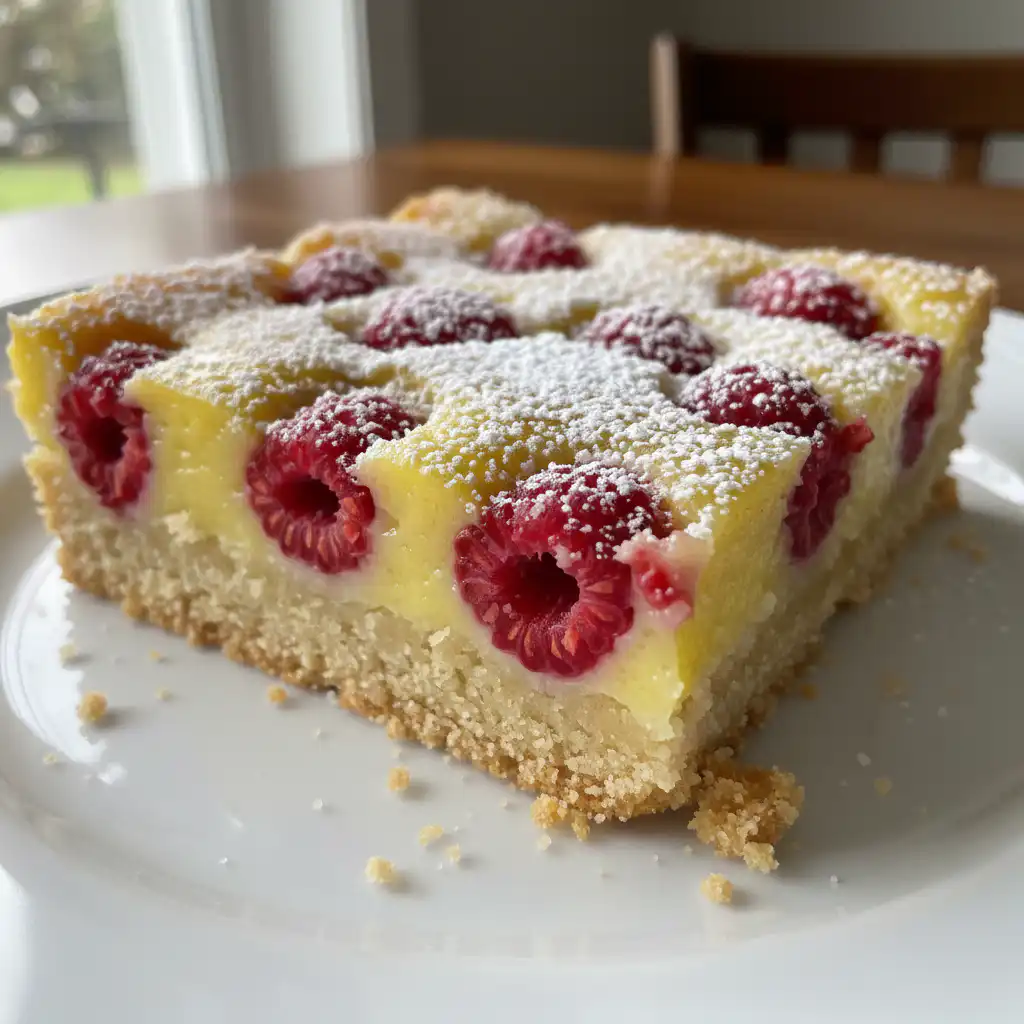
Once completely cooled, cut the raspberry lemon bars into desired squares or triangles. Just before serving, generously dust the tops with powdered sugar or confectioners’ sugar. This dusting adds a beautiful finish and a touch of extra sweetness.
Understanding the Science of Perfect Lemon Bars
Creating perfect raspberry lemon bars involves a little kitchen chemistry. Each ingredient plays a vital role in achieving that ideal balance of flavor and texture, from the crisp crust to the gooey filling.
The Role of Flour in Lemon Filling: While many people think of flour primarily as a thickener, in the lemon custard filling, all-purpose flour also acts as a crucial stabilizer. During baking, the flour absorbs moisture and forms a delicate matrix, helping the custard set properly and preventing it from becoming overly runny or breaking apart. It ensures the filling achieves that desired tender yet firm texture.
Why Eggs Matter: Eggs are the backbone of any good custard. In this recipe, the 7 large eggs contribute significantly to the rich, smooth texture of the lemon filling. They act as an emulsifier, binding the acidic lemon juice, sugar, and flour into a homogenous mixture. As the filling bakes, the egg proteins coagulate, which is the process of custard setting, transforming the liquid mixture into a solid yet tender bar.
Achieving Perfect Puree Consistency: The cornstarch in the raspberry puree is a workhorse when it comes to thickening. It is essential to cook the puree until it is visibly thickened and bubbling, reaching a consistency that is denser than the lemon filling. This ensures that when you swirl it in, the raspberry puree stays suspended beautifully, preventing it from sinking to the bottom of your raspberry lemon bars during baking.
The Magic of Brown Butter: Our unique twist starts with browning the butter. This process triggers the Maillard reaction, a complex chemical change that occurs when amino acids and reducing sugars react at high temperatures. It transforms the butter from a simple fat into a rich, nutty, and highly aromatic component, adding incredible depth of flavor to our crisp crust.
Pro Tips & Troubleshooting
Pro Tips for Success
Cooling & Setting: For optimal settling and exceptionally clean cuts, consider refrigerating your raspberry lemon bars for at least a day after they have cooled completely to room temperature. This allows the lemon filling and crust to fully meld and firm up.
Dusting: Always dust your raspberry lemon bars with powdered sugar or confectioners’ sugar just before serving. If you dust too early, the moisture from the filling can cause the sugar to dissolve, losing that beautiful finish.
Serving Temperature: For the very best texture, serve your raspberry lemon bars at room temperature. This allows the gooey filling to be soft and luscious, while the crisp crust retains its delightful snap.
Puree Consistency: To prevent the raspberry puree from sinking into the lemon filling, ensure it is cooked until it is quite thick, able to densely cling to a spoon. It should be noticeably denser than the liquid lemon mixture before you swirl it in.
Clean Cuts: Patience is key. Wait until the raspberry lemon bars are completely cooled and firm before attempting to cut them. This prevents the lemon filling from oozing out and ensures each bar has a neat, tidy edge.
Crust Perfection: When browning the butter for your crust, watch it closely. Once it turns amber and smells nutty, remove it from the heat. Make sure to scrape up all the flavorful browned solids at the bottom of the pan, as these contribute significantly to the depth of flavor in your crisp crust.
Common Mistakes to Avoid
Overbaking the Filling: Overbaking is a common pitfall that can lead to a rubbery or tough lemon filling. Aim for a center that still has a slight jiggle when gently shaken. The filling will continue to set as it cools.
Flimsy Baking Pan: Using a thin aluminum baking pan can cause your shortbread crust to float when the filling is added. Always opt for a sturdy glass baking pan or metal baking pan, which provides better heat distribution and stability.
Thin Raspberry Puree: If your raspberry puree is too thin, it will likely sink completely into the lemon filling during baking. Ensure it is cooked down sufficiently with cornstarch until it achieves a thick, almost jam-like consistency.
Overly Tart/Sweet Filling: Lemon bars are all about balance. If you find your filling too tart, you can slightly reduce the lemon juice next time or add an extra tablespoon of sugar. If it is too sweet, a touch more lemon zest can brighten it up.
Gummy Texture: A gummy texture in your lemon bars might occur from overmixing the filling, which can overdevelop the gluten in the flour, or from baking at an incorrect temperature. Gentle mixing and precise oven temperatures are key for a tender custard setting.
Crust Floating: Beyond using a sturdy baking pan, ensure your shortbread dough is well-chilled before baking. This helps stabilize the crust and prevents it from rising or floating when the wet lemon mixture is poured on top.
Serving & Storage
Serving Ideas
These raspberry lemon bars are a delightful dessert that shines on any occasion. Cut them into classic squares or elegant triangles for a beautiful presentation. A generous dusting of powdered sugar just before serving is always a wonderful touch.
For creative garnishes, consider adding a few fresh raspberries, a delicate curl of lemon zest, a dollop of homemade whipped cream, or a drizzle of melted white chocolate. They pair wonderfully with a freshly brewed cup of coffee, a soothing herbal tea, or even a light dessert wine for a more sophisticated treat.
Storage and Make-Ahead
Refrigeration: Store your raspberry lemon bars in an airtight container in the refrigerator for optimal freshness. They will maintain their delicious taste and texture for 3 to 5 days.
Freezing: These bars freeze beautifully, allowing you to enjoy them for longer. For best results, cut the raspberry lemon bars into individual slices. Wrap each slice tightly in plastic wrap, then wrap again in aluminum foil to prevent freezer burn. They can be stored in the freezer for up to 2-3 months. Thaw them in the refrigerator overnight or at room temperature for a few hours before serving.
Make-Ahead: To streamline your baking process, you can prepare the shortbread crust a day in advance and store it covered in the refrigerator. The raspberry puree can also be made ahead of time and kept refrigerated in an airtight container for up to 3 days.
Adaptations for Gatherings
Raspberry lemon bars are incredibly versatile for gatherings. They make an impressive dessert for potlucks, easy and elegant squares for a brunch spread, or a sophisticated treat for holiday celebrations. They are always a crowd-pleaser.
Conclusion
I hope you are as excited as I am about these ultimate raspberry lemon bars. This recipe truly offers a special blend of classic comfort and gourmet sophistication. The unique brown butter shortbread crust with its hint of almond is what truly sets these raspberry lemon bars apart, adding a depth of flavor that will leave everyone asking for the recipe.
With the detailed instructions, expert tips, and troubleshooting advice I have shared, you are well-equipped to achieve delicious results every time, even if you are new to baking. Do not hesitate to try this recipe, perhaps experimenting with other berries like blueberries, or adding a delicate white chocolate drizzle. Share your beautiful creations with friends and family!
Feel free to print this recipe to keep it handy in your kitchen, share it with fellow baking enthusiasts, and explore other delicious dessert recipes on my blog, like a classic strawberry shortcake.
FAQ
What is the best way to cut and store raspberry lemon bars for optimal freshness?
For the cleanest cuts, ensure your raspberry lemon bars are completely cooled to room temperature, and ideally, chilled in the refrigerator for a few hours or even overnight. Use a sharp, warm knife, wiping the blade clean between each cut. Store the bars in an airtight container in the refrigerator for 3 to 5 days. For longer storage, you can freeze individual slices, wrapped tightly in plastic wrap then foil, for up to 2-3 months. Thaw in the refrigerator.
Why isn’t my lemon bar filling setting, and how can I fix it?
Several factors can cause the lemon filling not to set. It might be underbaked, meaning the egg proteins have not fully coagulated. Ensure you bake until the edges are set and the center has only a slight jiggle. Incorrect ingredient ratios, especially too little flour or eggs, can also affect the custard setting. Always measure precisely. For future batches, ensure enough flour and eggs are used, and avoid opening the oven door too frequently during baking, which can drop the temperature.
Can I make this raspberry lemon bar recipe healthier or suitable for dietary restrictions?
Yes, you can adapt this recipe. For a low-fat version, you can substitute the dairy butter in the crust with a good quality plant-based margarine or solid coconut oil. While a fully vegan version would require egg substitutes, which can alter the texture of the lemon filling significantly, replacing dairy butter is a great start for dairy-free needs. For gluten-free, use a 1:1 gluten-free all-purpose flour blend in both the crust and the filling.
What are some common variations or additions I can make to raspberry lemon bars?
You can certainly get creative with these bars. Instead of just raspberries, consider swirling in some blueberry puree for a raspberry blueberry lemon bar. A drizzle of melted white chocolate over the finished bars adds another layer of sweetness. For a different citrus profile, try using Meyer lemons, which offer a sweeter, less tart lemon flavor.
How can I ensure my shortbread crust doesn’t float or become soggy?
To prevent the crust from floating, use a sturdy glass baking pan or metal baking pan instead of a flimsy aluminum one. Ensure the dough is well-chilled for at least 15 minutes before its initial bake, as this helps stabilize it. Also, avoid over-greasing the pan, which can contribute to the crust slipping or floating. The initial partial baking of the crust also helps to set it before the wet filling is added.
What’s the best way to make sure my raspberry puree is the right consistency?
The key to perfect raspberry puree is proper thickening with cornstarch. Cook the puree over medium heat, whisking constantly, until it visibly thickens and comes to a full boil. It should be thick enough to cling to the back of a spoon and appear denser than the lemon mixture. This ensures it creates beautiful swirls and does not sink into the lemon filling during baking.
How can I prevent the top of the filling from browning too much?
If you notice the top of your lemon filling browning too quickly during baking, you can loosely tent the baking pan with aluminum foil. This will protect the surface from direct heat while allowing the filling to continue cooking through. Remove the foil for the last few minutes if you want a very light golden hue.
What is the correct butter measurement for the crust (8oz vs 1 cup)?
For baking precision, 8 ounces of unsalted butter is indeed equivalent to 1 cup. The recipe specifies 8 ounces (1 cup) to ensure clarity for home bakers who might measure by weight or volume. Both measurements are correct and refer to the same amount of butter for your crisp crust.
Ultimate Raspberry Lemon Bars: Brown Butter & Almond Twist
Ingredients
Equipment
Method
- First, preheat your oven to 350°F. Lightly spray a sturdy 9×13-inch baking pan with cooking spray. I recommend using a glass baking pan or metal baking pan for best results, as flimsy pans can lead to issues like a floating crust.
- In a mixer fitted with a paddle attachment, cream the butter and sugar together on medium speed for about 2 minutes until the mixture is light in color and fluffy. This creaming butter technique incorporates air, contributing to a tender crust. Add the lemon zest and mix for a few seconds until just combined.
- In a separate bowl, whisk together the all-purpose flour and kosher salt. With the mixer on low speed, gradually add the flour mixture to the butter mixture until just mixed, about 1 minute. Be careful not to overmix, which can develop gluten too much and lead to a tough crust.
- Transfer the dough onto a lightly floured board and gather it into a ball. Then, press it evenly into the prepared baking pan using your fingers. This ensures a uniform base for your raspberry lemon bars.
- Chill the dough in the pan for 15 minutes. This chilling dough step helps prevent the crust from shrinking and ensures a crisp crust. Bake the crust for 15 to 20 minutes, until it is very lightly browned around the edges. Keep a close eye on it. Cool the crust in the baking sheet on a wire rack for about 30 minutes, until the dough is slightly firm. Keep your oven heated to 350°F.
- In a small saucepan, combine the 2 tablespoons of granulated sugar, ¼ cup lemon juice, and 2 teaspoons of cornstarch. Whisk them together until smooth. Add the fresh or frozen raspberries to the saucepan.
- Cook over medium heat, whisking constantly. The raspberries will break down, and the puree will thicken. Continue cooking until the puree comes to a rolling bubble and is thick enough to densely coat the back of a spoon, about 6 minutes. This cooking puree step is crucial for achieving the right consistency for your raspberry lemon bars.
- Carefully strain the hot thickened puree through a fine-mesh strainer, discarding any seeds. This step creates a beautifully smooth raspberry component for your gooey filling. Set the strained puree aside at room temperature until it is ready to be used.
- To make the luscious lemon filling, whisk together the 7 large eggs, 3 cups of granulated sugar, 2 tablespoons of lemon zest, and 1 cup of all-purpose flour in a large bowl until just combined. Gradually add the 1 cup of freshly-squeezed lemon juice and whisk until the mixture is smooth and homogenous. This careful emulsification ensures a silky filling.
- Pour the lemon filling mixture evenly over the cooled, baked crust. Now, for the artistic part: carefully drop about tablespoon-sized spoonfuls of raspberry puree around the entire surface of the lemon mixture. You are creating pools of raspberry goodness.
- Quickly drag a toothpick across the surface, gently swirling the raspberry puree into the lemon filling to create beautiful, eye-catching patterns. You can drag in straight lines, figure eights, or small circles for different effects. Do not overmix the swirls, or the colors will blend too much.
- Carefully transfer the baking pan to the preheated oven. Bake for 30-35 minutes, or until the filling is set in the center. The edges should appear firm, but the very center should have a slight jiggle, not be completely firm. This indicates the custard setting is complete without overbaking.
- Once baked, remove the pan from the oven and let the raspberry lemon bars cool completely to room temperature on a wire rack. This is a critical step for allowing the layers to set properly and preventing the gooey filling from oozing when cut. Refrigerating the bars will further firm them up.
- Once completely cooled, cut the raspberry lemon bars into desired squares or triangles. Just before serving, generously dust the tops with powdered sugar or confectioners’ sugar. This dusting adds a beautiful finish and a touch of extra sweetness.