
Spring and early summer bring so many delightful flavors, and for me, few things capture that essence quite like a classic American fruit pie. There is something truly comforting and nostalgic about a perfectly baked strawberry rhubarb pie. This guide is designed for everyone, whether you are a seasoned baker or just starting out. I will walk you through techniques, help you troubleshoot common issues, and share a special flavor enhancer that will make your pie truly unforgettable. My unique fresh ginger twist will elevate your pie to an entirely new level, promising an enhanced taste experience that stands out.
Why You’ll Love This Recipe
This strawberry rhubarb pie recipe stands apart due to the thoughtful incorporation of finely grated fresh ginger into the sweet and tart filling. The ginger introduces a warm, subtly spicy zest that beautifully complements and brightens the sweet-tart dynamic of strawberries and rhubarb. This addition significantly enhances the overall aromatic complexity of the pie, providing a refreshing counterpoint to the richness of the filling without ever overpowering the delicate flavors of the main fruits. Some believe ginger’s enzymatic properties can even contribute to a silkier filling texture, making each bite even more luxurious.
You will discover an unforgettable flavor profile with this recipe. The ginger elevates a classic comfort food to a gourmet experience, making each slice irresistible and memorable. This pie also celebrates seasonal simplicity. It makes the most of peak seasonal ingredients like fresh rhubarb and strawberries, highlighting their natural goodness. Furthermore, this recipe is both impressive yet approachable. You can bake a pie that looks and tastes stunning, but it is entirely achievable for any home cook. You can even use pre-made crusts for added convenience without sacrificing quality.
Ingredients Needed
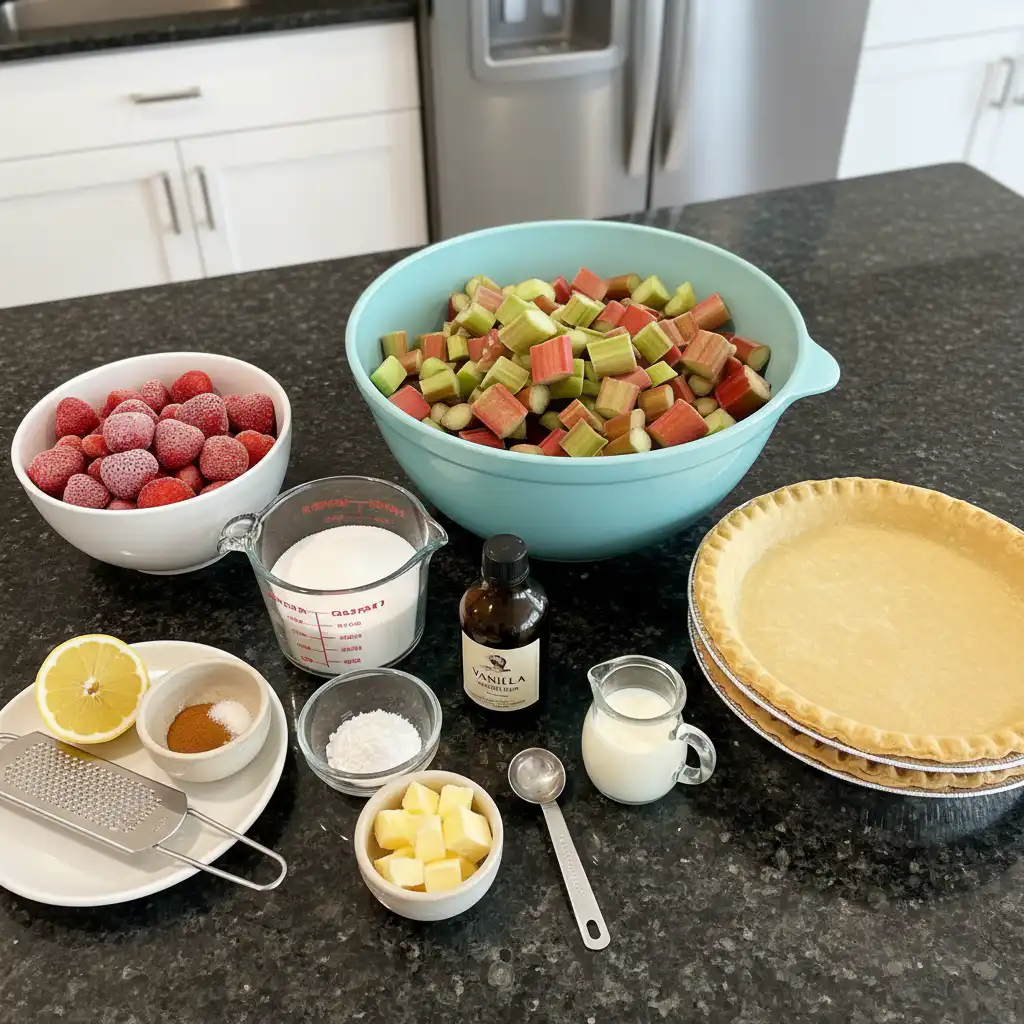
Here is exactly what you will need to create this wonderful pie in my kitchen.
* 1 lb. fresh rhubarb (leaves removed, trimmed, washed, cut into ½-inch pieces (453g) $6.99*)
* 1 lb. frozen strawberries (453g, $2.72)
* 1 cup granulated sugar ($0.38)
* ½ tsp ground cinnamon ($0.03)
* ¼ cup corn starch ($0.14)
* ½ lemon (juice and zest, $0.29)
* 1 tsp vanilla extract ($0.14)
* ¼ tsp salt ($0.01)
* 2 pie crusts (9-inch pre-made crusts, room temperature***, $2.77)
* 2 Tbsp butter (small dice, $0.30)
* 1 Tbsp milk ($0.01**)
* 1 Tbsp fresh ginger (finely grated)
Ingredient Notes & Substitutions
Let’s talk a bit more about the stars of our show and some key supporting players.
Rhubarb: When selecting rhubarb, you will often find stalks that range from bright red to greenish-pink. Red stalks often indicate a sweeter flavor, while green stalks tend to be more tart. Both work wonderfully in this strawberry rhubarb pie. Always remember to remove and discard the rhubarb leaves, as they contain high levels of oxalic acid and are poisonous. Only the stalks are safe to eat.
Strawberries: While fresh, ripe strawberries are always a delight, using frozen strawberries works perfectly well for this recipe. They are often a cost-effective option, especially outside of peak season, and their flavor holds up beautifully in baking. You do not need to thaw them before mixing the filling.
Corn Starch: My recipe uses corn starch to achieve a beautifully jammy filling. It is an excellent thickener that creates a clear, glossy finish. Other thickeners like flour, tapioca, or pectin can also be used. Flour is common but can sometimes give a cloudier filling. Tapioca offers a similar clarity to corn starch but can have a slightly chewies texture. Pectin, naturally found in fruits, needs sugar and acid to activate and create a firm set. For this pie, corn starch provides the ideal consistency.
Lemon Juice and Zest: The addition of both lemon juice and lemon zest is crucial. The juice not only brightens the flavors of the strawberries and rhubarb, but its acidity also helps interact with the natural pectin in the fruit, aiding in the filling’s consistency. The zest adds an aromatic lift that makes the pie truly shine.
Pie Crusts: You have options here. A homemade pie crust, with its buttery flakiness, is always a labor of love. However, high-quality store-bought pie crusts offer convenience without compromising much on taste. The most important tip for any crust is to ensure it is at room temperature before you begin rolling and handling. This prevents cracking and makes it much easier to work with, allowing you to achieve beautiful results. If you enjoy baking, consider trying our recipe for fluffy vanilla French beignets.
Butter/Milk: My recipe uses butter and milk for richness and a golden crust. If you have dietary restrictions, you can substitute plant-based butter alternatives and non-dairy milk (like almond or oat milk) with good results.
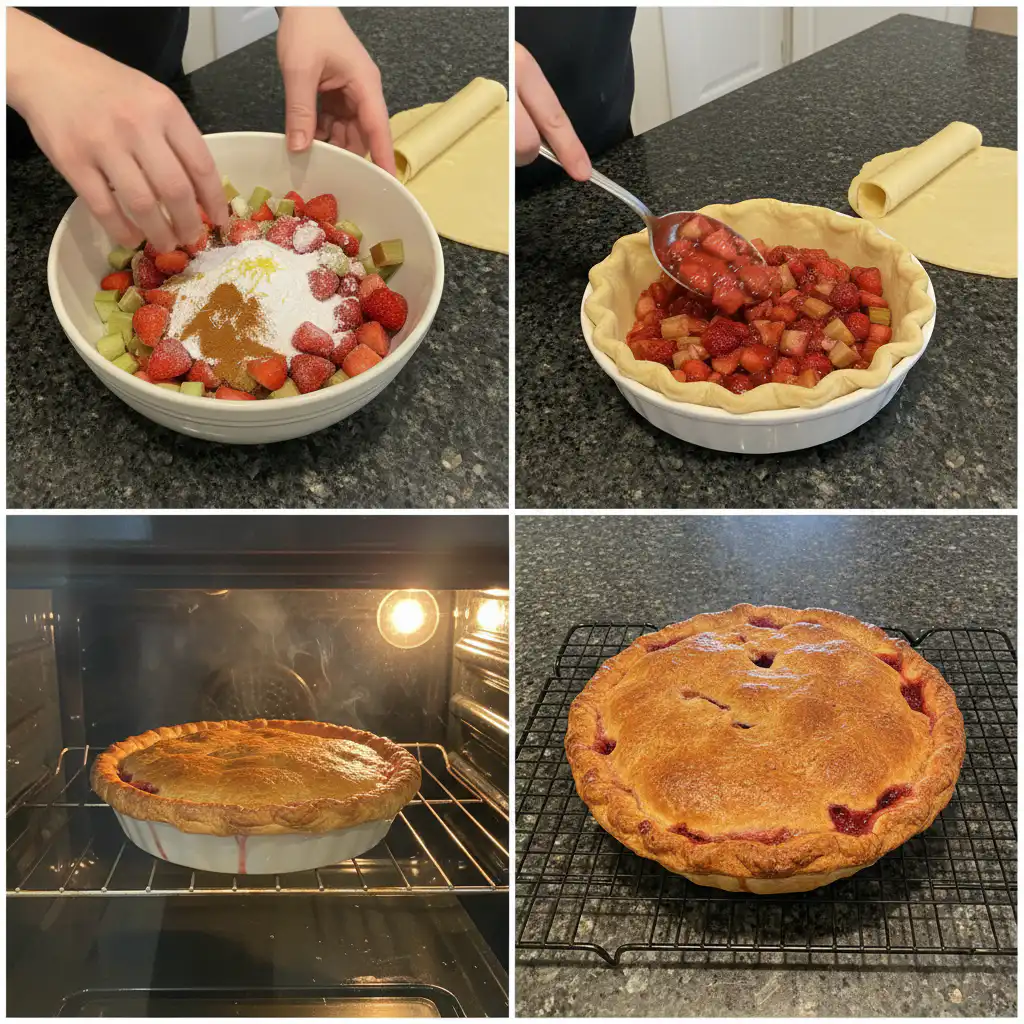
How to Make Strawberry Rhubarb Pie
Creating this strawberry rhubarb pie is a joyful process. Follow these steps for a perfect pie every time, brimming with that delicious ginger twist.
Prepare Your Workspace and Ingredients
First, preheat your oven to 400 degrees Fahrenheit. While the oven warms, take a moment to gather all your ingredients. This mise en place makes the entire baking process smoother and more enjoyable. Trim and cut your rhubarb, measure out your sugar and spices, and have everything ready to go.
Craft the Flavorful Filling
In a large mixing bowl, combine the chopped rhubarb, frozen strawberries, granulated sugar, ground cinnamon, corn starch, lemon juice, lemon zest, vanilla extract, and salt. Now, for my special touch: add one tablespoon of finely grated fresh ginger to this vibrant mixture. Gently fold all the ingredients together until they are well combined. The mixture will look glistening and incredibly tempting. Set it aside for a moment to allow the flavors to meld.
Lay the Bottom Crust
Take one of your room temperature pie crusts. Gently unroll it and carefully place it on the bottom of a 9-inch pie pan. Press the crust firmly against the bottom and up the sides of the pan, making sure there are no air bubbles. Allow any excess pie crust to hang over the edges; this will be used for sealing.
Add the Filling and Butter
Evenly pour the vibrant strawberry rhubarb filling into the pie crust. The colors are so beautiful together. Distribute the small pieces of butter over the top of the filling. These little dots of butter will melt into the filling, adding incredible richness and a silky texture during baking.
Place the Top Crust and Seal
Carefully unroll your second pie crust and center it over the filling. Gently lay it on top. Now, pinch the edges of the top crust together with the hanging bottom crust to create a secure seal all the way around. Once sealed, you can crimp the pie crust into decorative edges. You can use your fingers to flute it, or a fork to press a patterned edge, making your pie look as beautiful as it tastes.
Vent and Glaze for a Golden Finish
It is vital to cut several slits in the top pie crust. These vents allow steam to escape during the baking process, preventing the pie from bubbling over or becoming soggy. For a gorgeous golden-brown finish, lightly brush the top crust with milk. If you prefer, an egg wash (one egg beaten with a tablespoon of water) will also create a lovely sheen.
Protect the Edges
To prevent the pie crust edges from burning before the rest of the pie is done, tear off a few 3-inch strips of tin foil. Gently mold these strips around the very edges of your pie crust, creating a protective barrier.
Bake to Perfection
Place your pie on an oven-safe tray; this helps catch any potential drips and makes it easier to transfer. Slide it into your preheated 400-degree Fahrenheit oven. Bake for 30 to 45 minutes with the tin foil shield in place. After this initial bake, carefully remove the tin foil strips. Continue baking for an additional 25 to 30 minutes, or until the crust is deeply golden brown and you see the filling bubbling vigorously through the vents. This bubbling indicates the thickener is fully activated and the fruit is tender. If you have an instant-read thermometer, the internal temperature of the filling should reach around 200 to 205 degrees Fahrenheit.
The Crucial Cooling Phase
Once baked, remove the pie from the oven. This next step is absolutely critical: allow the pie to cool completely before slicing. This can take at least 3 to 4 hours, or even longer. Resisting the urge to cut into a warm pie is tough, but it is the key to ensuring the filling properly sets, preventing a runny, soupy slice.
Mastering Your Pie: Preventing Common Pitfalls
Even experienced bakers face challenges, especially with fruit pies. Here is how I tackle the most common ones.
Troubleshooting Runny Filling and Soggy Bottom Crust
Nothing is more disappointing than a beautiful pie with a filling that runs all over the plate, or a bottom crust that is sadly soggy.
Runny Filling: The critical role of a good thickener cannot be overstated. Our recipe uses corn starch, which consistently delivers a jammy filling. Ensuring you use the correct amount of thickener, along with sufficient baking time, is vital for the corn starch to fully activate. Remember, the lemon juice in our filling also aids in pectin activation, further contributing to a good set. Most importantly, the extended cooling time after baking is non-negotiable. The filling needs to cool completely for the starches and pectins to fully set. If you slice too soon, you will likely have a runny mess.
Soggy Bottom: To combat a soggy bottom crust, several strategies can be employed. Firstly, using a metal pie pan is often better than glass, as metal conducts heat more efficiently, helping the bottom crust crisp up. Always ensure your oven is adequately preheated to the correct temperature before the pie goes in. Baking the pie on the lowest rack for at least part of the baking time ensures direct heat reaches the bottom crust. For extra insurance, some bakers opt for blind baking, or par-baking, the bottom pie crust before adding the filling. This involves baking the empty crust for about 10-15 minutes until partially cooked.
Get Creative with Your Crust: Design & Variations
A pie is not just about taste; it is also a feast for the eyes.
Decorative Edges: Beyond a simple crimp, there are many ways to make your pie crust edges stand out. You can use the tines of a fork to press a uniform pattern. A rope edge is created by twisting two strips of dough together and adhering them to the rim. Traditional fluting involves pinching the dough between your thumb and forefinger to create a wavy pattern. Do not be afraid to use your rolling pin and even small cookie cutters to create beautiful finishes.
Pie Crust Styles: While a full top crust with vents is classic, you can explore other styles. A lattice top crust, created by weaving strips of dough over the filling, allows the vibrant fruit to peek through beautifully and offers a delightful texture. For a different profile, consider a crumble top, also known as a streusel topping. This involves mixing oats, flour, butter, and sugar into a crumbly mixture and scattering it over the filling instead of a second crust. It offers a wonderful textural contrast.
Pro Tips & Troubleshooting
From my kitchen to yours, here are some of my best advice and warnings.
Pro Tips for Pie Perfection
These are the tricks of the trade I use to ensure my pies turn out perfectly every time.
Ginger Boost: For the best flavor dispersion, always grate fresh ginger finely. This ensures its warm, subtly spicy zest is evenly distributed throughout the filling, making every bite sing.
Rhubarb Preservation: When rhubarb is in season, buy extra. You can freeze fresh rhubarb for later in the year, keeping it fresh for up to 6 to 12 months. Just wash, chop, and freeze in a single layer before transferring to a freezer bag.
Strawberry Choice: Do not hesitate to use frozen strawberries. They are often more affordable and work just as well as fresh ones in baked goods, saving you money without compromising flavor.
Crust Handling: Always ensure your pie crusts are at room temperature. This is key to preventing them from cracking when you unroll them and makes them much easier to handle and shape.
Venting is Vital: Always cut slits in the top crust. This is crucial to vent steam during baking, which prevents the pie from bubbling over and ensures a perfectly set filling.
Golden Finish: For that appetizing golden-brown, crunchy finish, brush the top crust with milk before baking. Melted butter or an egg wash (beaten egg with a splash of water) are also excellent alternatives.
Cooling Time: This is arguably the most important step for a successful slice. Allow the pie to cool completely, often 3 to 4 hours, for the filling to properly set before slicing. Patience truly pays off here.
Doneness Cues: Look for clear indicators that your pie is done. The filling should be bubbling vigorously through the vents, and the crust should be a rich, deeply golden color. An internal temperature around 200-205 degrees Fahrenheit is ideal for fruit pies.
Common Mistakes to Avoid
Even the best bakers make mistakes, but knowing what to watch for can save your pie.
Rhubarb Leaves: Never consume rhubarb leaves. They are poisonous due to high levels of oxalic acid. Always remove and discard them, using only the stalks.
Cold Crusts: Using pie crusts directly from the refrigerator can lead to frustration. Cold crusts are stiff and prone to cracking, making them difficult to roll and shape. Let them come to room temperature first.
Slicing Too Soon: This is a major culprit for runny filling. Slicing the pie before it has fully cooled and the filling has set will result in a messy, soupy slice. Resist the temptation.
Forgetting to Vent: Neglecting to cut slits in the top crust can cause steam to build up, leading to the pie bubbling over in the oven or creating a soggy top. Always vent.
Over-filling: Packing too much filling into your pie can cause it to bubble over during baking, creating a messy oven and potentially affecting the crust’s integrity. Leave a little room at the top.
Serving & Storage
Once your delicious strawberry rhubarb pie is baked and cooled, it is time to enjoy it and plan for any leftovers.
Serving Ideas
This strawberry rhubarb pie is a star on its own, but these serving suggestions will make it even more special.
Classic Pairings: My absolute favorite way to serve a warm slice is with a generous scoop of cold vanilla ice cream. The creamy coldness against the warm, sweet-tart fruit is simply divine. A dollop of homemade whipped cream also makes for an elegant and delicious accompaniment. For another comforting and sweet breakfast, you might love our easy fluffy pancakes.
Garnishing: For extra visual appeal, consider a light sprinkle of fresh ground cinnamon or a few fresh strawberry slices on the plate next to your pie.
Beverage Pairings: This pie pairs beautifully with a cup of hot coffee or tea. For a more sophisticated touch, a light dessert wine or even a sparkling rosé would complement its fruity notes.
Beyond the Pie: If you have leftover rhubarb, do not let it go to waste! Rhubarb is fantastic in other recipes, like blueberry rhubarb muffins or a simple rhubarb compote. You might also enjoy our quick blueberry French toast casserole for another delightful fruit-filled treat.
Storage and Make-Ahead
Proper storage ensures your pie remains delicious for as long as possible.
Room Temperature Storage: An unsliced, baked strawberry rhubarb pie can safely sit at room temperature for 1 to 2 days, especially if covered loosely to prevent it from drying out.
Refrigeration: For longer storage, cover any leftover strawberry rhubarb pie tightly with plastic wrap or aluminum foil and store it in the refrigerator. It will stay fresh for up to 3 to 5 days.
Freezing Baked Pie: Yes, you can freeze a baked strawberry rhubarb pie! Once completely cooled, wrap the entire pie tightly in several layers of plastic wrap, then an outer layer of aluminum foil. Freeze for up to 2 to 3 months. When ready to enjoy, thaw overnight in the refrigerator, then reheat.
Reheating: To restore some of that fresh-baked warmth and crispness to a chilled slice of pie, you can gently reheat it in a preheated oven (around 300-325 degrees Fahrenheit) for 10-15 minutes, or until warmed through. A quick zap in the microwave will warm it, but will not crisp the crust.
Conclusion
I truly hope you enjoy making this strawberry rhubarb pie as much as I love sharing it. The harmonious balance of sweet and tart, beautifully enhanced by my unique fresh ginger twist, makes for an unforgettable dessert experience. By following these detailed steps and incorporating my expert tips, you can confidently bake a successful and incredibly tasty pie, regardless of your baking experience. So, go ahead, embrace the joy of seasonal baking. Try this recipe, experiment with different crust variations if you are feeling adventurous, and most importantly, savor and share this comforting dessert with your loved ones. Print out this recipe for your collection, share it with friends, and come back to explore more of my comfort food creations.
FAQ
How do you balance the tartness of rhubarb in a pie?
I balance the inherent tartness of rhubarb through several key additions. The natural sweetness of strawberries provides a perfect counterpoint, along with sufficient granulated sugar. Crucially, the brightening notes of lemon juice and my special fresh ginger twist further enhance this balance, creating a complex and delightful flavor profile.
What is the best way to thicken strawberry rhubarb pie filling?
My recipe uses corn starch for a consistently jammy filling that sets beautifully. Other thickeners like tapioca or flour can also be used, but corn starch generally provides a clearer, glossier finish. Remember, the lemon juice also plays a role by helping to activate the pectin naturally present in the fruit, contributing to the filling’s set.
Can I use frozen rhubarb for this pie?
Yes, absolutely! Frozen rhubarb works perfectly well in this pie. You do not need to thaw it beforehand. Just toss it directly into the filling mixture with the other ingredients.
How long does strawberry rhubarb pie need to cool before slicing?
This is a critical step for a well-set pie. You must allow the pie to cool completely, which takes at least 3 to 4 hours, or even longer, for the filling to properly set. Slicing too soon will almost certainly result in a runny filling.
What are common mistakes to avoid when making strawberry rhubarb pie?
Some common mistakes include not removing rhubarb leaves (they are poisonous!), using cold pie crusts which are prone to cracking, slicing the pie before it has fully cooled leading to a runny filling, and forgetting to vent the top crust which can cause the pie to bubble over.
How do I store and reheat leftover strawberry rhubarb pie?
To store, cover leftover strawberry rhubarb pie tightly and refrigerate for up to 3-5 days. For reheating, you can warm individual slices in a 300-325 degree Fahrenheit oven for 10-15 minutes to restore some crispness to the crust, or simply microwave for speed.
What does rhubarb taste like?
Rhubarb has an intensely tart, tangy, and slightly earthy flavor when raw, often compared to green apples or celery. However, when cooked, especially with sugar and fruits like strawberries, its tartness mellows and sweetens significantly, developing a complex and delicious fruity note.
Are rhubarb leaves safe to eat?
Absolutely not. It is extremely important to remember that rhubarb leaves contain high levels of oxalic acid and are poisonous. Only the stalks of the rhubarb plant should be consumed.
What kind of pie crust is best for strawberry rhubarb pie?
A flaky, buttery pie crust is ideal for strawberry rhubarb pie. While many home bakers prefer to make their own, quality store-bought pie crusts, especially when brought to room temperature before use, offer convenience and yield excellent results for this recipe.
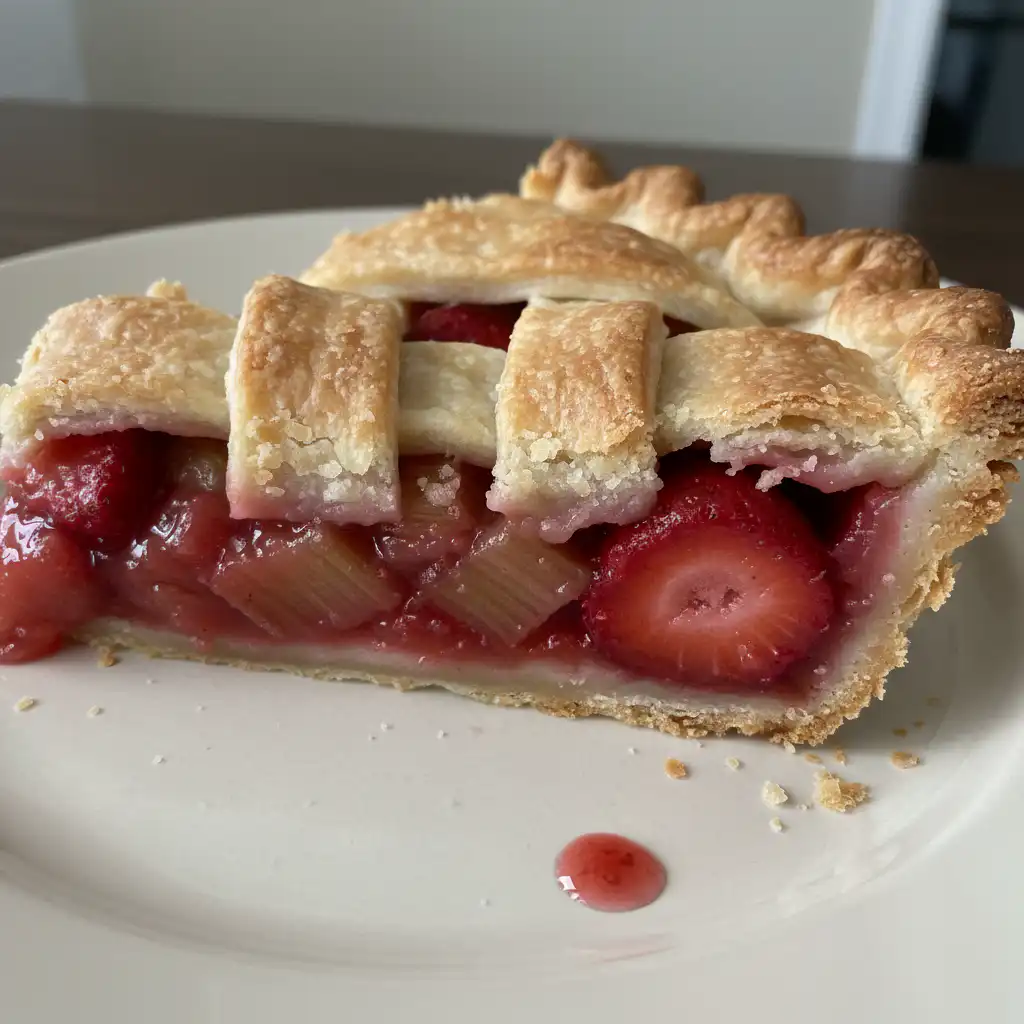
Best Strawberry Rhubarb Pie Recipe with Ginger Twist
Ingredients
Equipment
Method
- Preheat your oven to 400 degrees Fahrenheit. Gather all your ingredients, trim and cut your rhubarb, and measure out your sugar and spices.
- In a large mixing bowl, combine the chopped rhubarb, frozen strawberries, granulated sugar, ground cinnamon, corn starch, lemon juice, lemon zest, vanilla extract, salt, and one tablespoon of finely grated fresh ginger.
- Gently fold all the ingredients together until they are well combined. Set the mixture aside to allow the flavors to meld.
- Gently unroll one of your room temperature pie crusts and carefully place it on the bottom of a 9-inch pie pan.
- Press the crust firmly against the bottom and up the sides of the pan, ensuring no air bubbles, and allow any excess crust to hang over the edges.
- Evenly pour the vibrant strawberry rhubarb filling into the pie crust.
- Distribute the small pieces of butter over the top of the filling.
- Carefully unroll your second pie crust and center it over the filling, gently laying it on top.
- Pinch the edges of the top crust together with the hanging bottom crust to create a secure seal, then crimp the pie crust into decorative edges.
- Cut several slits in the top pie crust to allow steam to escape during baking.
- Lightly brush the top crust with milk for a gorgeous golden-brown finish.
- Tear off a few 3-inch strips of tin foil and gently mold them around the very edges of your pie crust to prevent burning.
- Place your pie on an oven-safe tray and slide it into your preheated 400-degree Fahrenheit oven. Bake for 30 to 45 minutes with the tin foil shield in place.
- After this initial bake, carefully remove the tin foil strips. Continue baking for an additional 25 to 30 minutes, or until the crust is deeply golden brown and the filling is bubbling vigorously through the vents (internal temperature 200-205 degrees Fahrenheit).
- Once baked, remove the pie from the oven and allow it to cool completely before slicing. This can take at least 3 to 4 hours, or even longer, to ensure the filling properly sets.