
There is nothing quite like the comforting aroma of freshly baked banana bread filling the kitchen. This almond flour banana bread recipe delivers that classic experience with a wonderfully healthy twist. It is incredibly moist, tender, and naturally gluten-free without sacrificing an ounce of flavor. I have perfected this recipe to be both incredibly easy for beginners and reliable enough for seasoned bakers. You will learn how to create a standout loaf, elevated by a secret flavor twist that makes it truly unforgettable.
Table of Contents
Table of Contents
Why You’ll Love This Recipe
The secret that makes this almond flour banana bread exceptionally delicious is browned butter. By gently cooking the butter until it develops a nutty aroma and golden-brown flecks, we create a deep, caramelized flavor through a process called the Maillard reaction. This simple step adds a layer of richness that regular melted butter just cannot match.
A pinch of ground nutmeg enhances the warmth. This spice works beautifully with the browned butter and cinnamon, creating a more complex and cozy flavor profile that feels truly gourmet.
This bread has a melt-in-your-mouth texture. Almond flour provides healthy fats and protein, resulting in a quick bread that is unbelievably moist and tender without being heavy or dense.
It is naturally gluten-free and refined sugar-free. Made entirely with almond flour and sweetened with maple syrup, this recipe is perfect for anyone following a gluten-free, grain-free, or paleo-friendly lifestyle. It is a treat you can feel good about.
The recipe follows an easy one-bowl method. Everything comes together in a single mixing bowl, making preparation quick and cleanup a breeze. It is perfect for a healthy breakfast, a satisfying snack, or weekly meal prep.
Ingredients Needed
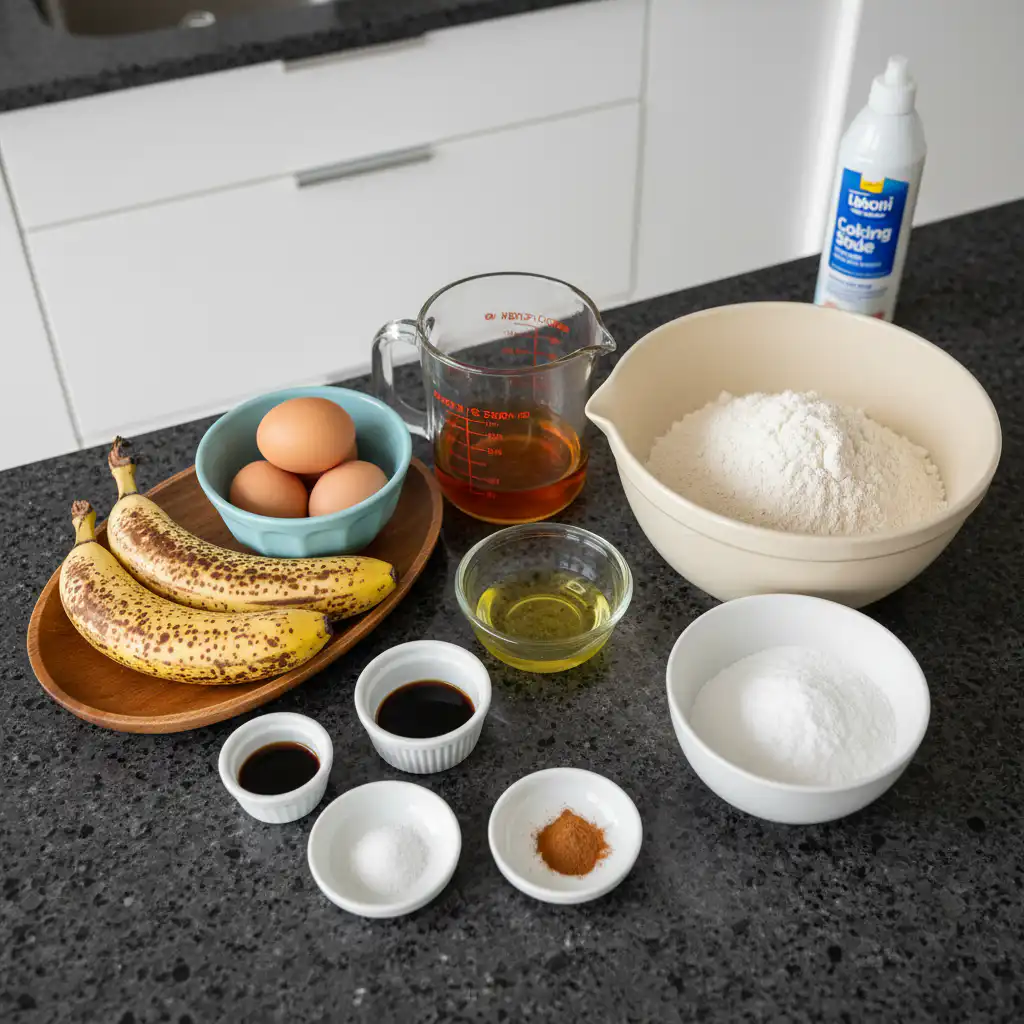
3 medium-large very ripe bananas with brown spots (1 cup mashed)
3 large eggs
1/4 cup any sweetener (I use maple syrup)
1/4 cup any mild oil or melted butter (I use avocado oil)
1 teaspoon pure vanilla extract
1 teaspoon cinnamon
1 teaspoon baking soda
1 teaspoon baking powder
1/4 teaspoon salt
3 cups almond flour (not almond meal)
Cooking spray (I use Misto)
Ingredient Notes & Substitutions
Ripe Bananas: Using very ripe bananas with plenty of brown spots is essential. These bananas are naturally sweeter and contain more moisture, which is critical for the flavor and texture of the final loaf. If you only have two bananas, the bread will still work but will have a slightly less pronounced banana flavor. If you find yourself with a surplus of ripe bananas, consider making these delicious banana oatmeal bars as well.
Almond Flour: For the best results, use a finely ground blanched almond flour. This type of flour has the skins removed, giving the bread a lighter color and a tender crumb. Almond meal is coarser and unblanched, which will result in a heavier, denser loaf.
Sweetener: I prefer maple syrup for its warm flavor, but you can also use honey. For a granular option, erythritol can work, but you may need to adjust the quantity slightly as it can have a different level of sweetness.
Oil or Butter: Mild avocado oil works well and keeps this recipe dairy-free. For the ultimate flavor boost, I recommend browning your butter. Simply melt the butter in a light-colored pan over medium heat, swirling occasionally, until it foams and you see golden-brown specks at the bottom. The aroma will be nutty and irresistible. Melted coconut oil or ghee are also great options.
Eggs and Vegan Alternatives: Eggs provide structure and leavening. To make a vegan version, you can try using three chia eggs. To make one chia egg, mix one tablespoon of chia seeds with three tablespoons of water and let it sit for a few minutes to gel. Note that this substitution may result in a slightly denser bread.
Spices: Cinnamon is a classic, but the small amount of nutmeg really elevates this recipe. It complements the browned butter and adds a subtle warmth that makes the bread taste extra special.
How to Make Almond Flour Banana Bread
Prep Your Pan & Oven
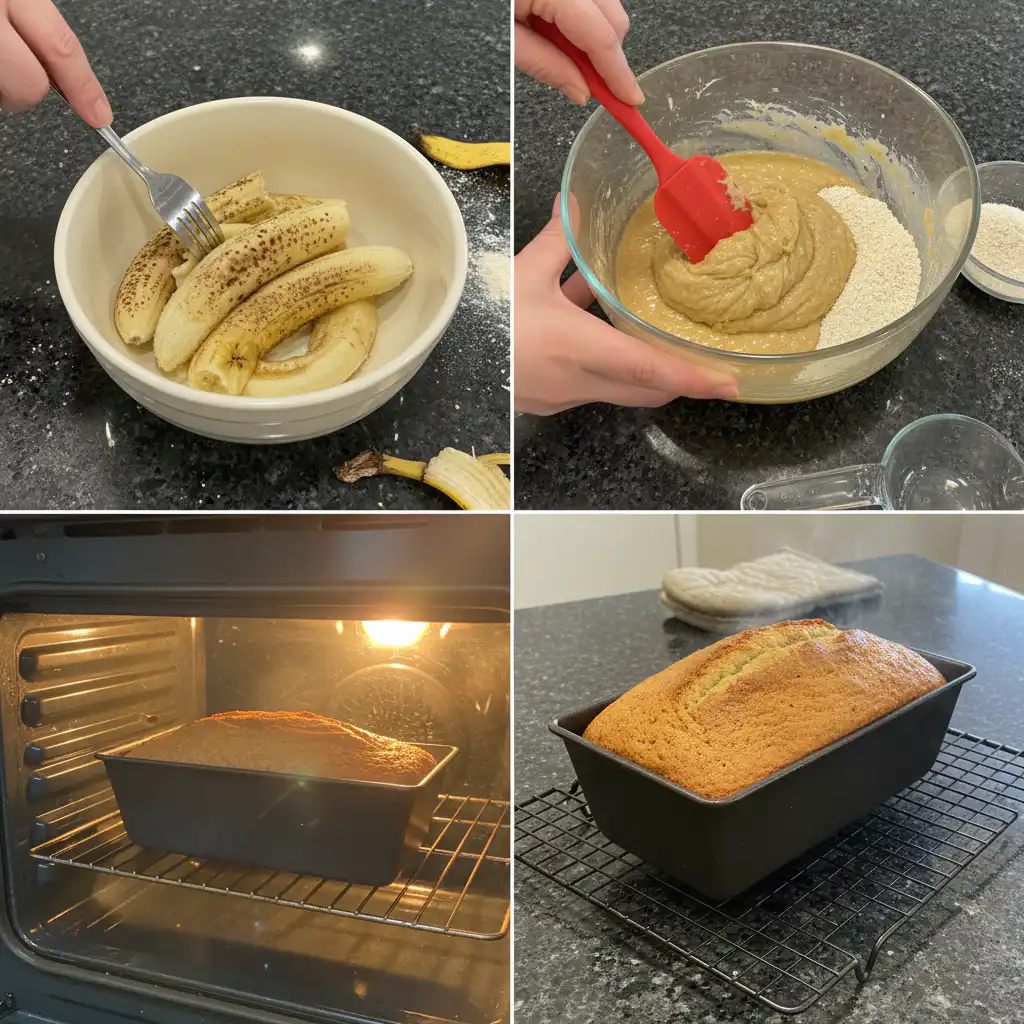
First, preheat your oven to 350 degrees F. Take a metal 9 x 5 loaf pan and line it with parchment paper, allowing some to hang over the sides for easy lifting later. Lightly spray the bottom and the lower inch of the pan with cooking spray. A metal pan is best as it conducts heat evenly, preventing a soggy bottom.
Combine Wet Ingredients & Bananas
In a large mixing bowl, add the ripe bananas and mash them with a fork or a masher until they are mostly smooth. Add the eggs, maple syrup, oil or browned butter, and vanilla extract. Then, sprinkle in the cinnamon, baking soda, baking powder, and salt. Whisk everything together until the mixture is well-blended and creamy.
Gently Incorporate Dry Ingredients
Now, add the almond flour to the wet mixture in the bowl. Use a spatula to gently stir and fold everything together until just combined. Be careful not to overmix the batter. The final consistency should be thick but still pourable.
Bake to Golden Perfection
Pour the batter into your prepared loaf pan and smooth the top with your spatula. Bake for 50 minutes, or until a toothpick inserted into the center comes out clean. The top should be a beautiful golden brown and feel firm to the touch. If you notice the top browning too quickly, you can loosely cover it with foil for the last 15 minutes of baking.
Cool Completely & Slice
Remove the almond flour banana bread from the oven and place the pan on a cooling rack for 10 minutes. After 10 minutes, use the parchment paper overhangs to lift the bread out of the pan and let it cool completely on the rack. This step is crucial; almond flour baked goods need to cool fully to set their structure and prevent crumbling.
The Science of Perfect Almond Flour Banana Bread
Choosing the Right Pan: Metal vs. Glass vs. Ceramic
The type of pan you use has a significant impact on your final bake. Metal pans, like aluminum, conduct heat efficiently and evenly. This helps the bread cook uniformly, creating a good crust and preventing a dense, soggy bottom. Glass and ceramic pans are insulators, meaning they heat up slowly but retain heat for a long time. This can cause the outer edges of the bread to overbake and brown too quickly while the center remains undercooked and gummy.
Knowing When It’s Done: Optimal Internal Temperature & The Toothpick Test
The classic toothpick test is a reliable indicator of doneness. When a toothpick inserted into the center comes out clean, the batter is set. For even more precision, you can use a digital thermometer. A fully cooked quick bread should have an internal temperature between 200 and 210 degrees F. This guarantees that the center is perfectly baked every time.
The Critical Cool-Down: Why Patience Pays Off
Waiting for your banana bread to cool completely is perhaps the most important step. Unlike wheat flour, almond flour is gluten-free. Its structure comes from the proteins and starches that set as they cool. Slicing into the loaf while it is still warm will disrupt this delicate structure, causing the bread to be gooey and fall apart. Patience allows the loaf to firm up, resulting in clean slices and a perfect texture.
Pro Tips & Troubleshooting
Pro Tips for Success
Perfecting the Browned Butter: Watch the butter closely as you brown it. It can go from perfectly nutty to burnt in a matter of seconds. Use a light-colored pan to monitor the color change easily.
Banana Ripeness is Key: Always use bananas with lots of brown spots. They provide the best natural sweetness and moisture, which is essential for a delicious banana bread.
Pan Preference & Prep: Stick with a metal loaf pan and always line it with parchment paper. This ensures even baking and makes removing the bread effortless.
Preventing Over-Browning: If the top of your loaf is getting too dark before the center is cooked, loosely tent it with aluminum foil for the last 15 to 20 minutes of baking.
The Power of Patience: I cannot stress this enough—let the bread cool completely on a cooling rack before slicing. This is the secret to a perfectly structured almond flour bread.
Clean Slices: Use a sharp serrated knife to slice the bread. This will give you clean, neat slices without squishing the tender crumb.
Enhance with Nutmeg: Do not skip the pinch of nutmeg. It subtly enhances the warm spices and complements the browned butter beautifully.
Common Mistakes to Avoid
Under-ripe Bananas: Using yellow or green-tinged bananas will result in a bread that lacks sweetness and moisture.
Wrong Pan Type: Baking in a glass or ceramic loaf pan can lead to an unevenly baked loaf with a soggy, dense center.
Slicing Too Soon: Slicing the bread while it is still warm is the fastest way to turn your beautiful loaf into a crumbly mess.
1:1 Flour Swap: Do not substitute almond flour with other flours like all-purpose or coconut flour. They have very different properties and will not work in this recipe.
Adding High-Moisture Fruits: Avoid adding fruits with high water content, like chopped apples, as they will make the bread too wet and prevent it from setting properly.
Sunken Middle or Not Rising: A sunken middle can be caused by opening the oven door too early, using expired leavening agents, or overmixing the batter.
Overly Dry or Gummy Texture: A dry texture comes from overbaking, while a gummy texture is often the result of underbaking or slicing the loaf before it has completely cooled.
Serving & Storage
Serving Suggestions
This almond flour banana bread is wonderful on its own for a healthy breakfast or snack. You can warm a slice in the toaster or microwave for that fresh-from-the-oven feel. It is delicious with a smear of almond butter, a dollop of Greek yogurt, or a drizzle of maple syrup. For some extra texture and flavor, try mixing in chocolate chips, chopped walnuts, or pecans into the batter before baking.
Proper Storage & Make-Ahead
To store the bread, wrap it tightly or place it in an airtight container. It will keep at room temperature for up to three days or in the refrigerator for up to a week. This recipe is also perfect for freezing. You can freeze the entire loaf or individual slices. Wrap them securely in plastic wrap and then a layer of aluminum foil. It will stay fresh in the freezer for up to three months. To enjoy, simply thaw slices at room temperature or gently reheat them in a toaster.
Conclusion
This almond flour banana bread is proof that you can enjoy a comforting, delicious treat that is also nourishing. Its moist, tender texture and rich flavor make it a family favorite. The special touch of browned butter and nutmeg elevates it from a simple quick bread to something truly special. For another sweet treat, check out these Twix cookies. I am confident that this easy, reliable recipe will become a staple in your kitchen. I encourage you to bake a loaf, fill your home with its wonderful aroma, and enjoy every single bite.
FAQ
Why is my almond flour banana bread too wet or not rising?
This can happen for a few reasons. Using a glass or ceramic pan can lead to underbaking in the center. Also, make sure your baking soda and baking powder are fresh. Slicing the bread before it has cooled completely will also make it seem wet or gummy inside.
What is the best type of pan to use for almond flour banana bread?
A metal loaf pan is highly recommended. It conducts heat evenly, ensuring the bread bakes all the way through without the edges burning or the bottom becoming soggy.
Can I substitute almond flour with other flours in this recipe?
No, almond flour has unique properties and cannot be swapped 1:1 with other flours like all-purpose or coconut flour. The recipe would require significant adjustments to work.
How do I properly store and freeze almond flour banana bread?
Store it in an airtight container at room temperature for 3 days or in the fridge for a week. To freeze, wrap slices or the whole loaf in plastic wrap and then foil. It will last for up to 3 months.
What is the difference between almond flour and almond meal for baking?
Almond flour is made from blanched almonds and is finely ground, creating a lighter, more tender crumb. Almond meal is made from unblanched almonds and is coarser, resulting in a denser baked good. This recipe works best with fine almond flour.
How can I adjust the sweetness of my almond flour banana bread?
For more natural sweetness, use the ripest bananas you can find. You can also slightly increase the maple syrup to your liking, but do not add too much extra liquid, as it can affect the texture.
Why does my banana bread brown too quickly on top?
Almond flour browns faster than traditional flour due to its higher fat and protein content. If the top is browning too quickly, simply tent the loaf pan loosely with a piece of aluminum foil for the last 15-20 minutes of baking.
Can I add other fruits like apples to almond flour banana bread?
It is best to avoid adding high-moisture fruits like apples or berries in large quantities, as the extra liquid can make the bread soggy. Stick to add-ins like chocolate chips or nuts for the best results.
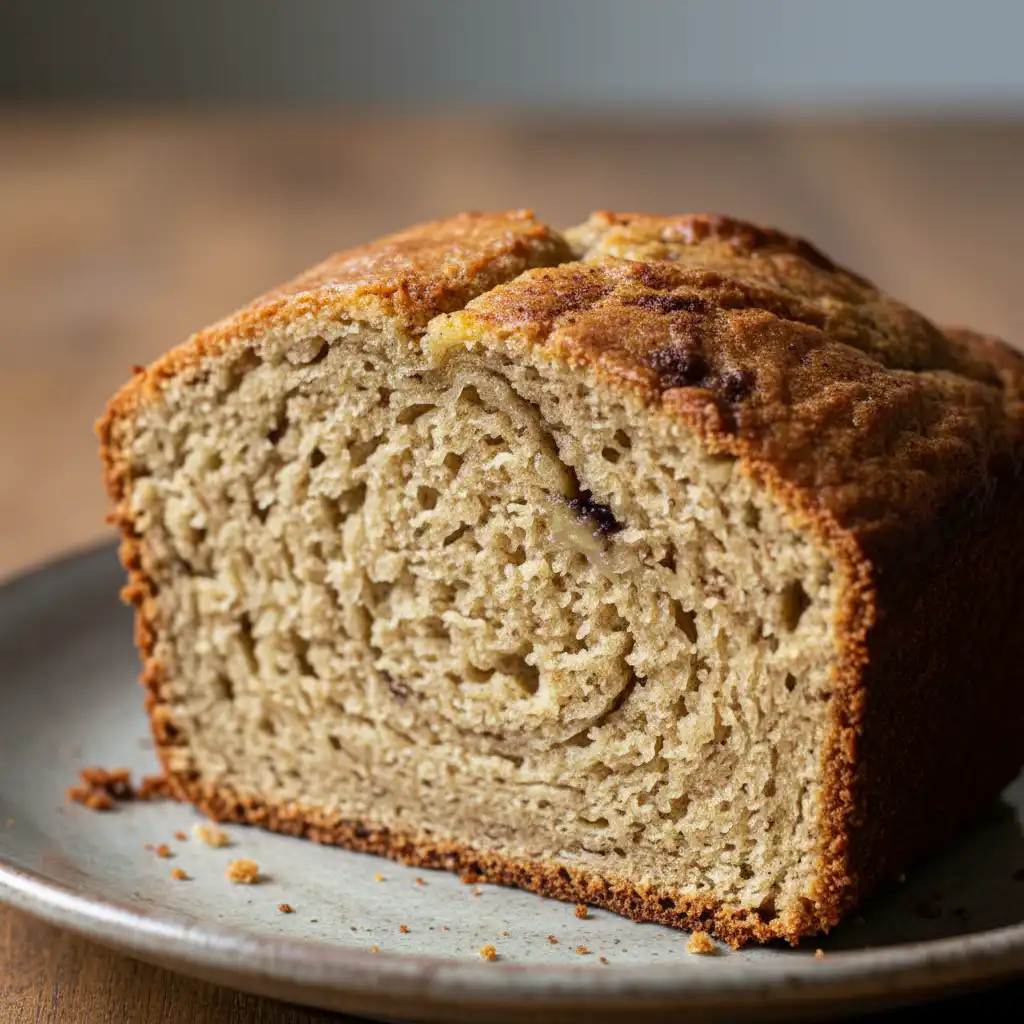
Almond Flour Banana Bread with Browned Butter
Ingredients
Equipment
Method
- Preheat your oven to 350°F (175°C). Line a 9×5 inch metal loaf pan with parchment paper, leaving an overhang on the sides for easy removal. Lightly spray the pan with cooking spray.
- In a large mixing bowl, mash the ripe bananas until mostly smooth. Add the eggs, maple syrup, oil or browned butter, and vanilla extract. Sprinkle in the cinnamon, baking soda, baking powder, and salt. Whisk everything together until the mixture is well-combined and creamy.
- Add the almond flour to the wet mixture. Use a spatula to gently fold until just combined. Avoid overmixing; the batter should be thick but pourable.
- Pour the batter into the prepared loaf pan and smooth the top. Bake for 50 minutes, or until a toothpick inserted into the center comes out clean. If the top browns too quickly, loosely tent it with aluminum foil for the last 15 minutes.
- Remove the pan from the oven and let it cool on a wire rack for 10 minutes. Then, use the parchment paper overhangs to lift the loaf out of the pan. Allow it to cool completely on the rack before slicing. This step is crucial for the bread to set properly.