Introduction
There is nothing quite like waking up to a stack of perfectly golden, impossibly fluffy pancakes. But what if those pancakes could also be a high-protein breakfast, keeping you satisfied all morning long? That is exactly what I set out to create with my ultimate fluffy greek yogurt pancakes recipe. Forget dry or dense; these are light, airy, and truly satisfying. I am going to share my secret technique for achieving that ethereal soufflé-like texture, along with all my chef tips for flawless results every time. Get ready to elevate your breakfast game!
Table of Contents
Table of Contents
Why You’ll Love This Recipe
The reason you will absolutely adore these pancakes comes down to one simple, game-changing twist. I separate the eggs, whip the egg whites to soft peaks, and then gently fold them into the batter as the very last step before cooking. This aeration technique is pure magic.
Unrivaled Fluffiness and Texture: Whipping egg whites creates countless tiny air pockets, much like a meringue. When these are folded into the batter, they expand beautifully as the pancakes cook. This results in an incredibly light, airy, and soufflé-like pancake texture that simply cannot be achieved with chemical leavening agents alone. It is a secret to truly fluffy pancakes.
High-Protein and Satisfying: The addition of Greek yogurt brings a wonderful tang, moisture, and a significant boost of protein. Combined with the added protein from the egg whites, these are truly protein pancakes. They will keep you full and energized, making them a fantastic high-protein breakfast.
Easy and Quick: Despite the unique egg white twist, this recipe is straightforward and easy to follow. It is perfect for a special brunch but also quick enough for a satisfying weekday breakfast.
Versatile: These homemade pancakes are a fantastic base. They are easy to customize with your favorite flavors or to adapt for different dietary needs.
Ingredients Needed
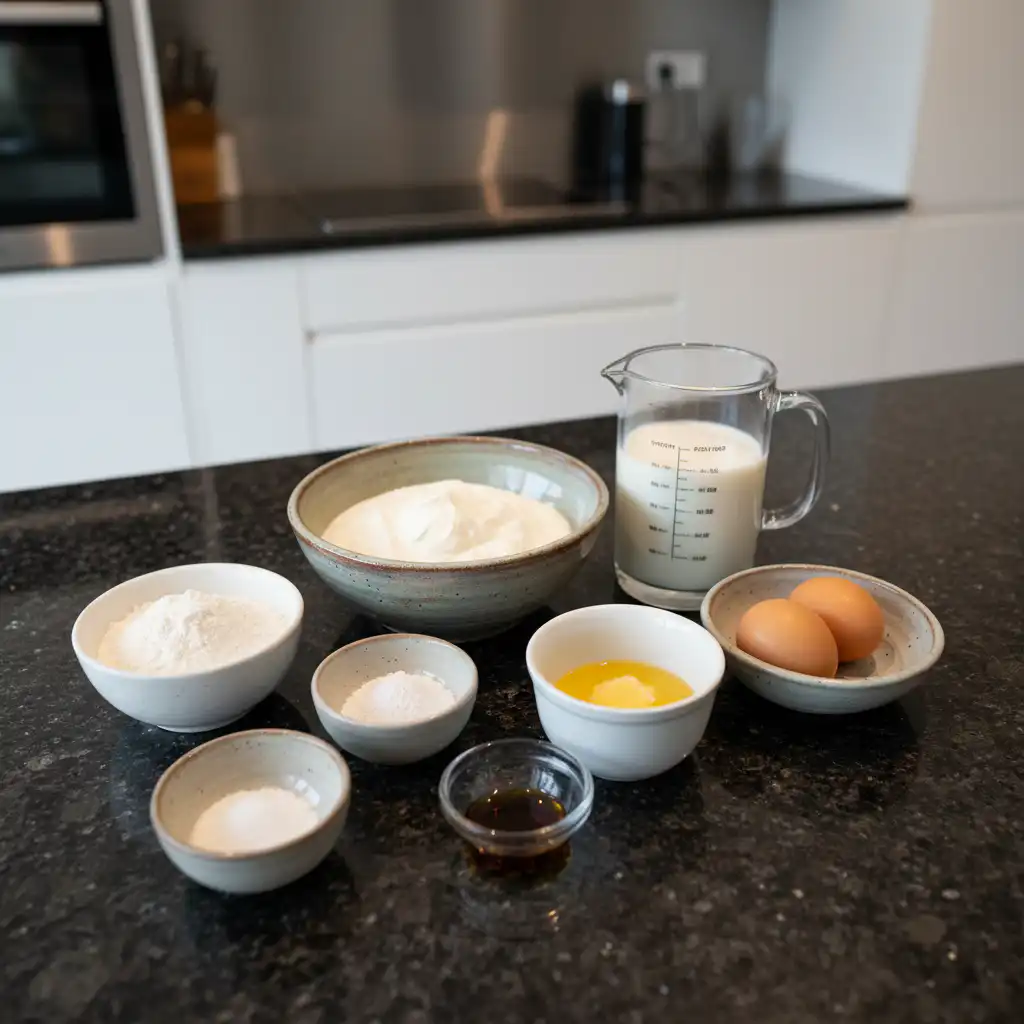
Here is what you will need from your pantry and fridge to make these delicious Greek yogurt pancakes:
1 cup flour
1 ¼ teaspoons baking powder
¼ teaspoon baking soda
¼ teaspoon salt
1 cup Greek yogurt, any flavor
¼ cup milk or water
2 eggs
½ teaspoon vanilla
2 tablespoons butter, melted
Ingredient Notes & Substitutions
I find that paying attention to your ingredients makes all the difference in creating the best pancakes.
Greek Yogurt: This is key for moisture, a pleasant tang, and the protein content in these protein pancakes. Full-fat Greek yogurt adds a richer taste, while low-fat versions make for a lighter pancake. Thicker yogurts, like Skyr, might require a tablespoon or two of extra milk or water to achieve the perfect batter consistency. The acid from the yogurt also helps activate the baking soda.
Flour: I always use all-purpose flour for a reliable texture. If you need a gluten-free option, a good quality gluten-free flour blend can work, though the texture might be slightly different. Almond flour or coconut flour can also be used, but they absorb liquid differently and will require adjustments to the overall liquid in the recipe. Whole wheat flour is another option for added fiber.
Leavening Agents (Baking Powder & Baking Soda): These are crucial for the initial lift of our pancakes. I always recommend using fresh, active baking powder that is aluminum-free to avoid any metallic taste and ensure maximum fluffiness. Old leavening agents will result in flat pancakes.
Milk or Water: This helps to adjust the batter consistency. For an extra layer of tang and tenderness, you could substitute buttermilk, just like you would in classic buttermilk pancakes.
Eggs: Eggs provide binding and richness to the batter, and their separation is critical for our unique twist. Bringing your eggs to room temperature helps create a smoother, more emulsified batter.
Vanilla Extract: A good quality vanilla extract enhances the overall flavor. If you use a vanilla-flavored Greek yogurt, you might want to adjust the amount of added vanilla.
Dairy-Free/Egg-Free: For dairy-free pancakes, you can swap the milk for a plant-based milk alternative, which is perfect if you need to know how to make pancakes without milk. For egg-free options, you can use egg substitutes, but be aware that the unique egg white twist for fluffiness cannot be replicated without real egg whites, and the texture will be different.
How to Make Fluffy Greek Yogurt Pancakes
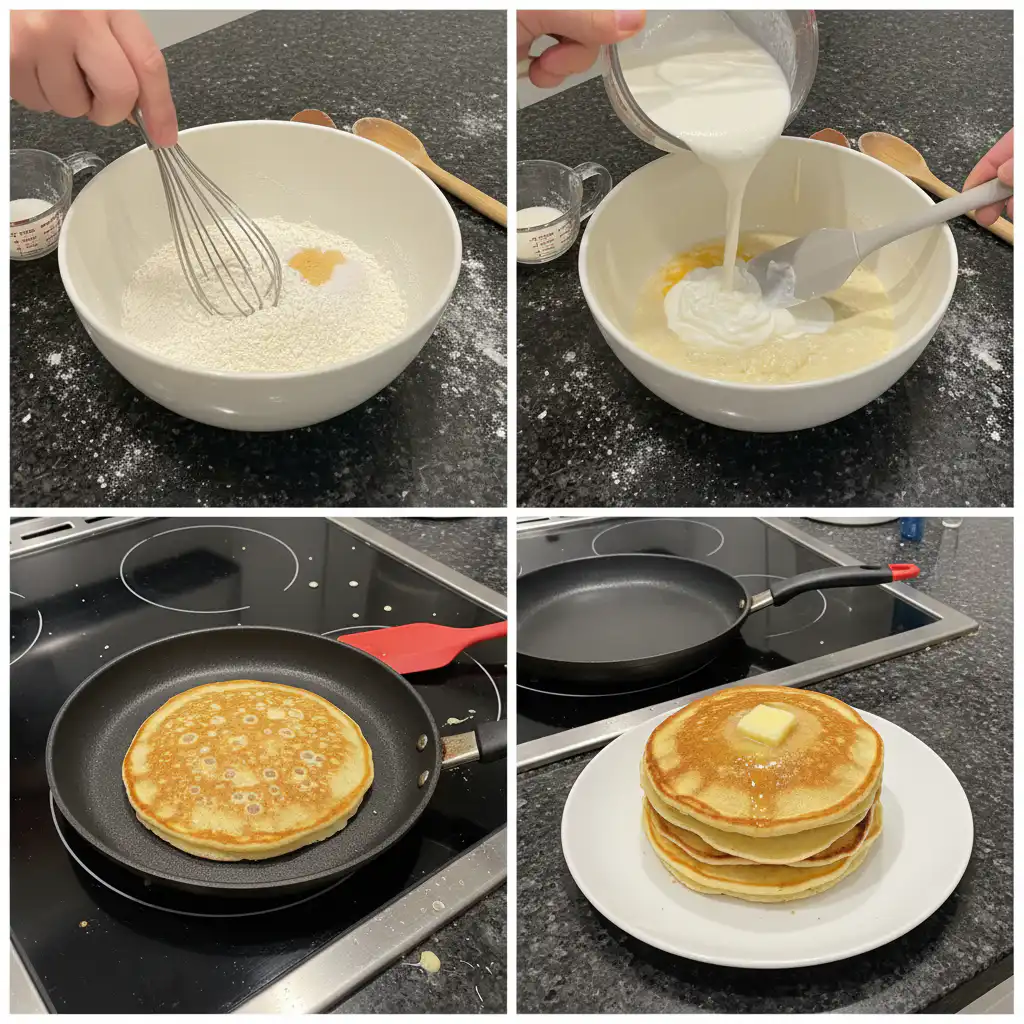
Making these fluffy greek yogurt pancakes is a truly rewarding experience, especially with our unique egg white twist. Here is how I do it in my kitchen:
Step 1: Prepare Dry Ingredients
In a large bowl, combine the flour, baking powder, baking soda, and salt. I like to whisk these dry ingredients thoroughly for about 30 seconds to ensure that the leavening agents and salt are evenly distributed throughout the flour. Accurate measurements here are key to consistent results.
Step 2: Prepare Wet Ingredients (Separating Eggs)
In a separate medium bowl, you will prepare your wet ingredients. First, carefully separate your two eggs, placing the yolks into this bowl and reserving the egg whites in a completely separate, clean, and dry bowl for later. To the egg yolks, add the Greek yogurt, milk or water, vanilla, and melted butter. Whisk until all these wet ingredients are well combined and smooth.
Step 3: Combine Wet and Dry Batters
Pour the wet mixture into the bowl with your prepared dry ingredients. With a whisk, combine them until there is no visible flour left. I cannot stress this enough: mix gently and briefly. Overmixing the batter will develop the gluten, leading to rubbery, tough pancakes. A few small lumps are perfectly fine and even desirable; they signify that you have not overmixed. The batter should be thick but pourable.
Step 4: Whip Egg Whites (The Unique Twist!)
Now for the secret to truly fluffy pancakes. In the separate, clean, dry bowl with your reserved egg whites, use an electric mixer or a hand whisk. Beat the egg whites until soft peaks form. This means the whites will hold their shape when you lift the whisk, but the very tips will gently curl over. This aeration is what will give your pancakes their incredible lift.
Step 5: Gently Fold in Egg Whites
This is a crucial step. Gently fold the whipped egg whites into your pancake batter. Do this in two additions, using a spatula and an underhand folding motion to carefully incorporate the air without deflating the batter. You want to preserve as much of that lovely air as possible. Do not overmix; a few streaks of white in the batter are perfectly acceptable and actually ideal. This delicate folding is what gives these pancakes their truly light and airy, soufflé-like texture.
Step 6: Heat Griddle & Cook Pancakes
Heat a large non-stick pan or griddle over medium heat, ideally between 350–375°F.
You will know it is ready when a drop of water sizzles and evaporates within a few seconds. If it disappears instantly or just sits there, the temperature needs adjusting.
Lightly grease the pan with butter, oil, or cooking spray. Then pour about ¼ cup of batter per pancake onto the hot surface.
If the batter is thick, gently spread it slightly with the back of a spoon or scoop.
Cook for about 2 minutes, until the edges look set and small bubbles form and pop on the surface. The underside should be golden brown.
Flip the pancakes carefully and cook for another 1–2 minutes until fully cooked and golden.
For the best texture, flip only once to keep the pancakes fluffy and evenly browned.
Step 7: Repeat & Serve
Do not press the pancakes down with your spatula while they are cooking; this will deflate them and make them dense. Repeat the cooking process with the rest of the pancake batter, greasing the griddle lightly between batches if needed. To keep cooked pancakes warm while you finish the rest, place them on a wire rack set over a baking sheet in a low oven (around 200°F). Serve your fluffy Greek yogurt pancakes immediately, topped with butter, maple syrup, or any of your favorite pancake toppings.
Mastering Batter Consistency & Griddle Temperature
Achieving the perfect pancake involves more than just great ingredients and technique; it also hinges on the right batter consistency and optimal griddle temperature.
Achieving the Perfect Batter Consistency
The ideal batter consistency for these Greek yogurt pancakes should be thick but still pourable, similar to a slow-moving river rather than a thin liquid.
It is completely normal to see a few small lumps in the batter. In fact, this is a good sign that you have not overmixed, which helps keep the pancakes light and fluffy.
If your batter feels too thick, especially when using a dense yogurt like Skyr, add 1–2 tablespoons of milk or water gradually. Mix gently until you reach the right consistency.
If the batter seems too thin, let it rest for 5–10 minutes so the flour can absorb more liquid. You can also stir in an extra tablespoon of flour if needed.
Keep in mind that the texture may vary slightly depending on the type of Greek yogurt and flour you use.
Optimal Griddle Temperature for Golden Pancakes
Proper griddle temperature is crucial for those beautiful, golden-brown pancakes with cooked centers. I find the sweet spot is typically between 350-375°F. If you do not have a griddle thermometer, here are some visual cues: a pat of butter should sizzle gently and melt without immediately browning, or a few drops of water should dance and evaporate slowly, rather than instantly disappearing or just sitting there. Too hot, and your pancakes will burn on the outside while remaining raw in the middle. Too cool, and they will dry out, become tough, and brown unevenly, preventing the desirable Maillard reaction. I often recommend cooking a small test pancake first to adjust the heat level before committing your full batch.
Pro Tips & Troubleshooting
Even experienced chefs can benefit from a few expert tips and knowing how to troubleshoot common issues when making homemade pancakes.
Pro Tips for the Best Greek Yogurt Pancakes
Make Ahead Batter: While the egg whites are best folded in fresh, you can prepare the base batter (dry ingredients combined with the wet ingredients minus the whipped egg whites) the night before. Store it in an airtight container in the refrigerator. Just be sure to let it come to room temperature for 10-15 minutes before cooking, and then fold in freshly whipped egg whites right before hitting the griddle for optimal results.
Fresh Leavening: Always use fresh, active baking powder. I make a habit of replacing mine every 6-9 months, or if it has been opened for a long time. Old leavening agents are a common culprit for flat pancakes.
Flavor Boosters: Elevate your Greek yogurt pancakes with extra flavor. Try using vanilla Greek yogurt, adding a little extra vanilla extract, a pinch of cinnamon, or a drizzle of honey directly into the batter.
Adjust for Thicker Yogurts: If you are using a very thick Greek yogurt, like some artisanal brands or Skyr, you might need to add an extra tablespoon or two of milk or water to achieve the desired batter consistency.
Room Temperature Ingredients: I find that bringing eggs and Greek yogurt to room temperature helps them emulsify more easily into the batter, leading to a smoother, more uniform consistency.
Ice-Cold Water: For an experimental twist, some chefs suggest using ice-cold water (instead of room temperature) in the batter. The idea is that the sudden thermal shock on the hot griddle could lead to an even fluffier texture.
Common Mistakes to Avoid for Perfect Pancakes
Overmixing the Batter: This is perhaps the most common mistake. Overmixing develops the gluten in the flour, resulting in tough, rubbery pancakes rather than light, fluffy ones. Mix only until no visible flour remains; lumps are fine.
Pressing Down with Spatula: Resist the urge to press down on your pancakes with the spatula as they cook. This deflates them and compresses the precious air we worked so hard to incorporate, leading to dense pancakes.
Flipping Multiple Times: For even cooking and a beautiful golden-brown crust, try to flip your pancakes only once. Wait until you see bubbles pop across the surface and the edges look set before making that single flip.
Inactive Leavening Agents: If your baking powder or baking soda is old, it will not create the necessary carbon dioxide bubbles for lift, leading to flat, dense pancakes. Check their freshness!
Incorrect Griddle Temperature: As discussed, a griddle that is too hot will burn the outside while leaving the inside raw. A griddle that is too cool will result in dry, unevenly cooked pancakes that lack that beautiful golden hue from the Maillard reaction.
Ignoring Batter Consistency: A batter that is too thick will yield dense, heavy pancakes, while a batter that is too thin will spread too much and be difficult to flip. Always aim for that thick but pourable consistency and adjust as needed.
Serving & Storage
Once your glorious stack of greek yogurt pancakes is ready, it is time to enjoy them! But also, let us talk about how to keep them fresh or plan ahead.
Creative Serving Ideas
Classic Sweet Toppings: You can never go wrong with a generous drizzle of real maple syrup. For a homemade touch, try a fresh strawberry, blueberry, or cinnamon syrup. A light dusting of powdered sugar also adds simple elegance.
Fresh & Fruity: My personal favorite is a heap of fresh berries, like blueberries or raspberries, or slices of ripe banana. Any seasonal fruit makes a wonderful topping.
Crunchy Additions: For extra texture, garnish your pancakes with toasted nuts such as pecans or walnuts, some crunchy pepitas, or a sprinkle of your favorite granola.
Savory Surprises: Do not shy away from savory options for brunch! Try pairing your fluffy pancakes with crispy bacon or sausage, a fried egg, sliced avocado, or even a sprinkle of fresh chives. It is a delicious and unexpected twist.
Pairings: These pancakes are fantastic alongside a side of crispy bacon or sausage, or simply with a refreshing glass of milk or orange juice.
Storage and Make-Ahead Tips
Storing Uncooked Batter: If you want to get a head start, the base batter (all ingredients combined except the whipped egg whites) can be stored in an airtight container in the refrigerator for up to 2-3 days. When you are ready to cook, let the batter come to room temperature for about 15 minutes, then gently fold in freshly whipped egg whites just before heading to the griddle for the best possible fluffiness.
Storing Cooked Pancakes: Once your pancakes are cooked and completely cooled, store them in an airtight container in the refrigerator for 3-4 days. This is a fantastic option for your meal prep breakfasts!
Freezing Cooked Pancakes: For longer storage, Greek yogurt pancakes freeze beautifully. Lay your completely cooled pancakes in a single layer on a baking sheet and freeze them until solid. Once frozen, transfer them to a freezer-safe bag or container, separating layers with parchment paper to prevent sticking. Label the bag with the date. They can be frozen for up to 2-3 months.
Reheating Frozen Pancakes: You have a few great options for reheating. You can pop them in a toaster or toaster oven until warmed through, use a microwave on a low setting for 30-60 seconds (covering them lightly to prevent drying out), or reheat them gently in an oven wrapped in foil at 350°F (175°C) for about 10 minutes. A griddle can also warm them up nicely.
Conclusion
There you have it: the secret to truly ultimate, incredibly fluffy greek yogurt pancakes. The unique egg white twist is a game-changer, transforming ordinary pancakes into a light, airy, soufflé-like delight. With the added protein from the Greek yogurt, these are not just a treat but a satisfying and nourishing option to add to your rotation of healthy breakfast recipes. I have shared all my expert tips and troubleshooting advice to ensure your success, even if you are a beginner. So go ahead, give this recipe a try in your kitchen. Experiment with your favorite toppings and enjoy the incredible results. I would love to hear how they turn out for you!
FAQ
Q: What does Greek yogurt do in pancakes, and how does it affect texture and nutrition?
A: Greek yogurt plays several important roles in pancakes. It adds significant moisture, which contributes to a tender texture. It also imparts a pleasant tang that balances the sweetness. Nutritionally, Greek yogurt boosts the protein content, making the pancakes more satisfying, and provides calcium. The acidity in the yogurt also reacts with baking soda, aiding in the leavening process for a lighter crumb.
Q: How much Greek yogurt should I use to replace milk in a standard pancake recipe?
A: Greek yogurt is much thicker than milk, so it is not a direct 1:1 replacement. Our recipe uses 1 cup of Greek yogurt along with ¼ cup of milk or water. This ratio creates a good balance of tang, moisture, and consistency. When adapting other recipes, you will need to adjust the liquid amount based on the desired batter consistency and the thickness of your specific Greek yogurt.
Q: What are common troubleshooting tips for making fluffy Greek yogurt pancakes?
A: For truly fluffy Greek yogurt pancakes, avoid overmixing the batter, as this develops gluten and leads to a rubbery texture. Ensure your baking powder and baking soda are fresh and active for maximum lift. Never press down on the pancakes with a spatula during cooking, as this will deflate them. Most importantly, incorporate the unique egg white folding technique explained in the instructions for unparalleled fluffiness. Refer to my “Pro Tips & Troubleshooting” section for more detailed advice.
Q: Can Greek yogurt pancakes be frozen, and what are the best methods for reheating?
A: Yes, Greek yogurt pancakes can be frozen for up to 2-3 months. After cooking, let them cool completely, then freeze them in a single layer on a baking sheet before transferring to a freezer-safe bag with parchment paper between layers. To reheat, you can use a toaster, microwave (on low power, covered, to prevent drying), oven (wrapped in foil at 350°F), or a griddle until warmed through.
Q: How can I customize Greek yogurt pancakes for different dietary needs or flavor preferences?
A: These pancakes are wonderfully versatile. For dietary needs, you can use gluten-free flour blends (adjusting liquid as needed), or dairy-free milk alternatives. For flavor, experiment with mix-ins like fresh fruit (blueberries, sliced bananas), chocolate chips, nuts (walnuts, pecans), or spices like cinnamon. You can also add a scoop of protein powder for an extra boost or use different flavored Greek yogurts. See my “Ingredient Notes & Substitutions” and “Creative Serving Ideas” sections for more inspiration.
Q: What is the ideal consistency for Greek yogurt pancake batter, and how do I adjust it?
A: The ideal consistency for your Greek yogurt pancake batter is thick but still pourable, resembling a slow-moving river. It should have some small lumps, which is a sign you have not overmixed. If the batter is too thick (often with very thick yogurts), add milk or water gradually, 1-2 tablespoons at a time, until it is just right. If it is too thin, you can let it rest for 5-10 minutes for the flour to absorb more liquid, or gently stir in a tablespoon of extra flour.
Q: What is the ideal griddle temperature for Greek yogurt pancakes?
A: For perfectly golden and evenly cooked Greek yogurt pancakes, the ideal griddle temperature is between 350-375°F. If your griddle is too cool, the pancakes will be dry and brown poorly. If it is too hot, they will burn on the outside before cooking through in the middle. Test the heat with a drop of water or a small pat of butter to ensure it sizzles gently and evaporates slowly.
Q: Why didn’t my pancakes fluff up?
A: Several factors can cause pancakes to fall flat. Common culprits include using old or inactive baking powder or baking soda, overmixing the batter (which develops gluten and makes them tough), or pressing the pancakes down with a spatula while they cook. For this recipe, it is also crucial to properly whip the egg whites to soft peaks and gently fold them into the batter without deflating them.
Q: Can I make the pancake batter ahead of time?
A: Yes, you can prepare the base pancake batter (all wet and dry ingredients combined, but excluding the whipped egg whites) a day or two in advance. Store it in an airtight container in the refrigerator. When you are ready to cook, let the batter come to room temperature for about 15 minutes, then whip the egg whites separately and gently fold them in just before cooking for the best, fluffiest results.
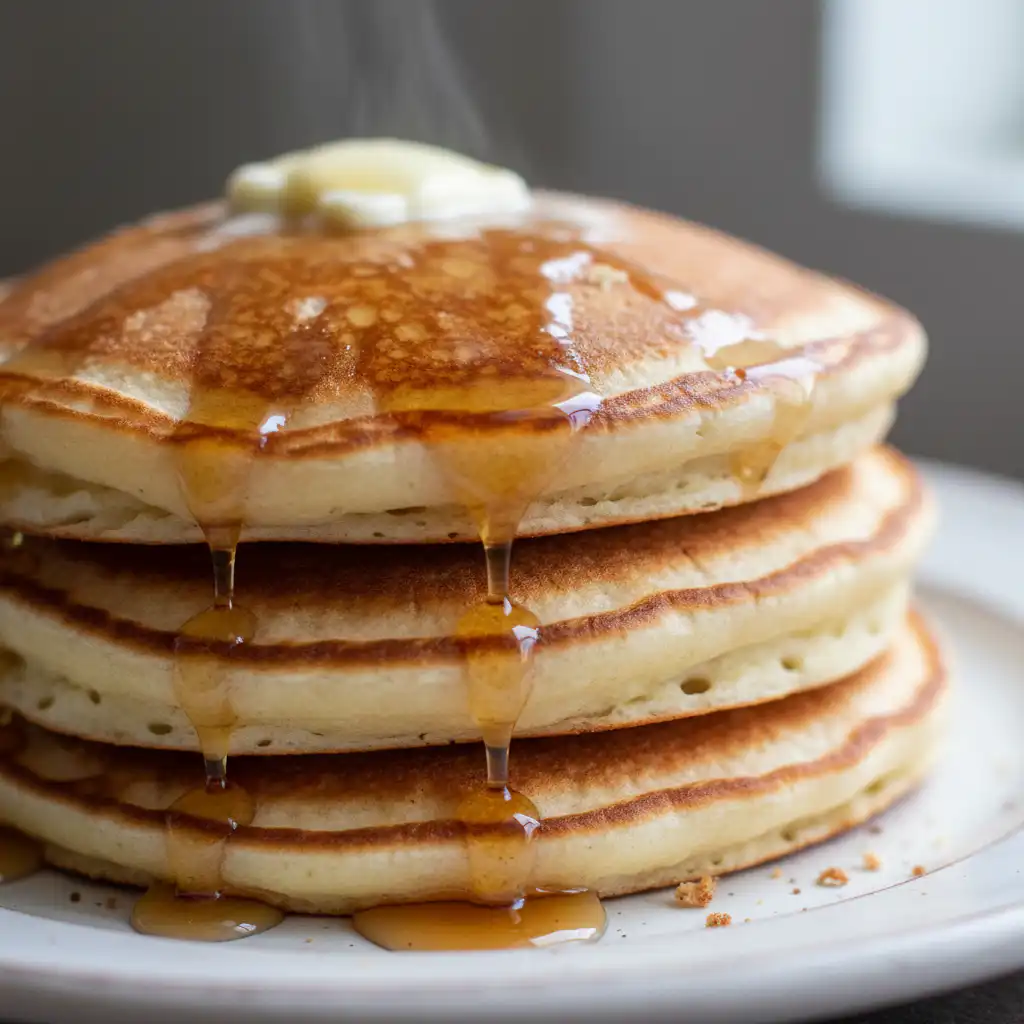
Ultimate Fluffy Greek Yogurt Pancakes
Ingredients
Equipment
Method
- In a large bowl, combine the flour, baking powder, baking soda, and salt. Whisk these dry ingredients thoroughly for about 30 seconds to ensure that the leavening agents and salt are evenly distributed throughout the flour.
- In a separate medium bowl, carefully separate your two eggs, placing the yolks into this bowl and reserving the egg whites in a completely separate, clean, and dry bowl for later. To the egg yolks, add the Greek yogurt, milk or water, vanilla, and melted butter. Whisk until all these wet ingredients are well combined and smooth.
- Pour the wet mixture into the bowl with your prepared dry ingredients. With a whisk, combine them until there is no visible flour left. Mix gently and briefly; a few small lumps are perfectly fine. The batter should be thick but pourable.
- In the separate, clean, dry bowl with your reserved egg whites, use an electric mixer or a hand whisk. Beat the egg whites until soft peaks form. This means the whites will hold their shape when you lift the whisk, but the very tips will gently curl over.
- Gently fold the whipped egg whites into your pancake batter. Do this in two additions, using a spatula and an underhand folding motion to carefully incorporate the air without deflating the batter. Do not overmix; a few streaks of white in the batter are perfectly acceptable.
- Heat a large non-stick pan or griddle over medium heat (aiming for 350-375°F). You will know it is ready when a drop of water sizzles and evaporates in a few seconds. Once hot, lightly grease it. Immediately, pour about ¼ cup of batter per pancake onto the hot surface. Cook the pancakes for about 2 minutes, until the edges begin to look defined and small bubbles form and pop across the surface. Flip the pancakes over carefully and cook for another minute to two on the other side, until golden brown and cooked through. Remember, only flip once.
- Do not press the pancakes down with your spatula while they are cooking. Repeat the cooking process with the rest of the pancake batter, greasing the griddle lightly between batches if needed. To keep cooked pancakes warm while you finish the rest, place them on a wire rack set over a baking sheet in a low oven (around 200°F). Serve your fluffy Greek yogurt pancakes immediately, topped with butter, maple syrup, or any of your favorite pancake toppings.