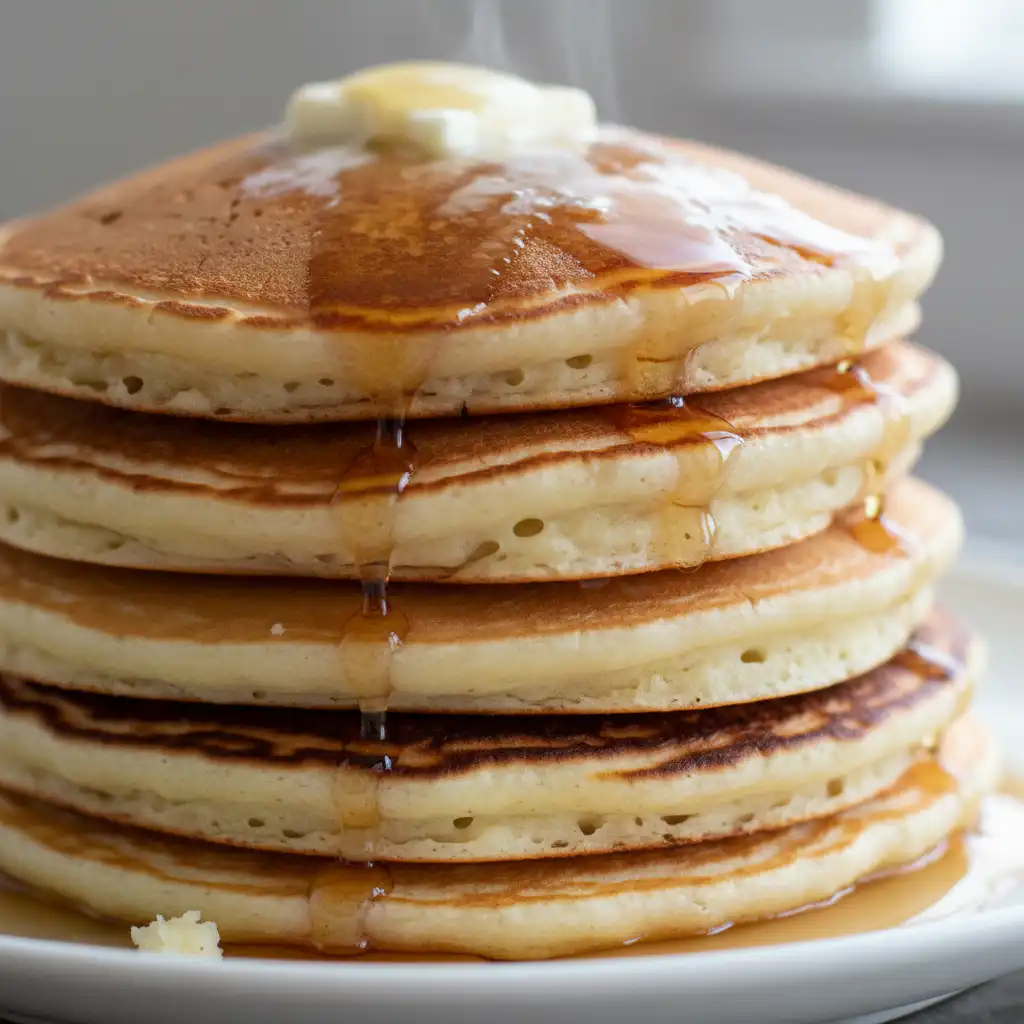
There is nothing quite like a stack of perfect homemade buttermilk pancakes. I’m talking about those thick, impossibly soft, and fluffy pancakes that are perfectly golden brown with a tender, melt-in-your-mouth texture. This recipe is your new go-to guide for achieving that breakfast perfection every single time. We will not only walk through a foolproof method for making the best buttermilk pancakes but also reveal a unique trick for an even more tender result. You will learn to avoid common pitfalls and discover delicious new ways to serve this classic breakfast food.
Table of Contents
Table of Contents
Why You’ll Love This Recipe
This recipe has a special trick that elevates it above the rest: the simple addition of cornstarch.
Unrivaled Fluffiness and Tenderness
My secret is adding one to two tablespoons of cornstarch to the dry ingredients. This simple step works wonders by inhibiting gluten development. The result is a consistently lighter, airier, and more tender texture that you just cannot get with flour alone. Your pancakes will be unbelievably soft.
Foolproof and Forgiving
I designed this recipe to minimize the most common pancake mistakes. The method is straightforward and the ingredients are balanced to give you a little wiggle room, making it perfect for both beginners and experienced home cooks looking to perfect their technique.
Classic Comfort, Elevated
You still get all the nostalgic flavor of a classic American breakfast, but with a noticeably superior texture. The subtle tang from the buttermilk is perfectly balanced, creating a stack of buttermilk pancakes that will become a new family favorite.
Ingredients Needed
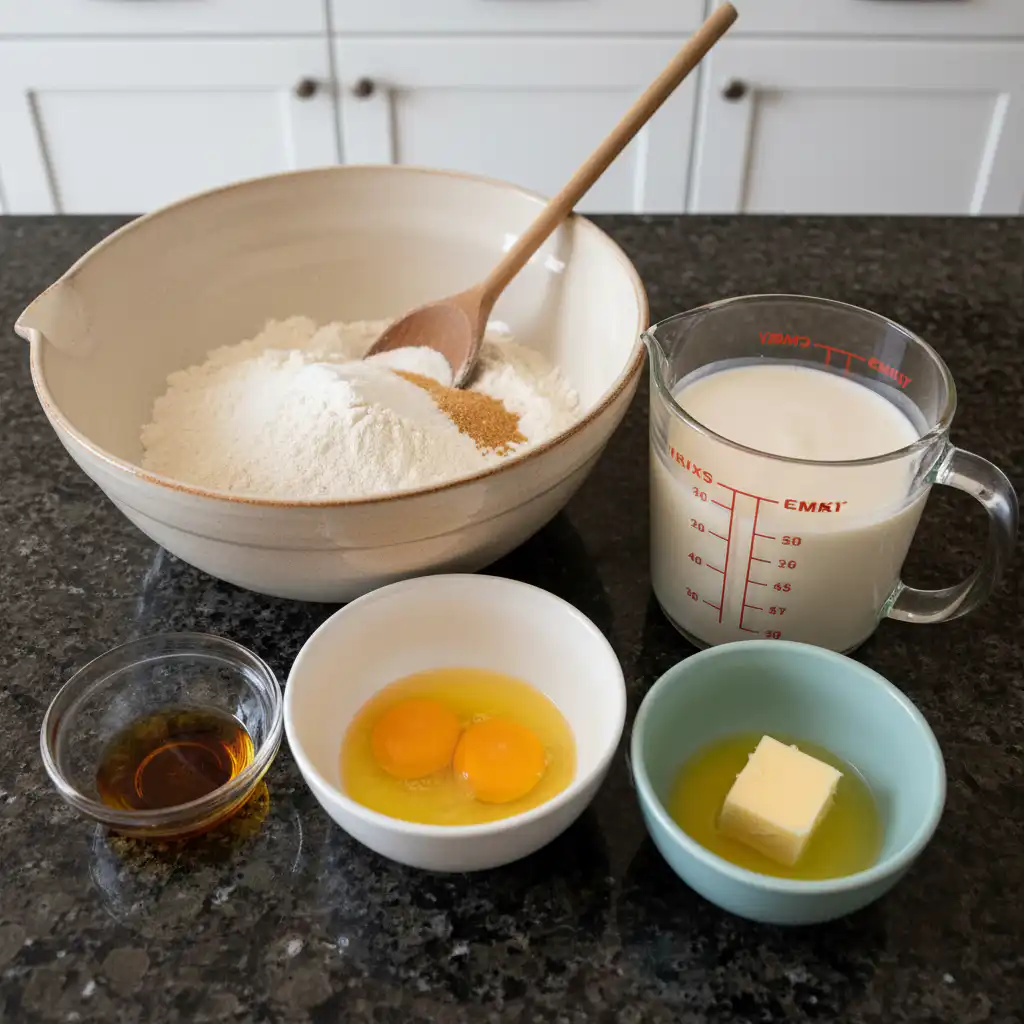
2 cups all-purpose flour
3 tablespoons sugar
2 teaspoons baking powder
½ teaspoon baking soda
½ teaspoon salt
2 ¼ cups buttermilk
2 large eggs (lightly beaten, room temperature preferred)
1 teaspoon vanilla extract
4 Tablespoons unsalted butter (melted and cooled)
Ingredient Notes and Substitutions
Buttermilk: If you do not have buttermilk, you can easily make a substitute. For every cup of milk, add one tablespoon of white vinegar or lemon juice. Let it sit for 5 to 10 minutes to curdle slightly. While you can use regular milk in a pinch (or check out our guide on how to make pancakes without milk completely), real or substituted buttermilk provides the necessary acid to react with the baking soda for the fluffiest pancakes and best flavor.
Flour: All-purpose flour is my standard, but you can experiment. For a heartier pancake, you can substitute up to half of the all-purpose flour with whole wheat flour, though you may need a splash more buttermilk. For a gluten-free version, a good quality 1-to-1 gluten-free flour blend should work well.
Eggs and Butter: Using room temperature eggs helps them combine more evenly into the batter, creating a better emulsion and a more consistent rise. It is also important that your melted butter has cooled slightly. Adding hot butter can scramble the eggs and create a lumpy, greasy batter.
The Secret Ingredient: Do not forget to add one or two tablespoons of cornstarch or arrowroot powder to your dry ingredients. This is key to achieving an exceptionally tender texture by reducing gluten development.
How to Make Fluffy Buttermilk Pancakes
This process is simple and rewarding. Follow these steps for perfect pancakes every time.
Prepare the Batter
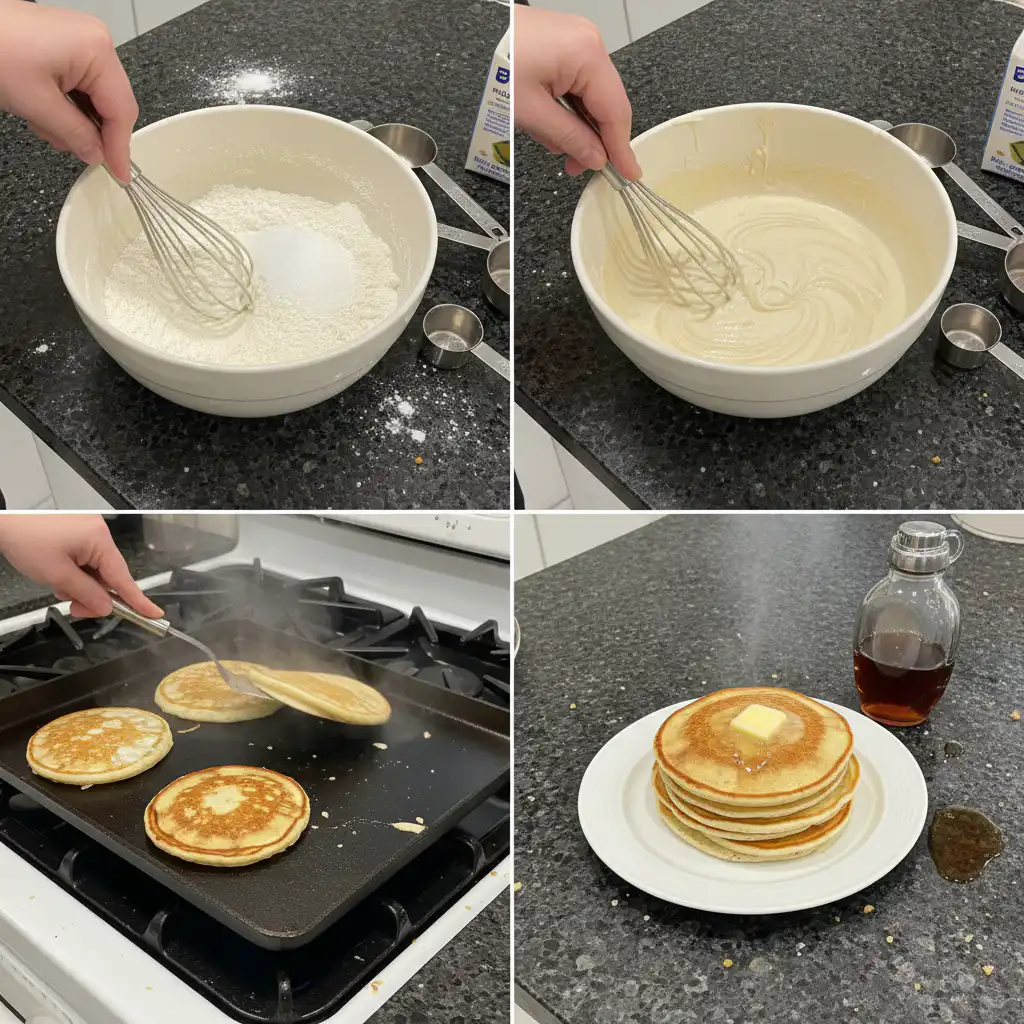
In a large mixing bowl, whisk together the all-purpose flour, sugar, baking powder, baking soda, salt, and your secret ingredient, cornstarch. Combining the dry ingredients first ensures the leaveners are evenly distributed for a consistent rise.
In a separate medium bowl, whisk the buttermilk, lightly beaten large eggs, and vanilla extract until just combined.
Now, take your cooled melted butter and slowly drizzle it into the wet ingredients while whisking continuously. The mixture might look a little curdled if your buttermilk is cold, and that is perfectly fine. Just whisk until it comes together.
Pour the wet ingredients into the bowl with the dry ingredients. Use a wooden spoon or spatula to stir until they are just combined. A few lumps and streaks of flour are not just okay, they are desirable. Do not overmix the batter, as this develops gluten and will result in tough, flat pancakes.
Cook the Pancakes
Place a non-stick skillet or a griddle over medium-low heat. Lightly grease the surface with cooking spray or a small amount of oil. Let the pan preheat for about five minutes. A properly heated surface is crucial for a golden-brown crust.
While the pan heats up, let your batter rest. This allows the gluten to relax and the leaveners to begin working their magic.
Once the pan is hot, scoop about one-half to two-thirds of a cup of batter onto the griddle for each pancake. You will hear a gentle sizzle as the batter hits the surface.
Cook for a few minutes on the first side. You will know it is time to flip when the edges start to look set and bubbles form and begin to pop across the surface of the pancake. This is the moment for perfect timing.
Using a thin pancake spatula, carefully flip the pancake and cook for another minute or two on the other side, until it is a beautiful golden brown and cooked through.
Transfer the cooked pancake to a plate and repeat the process with the remaining batter. I recommend lightly greasing the pan between each batch to prevent sticking and ensure even cooking.
Serve your fluffy buttermilk pancakes warm with your favorite toppings.
Mastering Your Griddle and Ingredient Science
A few key details about heat and ingredients can elevate your pancakes from good to great.
Optimal Griddle Temperature
The secret to that perfect golden brown color lies in the Maillard reaction, which happens at the right cooking heat. For an electric griddle, aim for a temperature between 350 and 375 degrees Fahrenheit. If you are using a non-stick skillet on the stove, medium-low heat is best. You can test if it is ready by flicking a drop of water onto the surface. If it sizzles and evaporates quickly, you are ready to cook. Too high, and the outside will burn before the inside cooks. Too low, and the pancakes will be pale and tough.
The Science of Room Temperature Ingredients
Using room temperature ingredients like large eggs and buttermilk is about more than just easier mixing. Cold ingredients can cause the melted butter to seize up and solidify, creating an uneven batter. More importantly, a room temperature batter cooks more evenly and allows the leaveners, like baking powder and baking soda, to activate more efficiently. This leads to a better, more consistent rise and contributes to those perfectly fluffy pancakes.
Pro Tips and Troubleshooting
Here are some of my most trusted tips from years of making pancakes in my kitchen.
Pro Tips for Perfect Pancakes
Rest the Batter: Letting the batter rest for 5-10 minutes while the griddle preheats allows the flour to hydrate and the leaveners to start working, which means a fluffier pancake.
Cool Your Melted Butter: Always let the melted butter cool for a few minutes before adding it to your wet ingredients. This prevents it from cooking the eggs on contact.
Do Not Overmix: This is the golden rule of pancake making. A lumpy batter is a good batter. Overmixing develops gluten, which is the number one cause of rubbery, dense pancakes.
Proper Pan Prep: A light coating of oil or cooking spray on a preheated griddle is all you need. Wipe the pan lightly between batches for the most even browning.
Know When to Flip: Look for bubbles that pop and stay open and edges that look dry and set. This is the visual cue that the pancake is ready to be turned.
Batch Cooking for a Crowd: To keep pancakes warm while you cook the whole batch, place a wire rack on a baking sheet in a preheated oven at 200 degrees Fahrenheit. Place cooked pancakes on the rack in a single layer to keep them warm and crisp.
Common Mistakes to Avoid
Overmixing the Batter: Stirring until the batter is perfectly smooth is a mistake. This develops too much gluten, resulting in flat and tough pancakes instead of a tender texture.
Cooking on High Heat: A common error is using a cooking heat that is too high. This leads to pancakes that are burnt on the outside but raw and doughy in the middle. Stick to medium-low heat for even cooking.
Not Preheating the Pan: Pouring batter onto a cold pan will cause it to spread too thin and soak up the oil, leading to greasy, unevenly cooked pancakes.
Ignoring Room Temperature Ingredients: Using cold buttermilk and eggs straight from the fridge can result in a lumpy batter and inhibit the rise, making your pancakes less fluffy.
Sticking to the Pan: If your pancakes are sticking, it is usually due to the pan not being hot enough or not having a thin, even layer of oil.
Uneven Browning: This can be caused by hot spots in your pan or not wiping and re-greasing the pan between batches. Swirl the pan slightly to distribute the heat.
Serving and Storage
Once you have a perfect stack, the fun really begins.
Serving Ideas
The classic combination of unsalted butter and pure maple syrup is always a winner. You can also get creative with toppings like homemade whipped cream, fresh strawberry sauce—which is fantastic if you love strawberry pancakes—or a rich caramel sauce. For a truly decadent treat, try a drizzle of hot fudge sauce or even a scoop of ice cream for a breakfast pancake sundae. You can also fold mix-ins like fresh blueberries or chocolate chips directly into the batter just before cooking.
Storage and Make-Ahead
To store leftover pancakes, let them cool completely. Place them in an airtight container in the refrigerator for up to 3 days. For longer storage, you can freeze them. Arrange the cooled pancakes in a single layer on a baking sheet and flash-freeze for 30 minutes before transferring them to a freezer-safe bag. They will keep for up to 3 months.
The best way to reheat leftover pancakes is in a toaster or toaster oven until warmed through and slightly crisp. You can also warm them in the microwave for about 20-30 seconds, but they will be softer.
For a quick breakfast, you can prepare a make-ahead dry mix, or even bake the batter into pancake mini muffins for busy mornings. Simply combine all the dry ingredients, including the cornstarch, and store it in an airtight container at room temperature. When you are ready to cook, just add the wet ingredients.
I do not recommend storing the prepared wet batter for more than a day, as the leaveners will lose their potency, resulting in less fluffy pancakes.
Frequently Asked Questions
What if I don’t have buttermilk for pancakes?
You can make an easy substitute by adding one tablespoon of white vinegar or lemon juice to a measuring cup and then adding enough milk to equal one cup. Let it sit for about five minutes. The acid creates a similar reaction with the baking soda to help the pancakes rise.
Why are my buttermilk pancakes flat or not fluffy?
The most common cause is overmixing the batter, which develops gluten and makes pancakes tough. Other causes include using expired baking powder or baking soda, not letting the batter rest, or cooking on a heat that is too low.
Can I add mix-ins like blueberries or chocolate chips to buttermilk pancakes?
Absolutely. You can gently fold in up to one cup of mix-ins like blueberries or chocolate chips after the wet and dry ingredients are just combined. Be careful not to overmix.
How do I know when my buttermilk pancakes are ready to flip?
Look for bubbles to form across the surface of the pancake. When those bubbles start to pop and the edges look set and slightly dry, it is time to flip. The first side usually takes a bit longer to cook than the second.
Can this buttermilk pancake batter be used to make waffles?
Yes, this batter can be used in a waffle iron. Waffle batters are typically a bit thicker and have more fat, so for the best results, you might consider adding an extra tablespoon of melted butter to the batter.
What are the best toppings for buttermilk pancakes?
Classic maple syrup and butter are always delicious. Other great options include fresh fruit, whipped cream, strawberry sauce, caramel sauce, or even chocolate gravy. The possibilities are endless.
Fluffy Buttermilk Pancakes
Ingredients
Equipment
Method
- In a large mixing bowl, whisk together the all-purpose flour, sugar, baking powder, baking soda, salt, and your secret ingredient, cornstarch. Combining the dry ingredients first ensures the leaveners are evenly distributed for a consistent rise.
- In a separate medium bowl, whisk the buttermilk, lightly beaten large eggs, and vanilla extract until just combined.
- Now, take your cooled melted butter and slowly drizzle it into the wet ingredients while whisking continuously. The mixture might look a little curdled if your buttermilk is cold, and that is perfectly fine. Just whisk until it comes together.
- Pour the wet ingredients into the bowl with the dry ingredients. Use a wooden spoon or spatula to stir until they are just combined. A few lumps and streaks of flour are not just okay, they are desirable. Do not overmix the batter, as this develops gluten and will result in tough, flat pancakes.
- Place a non-stick skillet or a griddle over medium-low heat. Lightly grease the surface with cooking spray or a small amount of oil. Let the pan preheat for about five minutes. A properly heated surface is crucial for a golden-brown crust.
- While the pan heats up, let your batter rest. This allows the gluten to relax and the leaveners to begin working their magic (aim for 5-10 minutes of rest).
- Once the pan is hot, scoop about one-half to two-thirds of a cup of batter onto the griddle for each pancake. You will hear a gentle sizzle as the batter hits the surface.
- Cook for a few minutes on the first side. You will know it is time to flip when the edges start to look set and bubbles form and begin to pop across the surface of the pancake. This is the moment for perfect timing.
- Using a thin pancake spatula, carefully flip the pancake and cook for another minute or two on the other side, until it is a beautiful golden brown and cooked through.
- Transfer the cooked pancake to a plate and repeat the process with the remaining batter. I recommend lightly greasing the pan between each batch to prevent sticking and ensure even cooking.
- Serve your fluffy buttermilk pancakes warm with your favorite toppings.