Welcome to my kitchen, where we are about to bake the most incredible vegan banana bread you have ever tasted. This recipe is my go-to for a reason; it is unbelievably moist, perfectly sweet, and has a delightfully fluffy texture that is often hard to achieve in plant-based baking. Forget dense or gummy loaves. This easy-to-follow guide delivers a foolproof quick bread that works every time, whether you need a delicious breakfast, a simple snack, or a comforting treat. Get ready to discover the simple secret to perfection.
Table of Contents
Table of Contents
Why You’ll Love This Recipe
The magic of this recipe lies in one simple, game-changing addition. We add a tablespoon of apple cider vinegar to the non-dairy milk. This small step creates a reaction with the baking soda, producing extra carbon dioxide bubbles. These bubbles act as a powerful leavening agent, giving the bread an exceptional lift and a light, airy crumb that is simply divine.
This trick ensures a consistently moist texture. The enhanced leavening prevents the loaf from becoming dense, resulting in a tender crumb that melts in your mouth. The vinegar also adds a very subtle tang that beautifully balances the sweetness of the ripe bananas, making the flavor more complex and interesting.
Best of all, this is a completely plant-based, dairy-free, and egg-free recipe. You do not need any special egg replacers like a flax egg. The combination of ripe bananas for binding and our vinegar trick for lift creates a perfect structure. It is a delicious and easy quick bread that anyone can master.
Ingredients Needed
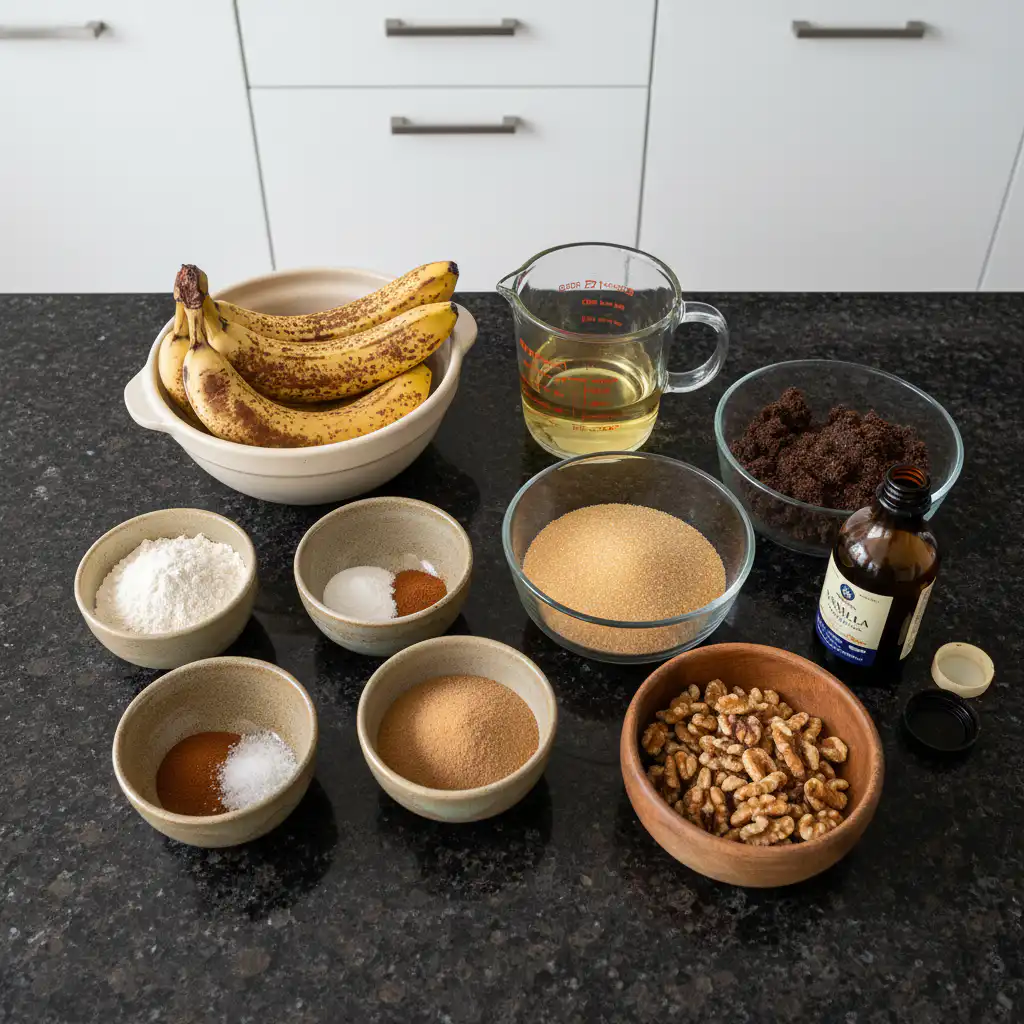
3 medium ripe bananas
⅓ cup olive oil
⅓ cup natural cane sugar
⅓ cup brown sugar (lightly packed)
¼ cup non-dairy milk
1 teaspoon vanilla
2 cups all-purpose (white) flour
1½ teaspoons cinnamon
1 teaspoon baking powder
½ teaspoon baking soda
½ teaspoon sea salt
1 cup raw walnuts (roughly chopped)
1/2 cup dark chocolate (roughly chopped, or chocolate chips)
Ingredient Notes & Substitutions
Ripe Bananas: The best kind of bananas for this recipe are heavily speckled with brown spots. These bananas are sweeter and softer, making them easy to mash and providing essential moisture and flavor. Avoid yellow or green bananas, as they will result in a less sweet and drier bread.
Olive Oil: I love the subtle, fruity note that olive oil adds, but you have alternative options. Melted coconut oil or melted vegan butter work well, though they will slightly change the final flavor profile. These vegan fats are key to a moist texture.
Sugars: The combination of natural cane sugar and brown sugar provides both sweetness and moisture. You can use coconut sugar as a direct substitute. If you only have granulated white sugar, it will work, but the loaf may have a slightly less moist texture.
Non-Dairy Milk: Any non-dairy milk works beautifully here. Oat milk, almond milk, and soy milk are all excellent choices. Each will impart a subtle nuance, but the difference is minimal in the final baked loaf.
Flour: Standard all-purpose flour is naturally vegan and gives the most reliable results. For a gluten-free loaf, you can use a high-quality gluten-free flour blend designed for baking. Other alternative flours like whole wheat can be used, but may create a denser bread.
Leavening Agents: In this egg-free recipe, baking soda and baking powder work together for lift. The baking soda reacts with the acidic apple cider vinegar to create an initial burst of leavening, while the baking powder provides a slower, more sustained rise during baking.
Mix-ins: Walnuts and dark chocolate are a classic pairing. Most dark chocolate is vegan, but always check the label for dairy-free ingredients. Feel free to use chocolate chips instead of chopped chocolate. You can also substitute walnuts with pecans or hazelnuts, or make the bread without any mix-ins at all.
How to Make Vegan Banana Bread
Step 1: Prepare the Pan and Oven
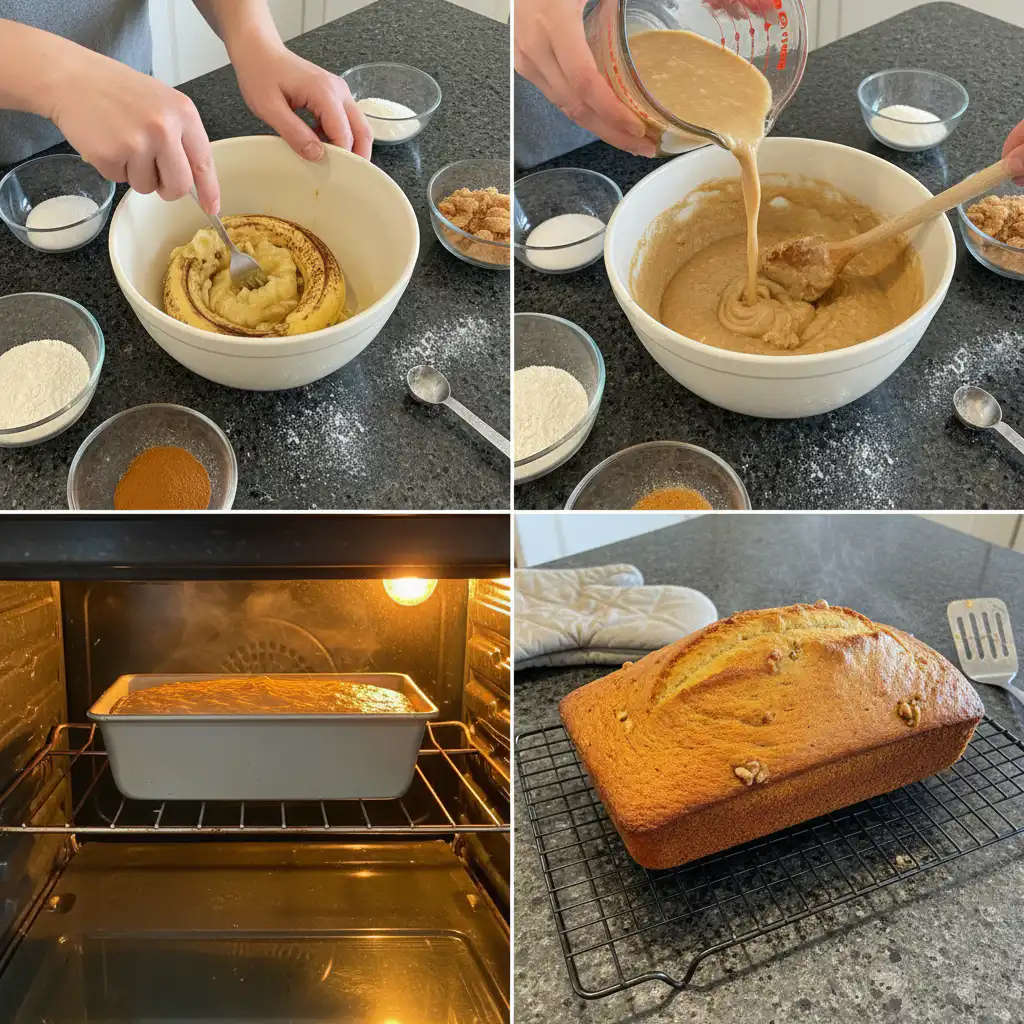
First, preheat your oven to 350°F (180°C). Prepare a standard loaf pan by lining it with parchment paper, leaving some overhang on the sides to act as handles for easy removal later. Set the pan aside.
Step 2: Mix the Wet Ingredients
In a large mixing bowl, mash the ripe bananas with a fork until they are very smooth, with minimal lumps. In a separate small cup, combine the non-dairy milk with one tablespoon of apple cider vinegar. Let this mixture sit for 5 minutes to curdle slightly. Then, add the olive oil, natural cane sugar, brown sugar, vanilla extract, and the milk mixture to the mashed bananas. Stir everything together until it is well combined.
Step 3: Combine the Dry Ingredients
Add the all-purpose flour, cinnamon, baking powder, baking soda, and sea salt directly into the bowl with the wet ingredients. Stir with a spatula until the ingredients are just combined. It is very important not to overmix the batter, as this can lead to a dense bread or a gummy texture.
Step 4: Fold in the Mix-ins
Gently fold in the chopped walnuts and dark chocolate using a rubber spatula or wooden spoon. Mix only until they are evenly distributed throughout the batter. Again, be careful not to overmix.
Step 5: Bake the Loaf
Pour the finished batter into your prepared loaf pan and smooth the top. Bake for 60-70 minutes. To check for doneness, insert a wooden skewer or toothpick into the center of the loaf. It should come out clean or with a few moist crumbs attached, but no wet batter. This is the key to a perfectly baked loaf.
Step 6: Cool Properly
Allow the banana bread to cool in the pan for 10 minutes. Then, use the parchment paper handles to lift it out and place it on a cooling rack to cool completely. This prevents moisture from getting trapped and ensures the bread sets properly.
Achieving the Perfect Vegan Banana Bread: Troubleshooting Common Issues
Why is My Banana Bread Dry or Dense?
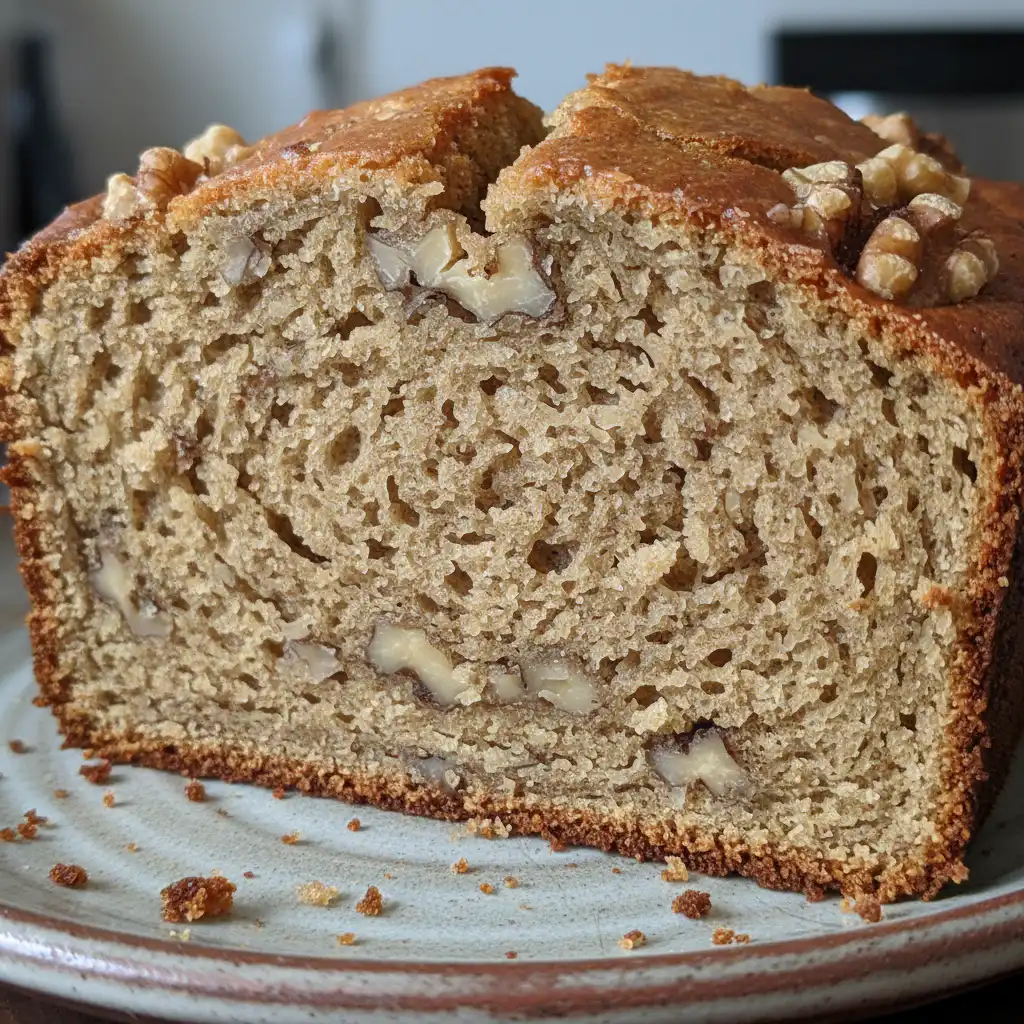
A dry or dense bread is often caused by a few common culprits. Using under-ripe bananas is a primary reason, as they lack the necessary moisture and sugar. Overmixing the batter can also develop too much gluten, resulting in a tough, dense bread. Finally, overbaking, even by a few minutes, can dry out the loaf. The apple cider vinegar trick in this recipe helps combat density by creating extra lift for a fluffy texture.
Preventing a Gummy Texture
A gummy texture typically happens from too much moisture or underbaking. Ensure you are measuring your ingredients accurately. The most common cause, however, is overmixing. When you stir the flour into the wet ingredients, mix only until you no longer see dry streaks. A few small lumps are perfectly fine and much better than a tough, overworked batter.
What if My Loaf Sinks in the Middle?
A loaf that sinks in the middle is usually a sign of being underbaked. The structure had not fully set before it was removed from the oven. To prevent this, always use the toothpick test for doneness. Opening the oven door too early or too frequently can also cause a sudden temperature drop, leading to a collapse. Make sure your oven is properly preheated before the pan goes in.
Pro Tips & Troubleshooting
Pro Tips
No Banana Chunks? No Problem: If you prefer a completely smooth batter without any banana pieces, you can pulse the wet ingredients (bananas, oil, sugars, milk, and vanilla) in a blender before combining them with the dry ingredients.
Pan Size Matters: This recipe is designed for a standard 9×5-inch loaf pan. If you use a smaller 8.5×4.5-inch pan, you may need to add a few extra minutes to the baking time. Always rely on the toothpick test for accuracy.
Gentle Folding is Key: When you add the walnuts and dark chocolate, use a gentle folding motion with a spatula. This incorporates the mix-ins without deflating the air you have created in the batter and prevents overmixing.
Optimizing ACV: Do not skip the step of letting the apple cider vinegar sit with the non-dairy milk for 5 minutes. This “souring” process is crucial for activating the baking soda and achieving maximum fluffiness.
Perfectly Ripe Bananas: The single most important ingredient is ripe bananas. Wait until they have plenty of brown spots on the peel. This guarantees the best sweetness and moisture for your loaf.
Common Mistakes to Avoid
Overmixing: The number one mistake in quick bread baking is overmixing the batter after adding flour. This develops gluten and results in a tough or dense loaf. Mix until just combined.
Under-ripe Bananas: Using yellow or green bananas will result in a bread that is bland, dry, and lacks the signature moist texture. Patience is key; let those bananas ripen!
Incorrect Oven Temperature: Always preheat your oven fully. An oven that is too hot can burn the outside before the inside is cooked, while an oven that is too cool can lead to a dense, underbaked loaf.
Not Cooling Properly: Slicing into hot banana bread is tempting, but letting it cool properly is essential. The initial 10 minutes in the pan allows it to set, and cooling fully on a rack prevents a soggy bottom.
Serving & Storage
Serving Ideas
This vegan banana bread is a perfect breakfast or snack all on its own. For a more decadent treat, serve a warm slice with a spread of nut butter, fruit jam, or vegan cream cheese. It is also delicious alongside fresh berries or sliced bananas. For presentation, a simple dusting of powdered sugar or a drizzle of maple syrup looks beautiful. Of course, it pairs perfectly with a fresh cup of coffee or tea.
Storage and Make-Ahead
For room temperature storage, keep the loaf in a sealed container for 3-4 days. To freeze banana bread, allow it to cool completely first. You can freeze the entire loaf or individual slices. Wrap it tightly in plastic wrap and then a layer of aluminum foil for freezer storage. It will keep well for up to a month in the freezer. To enjoy, thaw slices at room temperature or gently warm them in the microwave or oven for a freshly baked feel.
Conclusion
This recipe proves that vegan banana bread can be everything you want it to be: incredibly moist, delicious, and wonderfully light. The secret apple cider vinegar twist truly elevates the texture, creating a fluffy loaf that is sure to become a staple in your home. It is a simple, reliable, and forgiving recipe perfect for bakers of all skill levels. I encourage you to try it, experiment with your favorite mix-ins, and enjoy every last crumb. If you love baking with bananas, you should also try our banana oatmeal bars. If you bake this loaf, please consider rating the recipe or sharing your results!
FAQ:
What kind of bananas are best for vegan banana bread?
The best bananas are overripe ones with lots of brown or black spots on the peel. These bananas are much sweeter, contain more moisture, and are soft enough to be mashed easily into a smooth purée, which is crucial for the perfect flavor and texture.
Is all-purpose flour vegan?
Yes, in almost all cases, all-purpose flour is vegan. It is made from grinding wheat, which is a plant. While some sugars used to be processed with bone char, this is less common today, and flour itself is not treated this way.
What can I use instead of eggs in vegan banana bread?
In this specific recipe, the ripe bananas themselves act as a natural binder, replacing the function of eggs. The combination of baking soda and apple cider vinegar provides all the leavening needed, so no additional egg replacer like a flax egg is required. This technique also works wonderfully in other simple recipes, like these 3-ingredient banana pancakes.
Is dark chocolate always vegan?
Not always. While many high-quality dark chocolate brands are vegan, some contain milk solids, whey, or other dairy-derived ingredients. It is always best to check the ingredients list to ensure it is fully dairy-free before using.
How do I properly store and freeze vegan banana bread?
Store the completely cooled bread in an airtight container at room temperature for up to 4 days. For freezer storage, wrap it tightly in plastic wrap and then foil to prevent freezer burn. It can be frozen for up to one month. Thaw at room temperature or reheat gently.
Why might my vegan banana bread be dry or dense?
The most common reasons are overmixing the batter, which creates a tough texture, using under-ripe bananas that lack moisture, or simply overbaking the loaf. Our recipe’s apple cider vinegar trick helps combat density by boosting the leavening for a fluffier result.
What type of non-dairy milk is best for vegan banana bread?
Fortunately, this recipe is very flexible. Oat milk, almond milk, and soy milk all work wonderfully. Each may contribute a very subtle difference in flavor, but any of these common non-dairy milks will produce a delicious, moist loaf.
Can I make vegan banana bread without nuts or chocolate?
Absolutely. You can simply omit the walnuts and dark chocolate for a classic, plain banana bread. You could also substitute them with other mix-ins like seeds, raisins, or other dried fruit if you prefer.
Fluffiest Vegan Banana Bread
Ingredients
Equipment
Method
- Preheat your oven to 350°F (180°C). Line a 9×5-inch loaf pan with parchment paper, allowing some overhang on the sides to act as handles. Set aside.
- In a small cup or bowl, combine the non-dairy milk and apple cider vinegar. Let it sit for 5 minutes to curdle slightly, creating a vegan ‘buttermilk’.
- In a large mixing bowl, mash the ripe bananas with a fork until very smooth. Add the olive oil, natural cane sugar, brown sugar, vanilla extract, and the milk-vinegar mixture. Stir everything together until well combined.
- Add the all-purpose flour, cinnamon, baking powder, baking soda, and sea salt directly to the wet ingredients. Stir with a spatula only until the ingredients are just combined. Do not overmix; a few lumps are okay.
- Gently fold in the chopped walnuts and dark chocolate until they are evenly distributed. Be careful not to overwork the batter.
- Pour the batter into the prepared loaf pan and smooth the top. Bake for 60-70 minutes. Check for doneness by inserting a toothpick into the center; it should come out clean or with a few moist crumbs attached.
- Let the banana bread cool in the pan for 10 minutes. Then, use the parchment paper handles to lift it out and transfer it to a wire rack to cool completely before slicing.