
There is nothing quite like the comforting aroma of freshly baked banana bread filling the house. It’s a timeless classic for a reason. But today, we are taking it to a whole new level with my ultimate peanut butter banana bread recipe. This isn’t just another banana bread; it’s incredibly moist, packed with rich flavor, and features a special twist that makes it truly unforgettable. It’s an easy quick bread that delivers a bakery-quality result every time, making it perfect for a cozy afternoon treat or a grab-and-go breakfast.
Table of Contents
Table of Contents
Why You’ll Love This Peanut Butter Banana Bread Recipe
The secret that sets this recipe apart is the customizable twist. You get to choose between a crunchy cinnamon streusel topping or a rich, decadent peanut butter swirl. Either option elevates this simple quick bread into something spectacular.
A cinnamon streusel topping adds a fantastic textural contrast. The sweet, buttery crunch and warm spice create a perfect crust that complements the soft, tender bread beneath it.
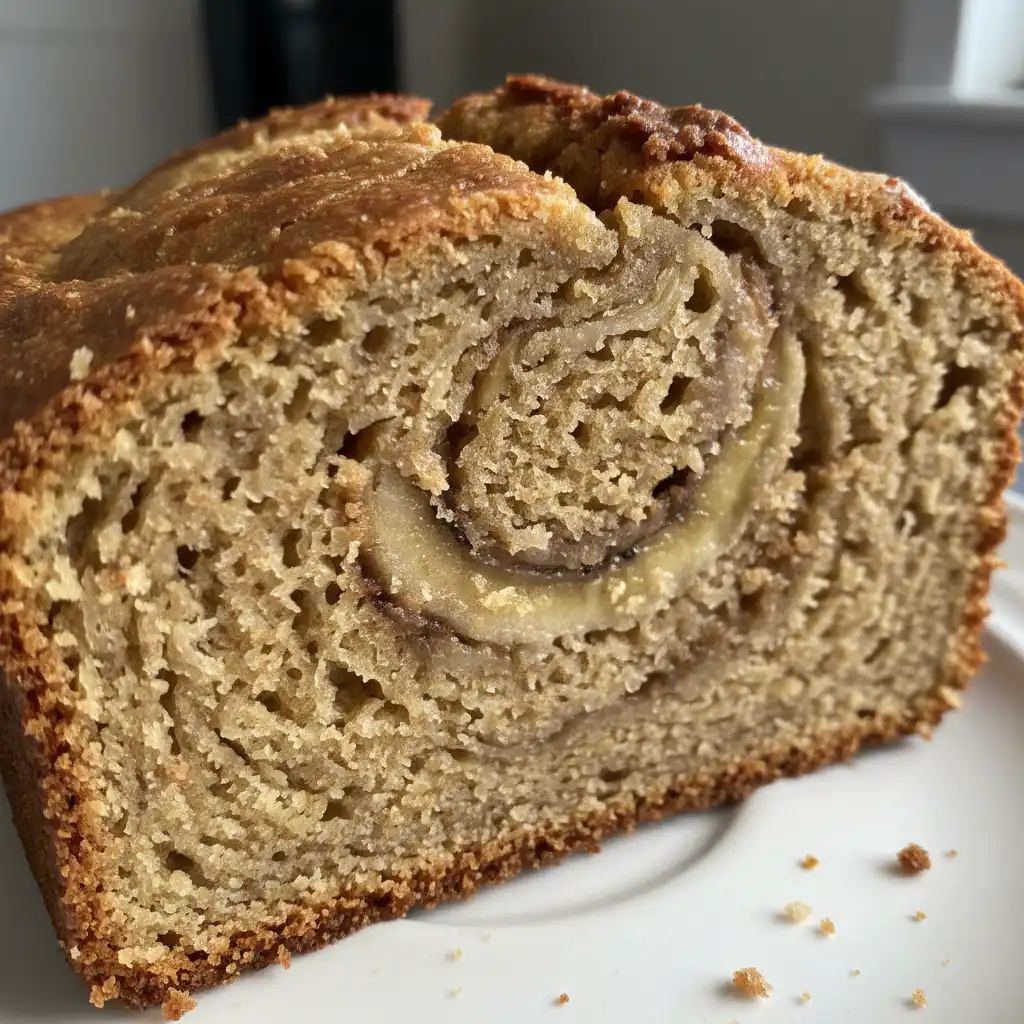
A peanut butter swirl creates beautiful marbling and intense pockets of flavor. By reserving a bit of the peanut butter mixture and swirling it through the batter, you ensure every slice has gooey, rich peanut butter goodness.
This recipe guarantees a moist, cake-tender texture. The combination of very ripe bananas and peanut butter creates a tender crumb that melts in your mouth.
The rich peanut butter flavor is perfectly balanced with the natural sweetness of the bananas. It’s a sweet treat that is deeply satisfying without being overly sugary.
Ingredients Needed for the Best Peanut Butter Banana Bread
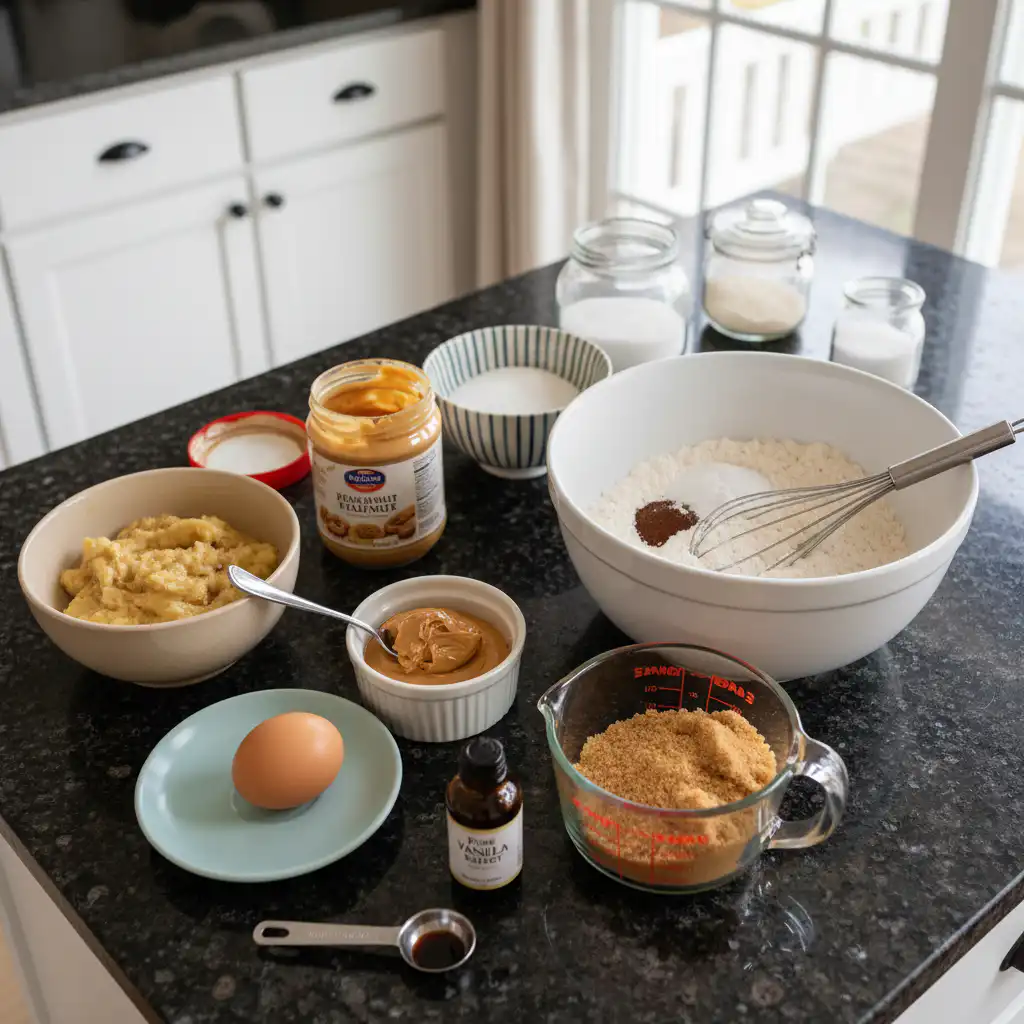
1 1/2 cups all-purpose flour
1 teaspoon baking soda
1/2 teaspoon kosher salt
1 cup mashed brown bananas (you will need 3 large brown bananas)
1/2 cup creamy peanut butter
1/4 cup unsalted butter (melted and slightly cooled)
3/4 cup packed light brown sugar
1 large egg (at room temperature)
1 teaspoon pure vanilla extract
Ingredient Notes & Substitutions
Bananas: The key to the best flavor and moisture is using very ripe bananas. Look for brown bananas with lots of dark spots or even fully browned peels. These bananas are much sweeter and softer, making them perfect for mashing into the batter.
Peanut Butter: I use standard creamy peanut butter for a smooth batter consistency. If you use a natural peanut butter that is very thick or requires stirring, you might need to add a tablespoon of milk to loosen the batter slightly.
Butter: Using unsalted butter allows you to control the saltiness of the final loaf. Make sure the melted butter has cooled a bit so it doesn’t scramble the egg.
Sugar: Packed light brown sugar adds moisture and a slight caramel note. For variations, you can reduce the sugar to 1/2 cup for a less sweet bread or substitute it with a sugar alternative like erythritol.
Flour: While all-purpose flour gives a classic tender crumb, you can substitute up to half of it with whole wheat flour for extra fiber. For a gluten-free version, a 1-to-1 gluten-free flour blend should work well.
Egg: A room temperature egg is essential. This helps it emulsify better with the fats, creating a smoother, more uniform batter. For best results, all wet ingredients should be at an optimal room temperature.
Flavor Enhancers: Pure vanilla extract adds depth, while kosher salt balances the sweetness and enhances all the other flavors.
How to Make the Ultimate Peanut Butter Banana Bread
Preparation and Mixing
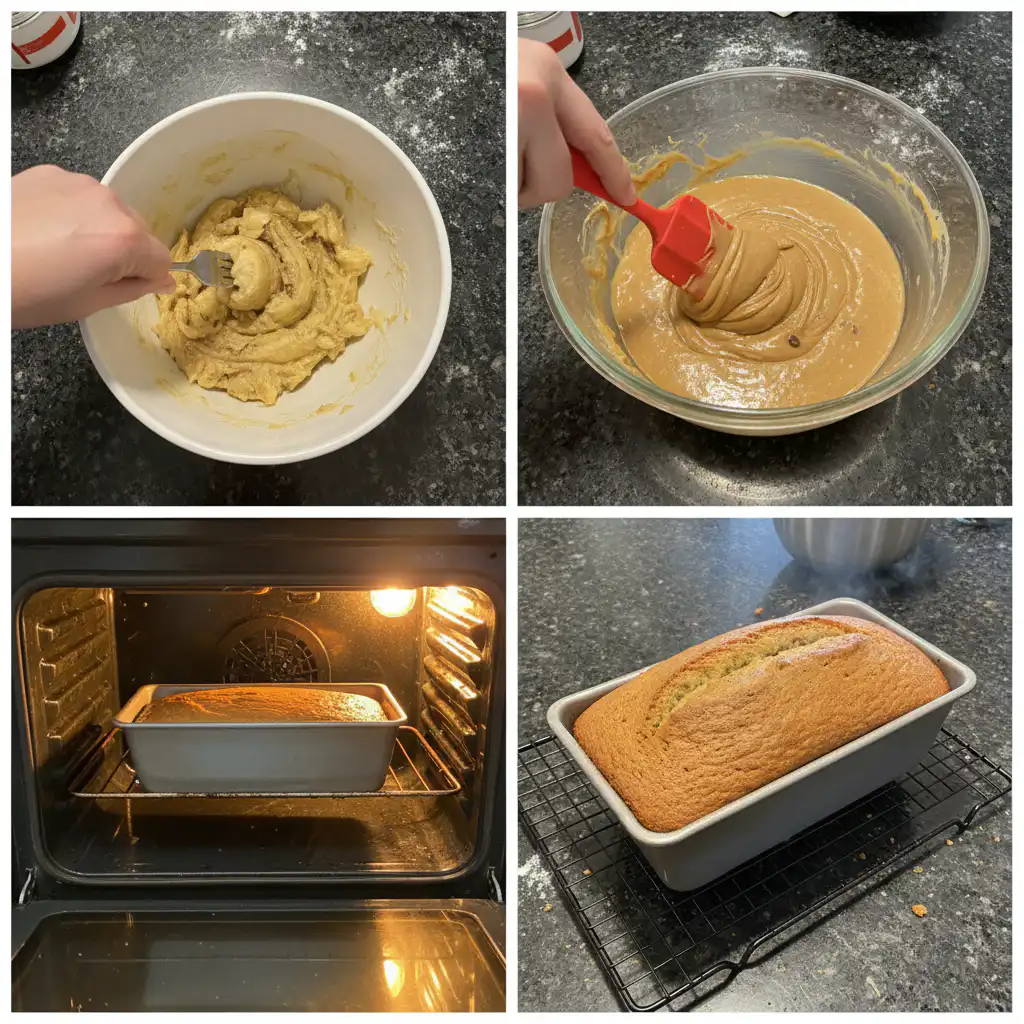
First, preheat your oven to 350ºF. Grease a 9×5-inch loaf pan generously with nonstick cooking spray and set it aside for later.
In a medium bowl, whisk together the all-purpose flour, baking soda, and kosher salt. This step ensures the leavening agent is evenly distributed, which helps the bread rise properly.
In a separate large bowl, mash the ripe bananas with a fork until they are mostly smooth but still have some small lumps for texture. Add the creamy peanut butter and slightly cooled melted butter, and stir until they are well combined.
Next, stir in the packed light brown sugar, the room temperature egg, and the pure vanilla extract. Continue stirring until the mixture is smooth and has a beautiful, glistening sheen.
Combining the Batter
Now, gently add the dry ingredients to the wet ingredients. Stir with a spatula or wooden spoon until everything is just combined and you no longer see any dry streaks of flour. It is critical that you do not over mix the batter. Overmixing develops gluten, which will result in a tough, dense bread instead of a tender crumb.
Add Your Signature Twist
Before baking, choose your twist. For a cinnamon streusel, mix 1/4 cup flour, 1/4 cup brown sugar, and 1 teaspoon of cinnamon. Cut in 2 tablespoons of cold butter until crumbly, then sprinkle evenly over the batter in the loaf pan. For a peanut butter swirl, reserve 2 tablespoons of the peanut butter mixture from the wet ingredients. Dollop it over the top of the batter in the pan and use a knife to gently swirl it in for a marbled effect.
Baking and Cooling
Pour the final batter into your prepared loaf pan. Bake for 50-65 minutes. Since oven temperature and baking time can vary, start checking for doneness at the 50-minute mark. The bread is done when a toothpick inserted into the center comes out clean with a few moist crumbs attached, but no wet batter.
Remove the pan from the oven and place it on a wire cooling rack. Allow the bread to cool in the pan for about 10 minutes. This helps it set.
After 10 minutes, run a knife around the edges of the bread to loosen it. Carefully invert the pan to remove the loaf. Let the bread cool completely on the wire cooling rack until it’s just slightly warm before you slice and serve.
Mastering Banana Bread: Pan Choices & Perfect Doneness
The type of loaf pan you use can affect your baking time. Light-colored metal pans are my preference as they conduct heat evenly and promote consistent browning.
If you use a glass or dark metal loaf pan, it may absorb more heat. You might need to reduce the oven temperature by 25 degrees or check for doneness a bit earlier to prevent dry edges or an overbaked exterior.
Testing for doneness is more than just a timer. A “clean toothpick” doesn’t mean perfectly dry. You want to see moist crumbs clinging to it, which indicates a perfectly moist bread. If the toothpick comes out with wet batter, it needs more time.
Other visual cues for doneness include a golden-brown top and edges that are pulling away from the sides of the pan. The top of the loaf should also spring back when you lightly press it.
The Science of a Tender Crumb: Why Overmixing is Your Foe
Banana bread is a type of quick bread, which means it relies on a chemical leavener like baking soda, not yeast, to rise. The goal is a light, cake-tender texture.
The biggest enemy of a tender crumb is overmixing. When you mix all-purpose flour with wet ingredients, you begin to develop gluten. A little gluten is needed for structure, but too much gluten development will turn your soft bread into a tough, chewy, and dense loaf.
To achieve that perfect texture, you should mix the dry ingredients into the wet ingredients only until they are just combined. Stop as soon as you no longer see streaks of flour. Using a spatula to gently fold the ingredients is one of the best baking techniques to prevent overmixing.
Pro Tips & Troubleshooting
Pro Tips for Success
Use very brown bananas. The more brown spots, the more sugar and moisture they contribute, leading to a sweeter, more flavorful bread.
Bring wet ingredients to room temperature. A room temperature egg, butter, and even mashed bananas will combine more easily, creating a smoother batter.
Do not over mix the batter. Mix only until the flour disappears to ensure a wonderfully tender crumb.
Check for doneness early. Start checking your bread at 50 minutes, as all ovens bake differently.
Apply your twist carefully. For the cinnamon streusel, sprinkle it evenly to cover the surface. For the peanut butter swirl, create just a few passes with a knife for a distinct pattern.
Cool properly. Letting the bread cool on a wire cooling rack allows air to circulate, preventing a soggy bottom.
Common Mistakes to Avoid
Overmixing the batter is the most common mistake and will lead to a dense, tough bread.
Using under-ripe bananas will result in a bread that lacks sweetness, moisture, and deep banana flavor.
Overbaking can quickly dry out the bread. Watch for the signs of doneness carefully to avoid a tough crumb and dry edges.
A sinking middle can be caused by underbaking, opening the oven door too early, or an incorrect amount of baking soda.
Thick natural peanut butter may alter the batter consistency. You may need a splash of milk to get the right texture.
An inaccurate oven temperature can throw off the baking time. An oven thermometer is a great tool for ensuring perfect results.
Serving & Storage
Creative Serving Ideas
This peanut butter banana bread is delicious on its own, but serving it warm is a real treat. Spread a slice with additional peanut butter or a drizzle of honey for a classic, comforting snack.
For a more decadent dessert, serve a slice with a scoop of vanilla ice cream. The combination of warm bread and cold ice cream is divine. Of course, it is also the perfect companion for a morning cup of coffee or tea.
If you want to add even more texture and flavor, a sprinkle of chocolate chips on top just before baking is always a welcome addition.
Storage and Make-Ahead Tips
To store the bread, let it cool completely. Wrap it tightly in plastic wrap and keep it at room temperature on the counter for up to 3 days.
This bread also freezes wonderfully. For best results, cool the bread completely first. Wrap the whole loaf or individual slices securely in plastic wrap, then in aluminum foil, and place it inside a freezer bag. It will keep in the freezer for up to 1 month.
To enjoy, simply defrost the bread at room temperature before slicing and serving. You can also gently reheat individual slices in the toaster or microwave for that fresh-baked warmth.
Your New Favorite Peanut Butter Banana Bread Awaits!
With its incredibly moist bread, rich flavor, and the unique choice of a crunchy cinnamon streusel or a decadent peanut butter swirl, this recipe is sure to become a new favorite. The steps are simple, and with my tips, even a novice baker can achieve a perfect loaf.
I encourage you to get into your kitchen and give this recipe a try. Experiment with fun variations like adding chocolate chips or trying the different serving ideas. I know you will love it as much as my family does.
Frequently Asked Questions About Peanut Butter Banana Bread
What kind of bananas are best for peanut butter banana bread?
The best bananas are very ripe ones. Look for peels that have lots of brown spots or are almost entirely brown. These bananas are sweeter and more moist, which translates to a more flavorful and tender bread.
How do I prevent my banana bread from being dry or dense?
The two most important factors are to avoid overmixing the batter, which develops gluten and makes it tough, and to avoid overbaking. Check for doneness with a toothpick and remove it from the oven as soon as it’s ready.
Can I make peanut butter banana bread into muffins?
Yes, absolutely. To adapt this recipe for muffins, simply divide the batter among lined muffin cups and reduce the baking time to around 20-25 minutes. Check for doneness with a toothpick just as you would for the loaf.
How do I store and freeze peanut butter banana bread?
Store the completely cooled bread wrapped in plastic wrap at room temperature for up to 3 days. To freeze, wrap it tightly in plastic wrap and foil, place it in a freezer bag, and freeze for up to 1 month. Defrost at room temperature before enjoying.
What are some popular additions or variations for this recipe?
Chocolate chips are a classic addition. You can also mix in chopped nuts, swap half the all-purpose flour for whole wheat flour, or use almond butter instead of peanut butter. For a lower-sugar option, an erythritol blend can be used.
How do I know when my peanut butter banana bread is done baking?
Use the toothpick test. Insert a toothpick into the center of the loaf; it should come out with moist crumbs attached, not wet batter. The top should be golden-brown and spring back when you gently press it.
What kind of peanut butter works best for peanut butter banana bread?
Standard creamy peanut butter works best for a smooth batter consistency. If using a very thick natural peanut butter, you may need to add a tablespoon or two of milk to achieve the right texture.
Why did my banana bread sink in the middle?
A sunken middle is usually caused by underbaking, opening the oven door too frequently during baking, or having an incorrect oven temperature. Ensure the center is fully cooked before removing it from the oven.
What is the function of baking soda in banana bread?
Baking soda is the leavening agent in this quick bread. It reacts with the acidic ingredients, like brown sugar and bananas, to create carbon dioxide gas, which makes the bread rise and gives it a light, airy texture.
Ultimate Peanut Butter Banana Bread with Streusel or Swirl
Ingredients
Equipment
Method
- Preheat your oven to 350ºF (175°C). Grease a 9×5-inch loaf pan with nonstick cooking spray and set aside.
- In a medium bowl, whisk together the all-purpose flour, baking soda, and kosher salt to combine.
- In a separate large bowl, mash the ripe bananas with a fork. Add the creamy peanut butter and slightly cooled melted butter, and stir until well combined.
- Stir the packed light brown sugar, room temperature egg, and pure vanilla extract into the banana mixture until smooth.
- Gently fold the dry ingredients into the wet ingredients with a spatula or wooden spoon. Mix only until you no longer see dry streaks of flour. Do not overmix.
- Choose one of the following options. For Cinnamon Streusel: In a small bowl, mix 1/4 cup flour, 1/4 cup brown sugar, and 1 tsp cinnamon. Cut in 2 tbsp cold butter until crumbly. Sprinkle evenly over the batter in the loaf pan. For Peanut Butter Swirl: Reserve 2 tablespoons of the wet peanut butter mixture before adding the dry ingredients. Dollop it over the batter in the pan and use a knife to gently swirl it in.
- Pour the final batter into your prepared loaf pan and spread evenly.
- Bake for 50-65 minutes. The bread is done when a toothpick inserted into the center comes out with a few moist crumbs attached, but no wet batter.
- Remove the pan from the oven and place it on a wire cooling rack. Allow the bread to cool in the pan for 10 minutes.
- After 10 minutes, run a knife around the edges to loosen the loaf. Carefully invert the pan to remove it. Let the bread cool completely on the wire rack before slicing and serving.