Welcome to what I promise will be the last sourdough pancakes recipe you will ever need. If you are searching for pancakes that are impossibly fluffy, wonderfully tangy, and have a secret ingredient that makes them truly unforgettable, you have come to the right place. In my kitchen, we have perfected the art of turning sourdough discard into a breakfast masterpiece. This recipe is simple enough for a weekday treat but special enough for a weekend brunch, packed with all the tips you need for guaranteed success every single time.
Table of Contents
Table of Contents
Why You’ll Love This Recipe
The real magic in these sourdough pancakes comes from one simple, transformative step: browning the butter. This isn’t just about melting butter; it’s a culinary technique that elevates the entire dish.
By gently heating butter until the milk solids toast and turn a beautiful golden brown, we trigger the Maillard reaction. This chemical process creates wonderfully nutty and complex flavor compounds. The aroma alone is intoxicating.
This nutty, almost caramel-like flavor of the brown butter provides the perfect counterpoint to the gentle tang of the sourdough discard. It cuts through the acidity and deepens the overall taste, making each bite more satisfying than the last. It also adds a subtle richness to the texture.
Ultimately, this small step transforms a great breakfast into a gourmet experience. It is the perfect way to use your sourdough discard and create a memorable family meal that tastes like it came from a high-end brunch spot.
Ingredients Needed
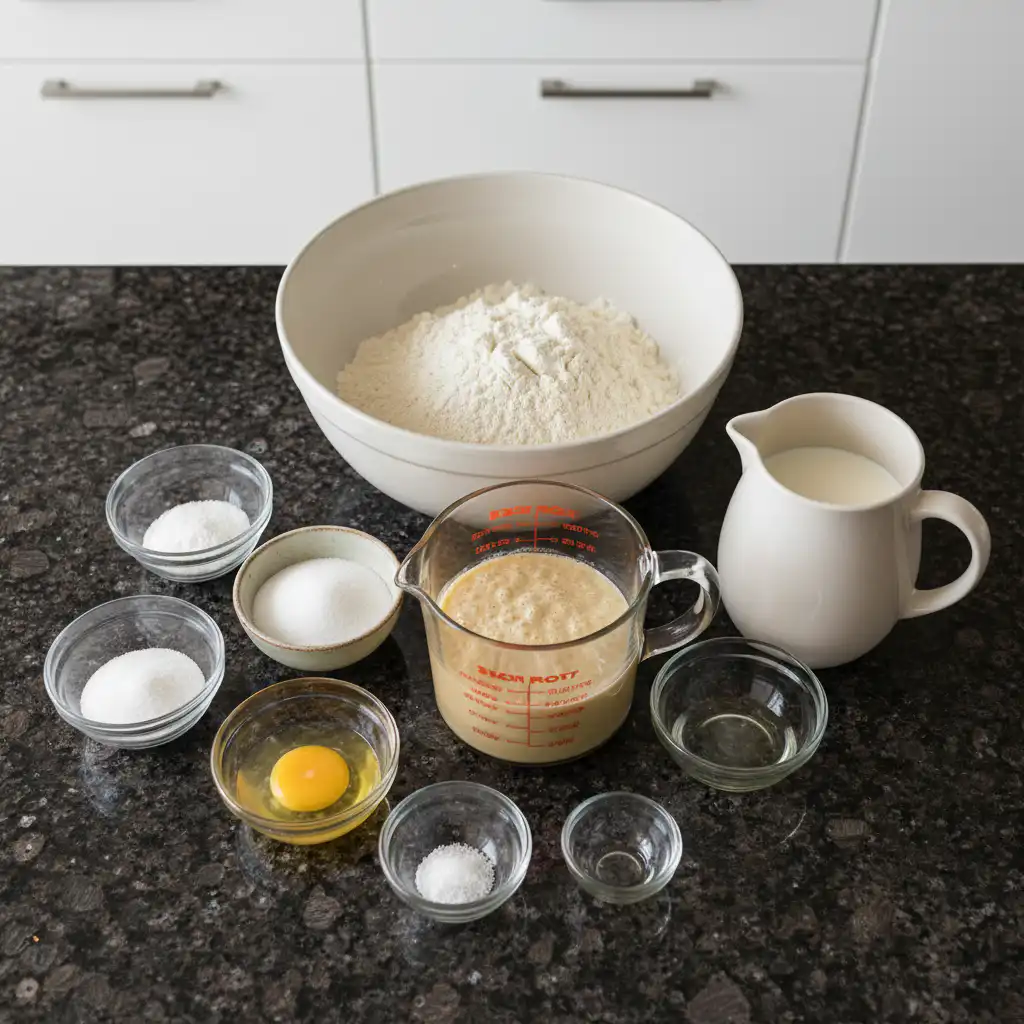
2 cups all-purpose flour
2 teaspoons baking powder
1 teaspoon baking soda
2 tablespoons granulated sugar
1 teaspoon salt
1 cup sourdough discard (at room temperature)
1 1/2 cups 2% milk (at room temperature)
1 large egg, beaten (at room temperature)
2 tablespoons vegetable oil
Ingredient Notes & Substitutions
Sourdough Discard: This recipe is designed for sourdough discard, which is unfed starter that adds a lovely tangy flavor without providing significant lift. If you use an active, bubbly starter, your pancakes might be slightly tangier and fluffier, and you may need a splash more milk to get the right batter consistency.
Flour Alternatives: While all-purpose flour gives a classic light texture, you can experiment. Try substituting up to half of the all-purpose flour with whole wheat flour or spelt flour for a heartier, nuttier pancake. For a gluten-free version, use a high-quality 1-to-1 gluten-free flour blend.
Milk Options: Buttermilk can be substituted for regular milk to create extra tangy buttermilk pancakes. For a dairy-free option if you need to make pancakes without milk, unsweetened almond, soy, or oat milk work well in this recipe.
Room Temperature Ingredients: This is crucial. Using room temperature milk, egg, and sourdough discard helps the batter mix together smoothly and evenly. Cold ingredients can cause the batter to become lumpy and prevent the leavening agents from activating properly, resulting in dense pancakes.
How to Make Sourdough Pancakes
Step 1: Combine Dry Ingredients
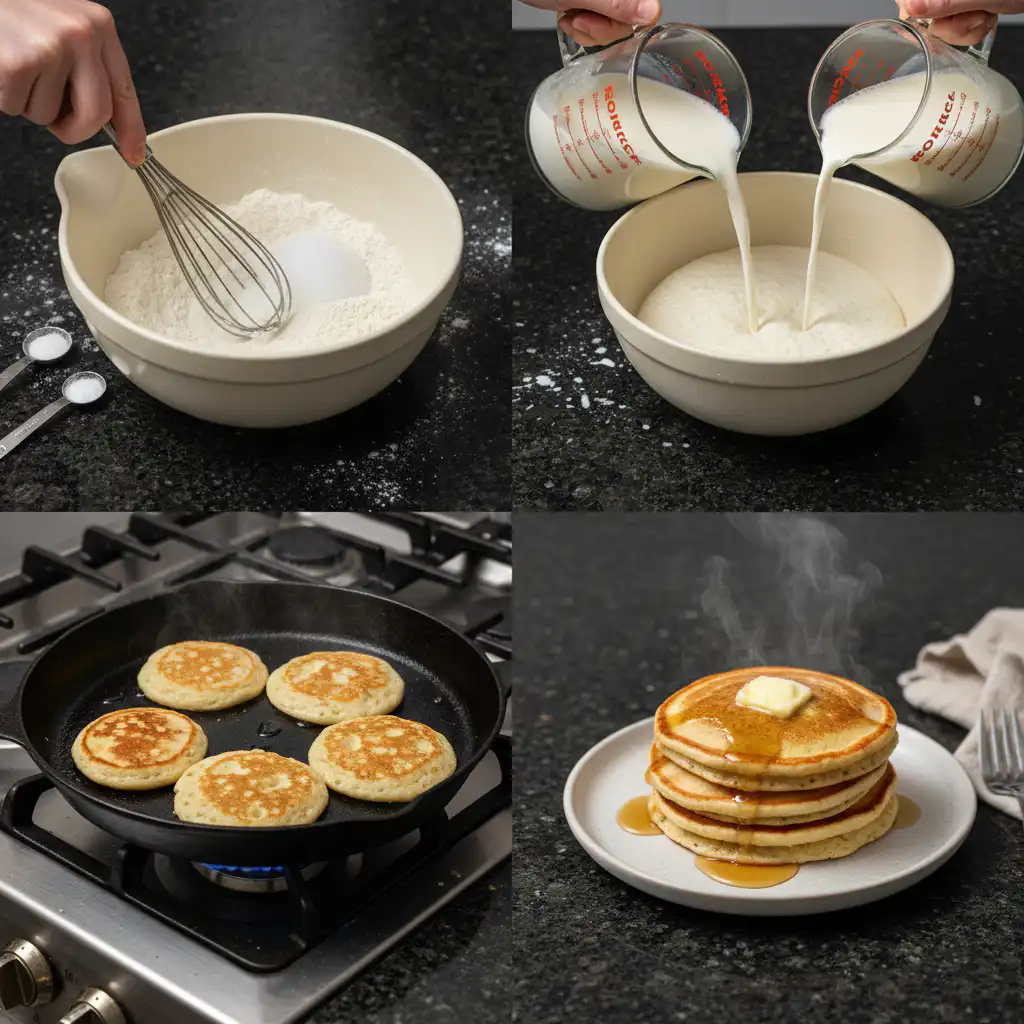
In a large mixing bowl, whisk together the all-purpose flour, baking powder, baking soda, granulated sugar, and salt. Mixing the dry ingredients first ensures the leavening agents are evenly distributed for a consistent rise.
Step 2: Mix the Batter
Pour the room temperature sourdough discard, milk, beaten egg, and vegetable oil on top of the dry ingredients. Mix with a spatula or whisk just until the ingredients are combined. A few small lumps are perfectly fine. Be careful not to overmix, as this can develop gluten and make the pancakes tough.
Step 3: Prepare the Griddle
Place a pancake griddle or a large cast iron skillet over medium-low heat. Add a small amount of melted butter or oil to grease the surface. You know the griddle is ready when a drop of water sizzles and evaporates quickly.
Step 4: Cook the Pancakes
Ladle about 1/3 cup of batter onto the hot griddle for each pancake. Let it cook for 2-3 minutes. You will know it is time to flip when you see bubbles forming across the surface and the edges begin to look dry and set.
Gently flip the pancake and cook for another 1-2 minutes on the second side. The pancake should be a beautiful golden brown and cooked through.
Step 5: Serve with Brown Butter
To make the signature brown butter topping, melt a few tablespoons of butter in a small saucepan over medium heat. Swirl the pan occasionally until the butter foams, turns golden brown, and smells nutty. Immediately remove from heat.
Serve the warm sourdough pancakes immediately, drizzled with the fragrant brown butter and a generous pour of maple syrup.
Sourdough Pancake Variations & Key Adaptations
Understanding Sourdough Starter: Discard vs. Active
This recipe calls for sourdough discard, which lends a mild tang and tender texture. Using an active, fed starter will result in a more pronounced sour flavor and potentially an even lighter, airier pancake due to the extra leavening power. If you use active starter, you may want to reduce the baking powder by about half a teaspoon, but the recipe will work well either way.
Flour Alternatives & Dietary Swaps
Feel free to customize your pancakes with different flours. Using whole wheat flour or spelt flour will create a denser, more rustic pancake with a nutty flavor. Simply swap out up to one cup of the all-purpose flour. For completely gluten-free sourdough pancakes, a measure-for-measure gluten-free flour blend is your best option. You can also easily make these dairy-free by using your favorite plant-based milk.
Making Sourdough Waffles
This batter adapts beautifully for making sourdough waffles. To get that perfect crispy exterior and fluffy interior, I recommend adding one extra tablespoon of vegetable oil or melted butter to the batter. This extra fat helps the waffles crisp up in the waffle iron and prevents sticking. Simply prepare the batter as directed and cook according to your waffle maker’s instructions.
Pro Tips & Troubleshooting for Perfect Pancakes
Pro Tips for Fluffy Sourdough Pancakes
Bring Ingredients to Room Temperature: I cannot stress this enough. Room temperature discard, milk, and egg combine into a smooth, cohesive batter. This allows the baking powder and baking soda to activate efficiently for maximum fluffiness.
Get the Batter Consistency Right: The ideal batter should be thick but still pourable from a ladle. If it seems too thick and doesn’t spread on the griddle, whisk in another tablespoon or two of milk until it reaches the right consistency.
Maintain Optimal Griddle Temperature: A steady medium-low heat is the secret to evenly cooked, golden-brown pancakes. If the heat is too high, the outside will burn before the inside cooks through.
Patience is Key for Flipping: Wait for those visual cues. The surface should be covered in bubbles and the edges should look matte, not glossy. This indicates the pancake is set enough to flip without falling apart.
Embrace the Brown Butter: Do not skip the brown butter for serving. It takes only a few minutes to make and its nutty, toasted flavor is what makes this recipe truly special. Drizzle it on just before the maple syrup.
Common Mistakes to Avoid
Overmixing the Batter: When you mix flour with liquid, you start developing gluten. A little is good, but too much from overmixing will result in tough, rubbery, and gummy pancakes instead of light and fluffy ones.
Solving Dense or Flat Pancakes: If your pancakes are dense, the culprit is often old leavening agents (baking powder and soda) or cold ingredients. Sticking can be caused by a griddle that is not hot enough or insufficiently greased.
Cooking on Too High Heat: This is a classic pancake mistake. A scorching hot pan will burn the exterior of the pancake while leaving the center a gooey, uncooked mess. Keep the heat moderate and consistent.
Serving & Storage
Serving Ideas for Brown Butter Sourdough Pancakes
The Signature Brown Butter Experience: The best way to serve these is the simplest. A generous drizzle of freshly made brown butter, followed by pure maple syrup. It is a perfect flavor combination.
Classic Sweet Toppings: You can never go wrong with classic toppings like fresh berries, a dollop of yogurt, or a light dusting of powdered sugar. Sliced caramelized bananas are also a delicious addition.
Unique Accompaniments: For something different, try serving them with homemade raspberry sauce, strawberry sauce, or a spread of your favorite nut butter.
Savory Pairings: These pancakes are a fantastic base for a full brunch. Serve them alongside savory items like scrambled eggs, crispy bacon, or breakfast sausage to balance the sweetness.
Storage and Make-Ahead Tips
Storing Leftover Pancakes: Let any leftover pancakes cool completely. You can store them in an airtight container in the refrigerator for up to 3 days. For longer storage, freeze them. Place layers of parchment paper between the pancakes in a freezer-safe bag. They will keep for up to 2 months.
Reheating Pancakes: The best way to reheat pancakes is in a toaster or toaster oven until they are warm and slightly crisp. You can also warm them on a griddle over low heat or briefly in the microwave.
Make-Ahead Batter: You can prepare the batter the night before, which is excellent for meal prep breakfasts. Whisk together all ingredients except for the baking powder and baking soda. Cover and refrigerate. In the morning, gently whisk in the leaveners right before you are ready to cook.
Keeping Pancakes Warm for a Crowd: To keep pancakes warm while you cook the whole batch, place a wire rack on a baking sheet. Put the baking sheet in an oven preheated to 200°F. Place the cooked pancakes in a single layer on the rack to keep them warm and crisp.
Conclusion
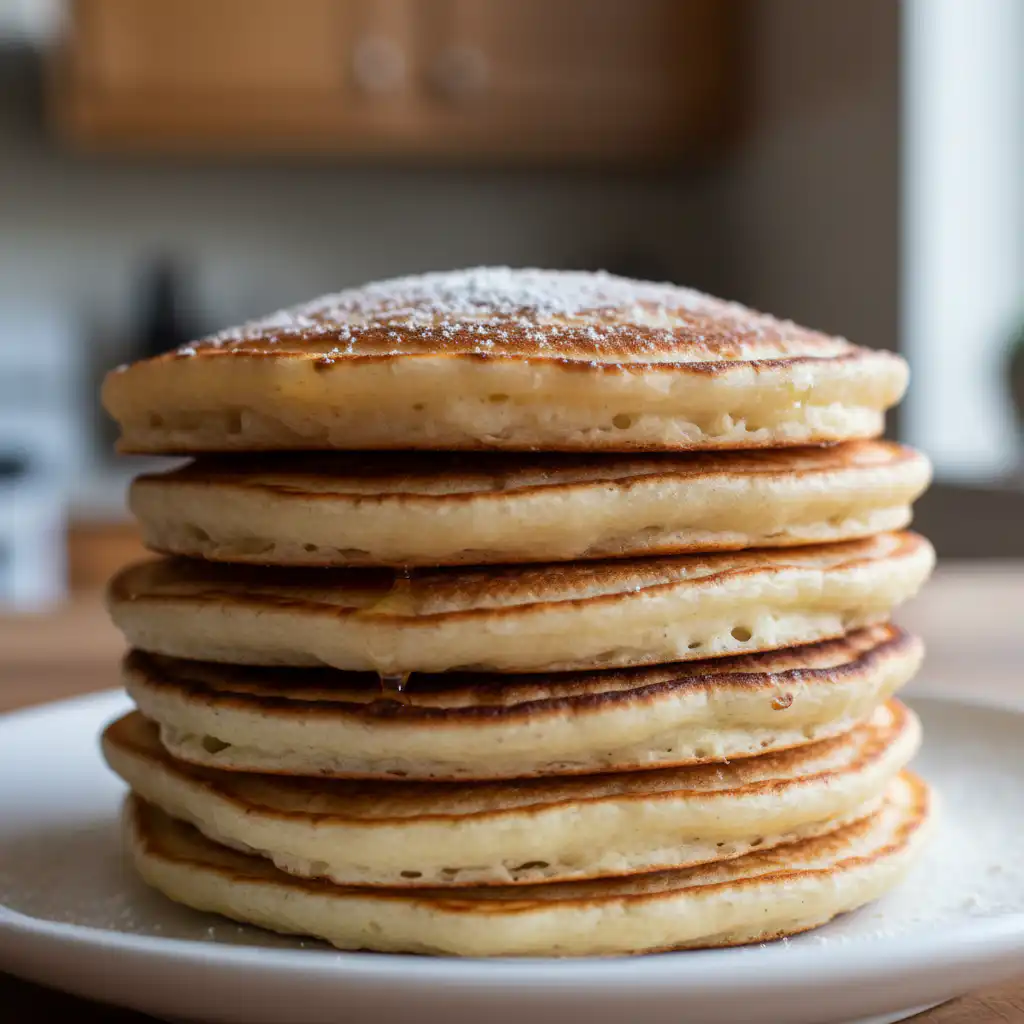
These Brown Butter Sourdough Pancakes are more than just a recipe; they are an upgrade to your entire breakfast routine. The combination of the sourdough’s subtle tang with the deep, nutty flavor of brown butter creates a truly special dish. The texture is perfectly fluffy and satisfying, proving that using your sourdough discard can lead to incredible results. With these detailed instructions and professional tips, you are fully equipped to make restaurant-quality pancakes in your own kitchen. I encourage you to enjoy the process and make this recipe your own.
FAQ
What is sourdough discard and can I use active sourdough starter?
Sourdough discard is the portion of your starter that you remove before feeding it. It is less active but adds wonderful tangy flavor. You can absolutely use an active, fed sourdough starter in this recipe. It will likely make the pancakes even more tangy and slightly fluffier.
What are the key tips for making the fluffiest sourdough pancakes?
The keys to fluffy pancakes are using room temperature ingredients, not overmixing the batter, ensuring the batter has a thick but pourable consistency, and cooking on a properly preheated griddle over medium-low heat. Waiting for bubbles to appear before flipping is also crucial.
Can I prepare sourdough pancake batter in advance?
Yes, you can. Mix all the ingredients together except for the baking powder and baking soda. Store the batter in an airtight container in the refrigerator overnight. The next morning, gently stir in the baking powder and soda right before cooking.
What makes sourdough pancakes different from regular pancakes?
Sourdough pancakes have a distinct, delicious tangy flavor from the fermentation in the sourdough starter. This complex flavor profile provides a wonderful contrast to sweet toppings like maple syrup. They also often have a lighter, more tender texture.
How do I store and reheat leftover sourdough pancakes?
Store cooled pancakes in an airtight container in the fridge for up to 3 days or in the freezer for up to 2 months, separated by parchment paper. Reheat them in a toaster, toaster oven, or on a skillet for the best texture.
What are some delicious serving ideas and variations for sourdough pancakes?
Our favorite serving suggestion is with a drizzle of brown butter and maple syrup. Other great options include fresh berries, yogurt, caramelized bananas, or savory sides like bacon and scrambled eggs. For variations, you can add chocolate chips to the batter or use it to make sourdough waffles.
What should I do if my sourdough pancakes are dense, flat, or sticking to the griddle?
Dense or flat pancakes are often caused by overmixing the batter, using cold ingredients, or having expired baking powder or soda. If your pancakes are sticking, it usually means your griddle is not hot enough or you did not use enough butter or oil to grease it.
Brown Butter Sourdough Pancakes
Ingredients
Equipment
Method
- In a large mixing bowl, whisk together the all-purpose flour, baking powder, baking soda, granulated sugar, and salt. Mixing the dry ingredients first ensures the leavening agents are evenly distributed for a consistent rise.
- Pour the room temperature sourdough discard, milk, beaten egg, and vegetable oil on top of the dry ingredients. Mix with a spatula or whisk just until the ingredients are combined. A few small lumps are perfectly fine. Be careful not to overmix, as this can develop gluten and make the pancakes tough.
- Place a pancake griddle or a large cast iron skillet over medium-low heat. Add a small amount of melted butter or oil to grease the surface. You know the griddle is ready when a drop of water sizzles and evaporates quickly.
- Ladle about 1/3 cup of batter onto the hot griddle for each pancake. Let it cook for 2-3 minutes. You will know it is time to flip when you see bubbles forming across the surface and the edges begin to look dry and set.
- Gently flip the pancake and cook for another 1-2 minutes on the second side. The pancake should be a beautiful golden brown and cooked through.
- To make the signature brown butter topping, melt a few tablespoons of butter in a small saucepan over medium heat. Swirl the pan occasionally until the butter foams, turns golden brown, and smells nutty. Immediately remove from heat.
- Serve the warm sourdough pancakes immediately, drizzled with the fragrant brown butter and a generous pour of maple syrup.