
Welcome to my kitchen, where I believe that truly delicious meals do not have to be complicated or time-consuming. Today, I am thrilled to share my absolute favorite recipe for easy garlic chicken, a dish that consistently delivers on flavor and pure comfort. This is the kind of weeknight meal that will have everyone asking for seconds, making it a perfect addition to your family dinner rotation. Get ready to transform simple chicken into a culinary masterpiece, all thanks to a little kitchen magic that creates an irresistible, deep brown pan gravy.
Table of Contents
Table of Contents
Why You’ll Love This Recipe
This easy garlic chicken recipe is a weeknight savior. It solves the common dilemma of wanting a home-cooked, flavorful meal without spending hours in the kitchen, proving that quick dinners can still be gourmet.
The Unique Twist: My secret for an incredibly rich and beautifully colored pan sauce lies in a simple deglazing step. After searing the chicken, I quickly deglaze the pan with a splash of dry white wine and a hint of low-sodium soy sauce before adding the chicken broth.
Twist Reasoning: This technique works wonders. Deglazing helps lift all those delicious browned bits, or fond, from the bottom of the skillet, directly enhancing the flavor of your gravy. This process, driven by the Maillard reaction, creates a deeply savory base. The wine adds complex notes that elevate the taste, and don’t worry, the alcohol evaporates during cooking. The soy sauce is my secret weapon for boosting umami and developing that gorgeous, rich brown color in the pan sauce, which many home cooks struggle to achieve.
The Benefits: You will love this recipe because it is incredibly quick to prepare, surprisingly flavorful, and delivers restaurant-quality gravy right at home. It is perfect for busy families, budget-friendly, and highly reliable, promising a delicious outcome every time.
Ingredients Needed
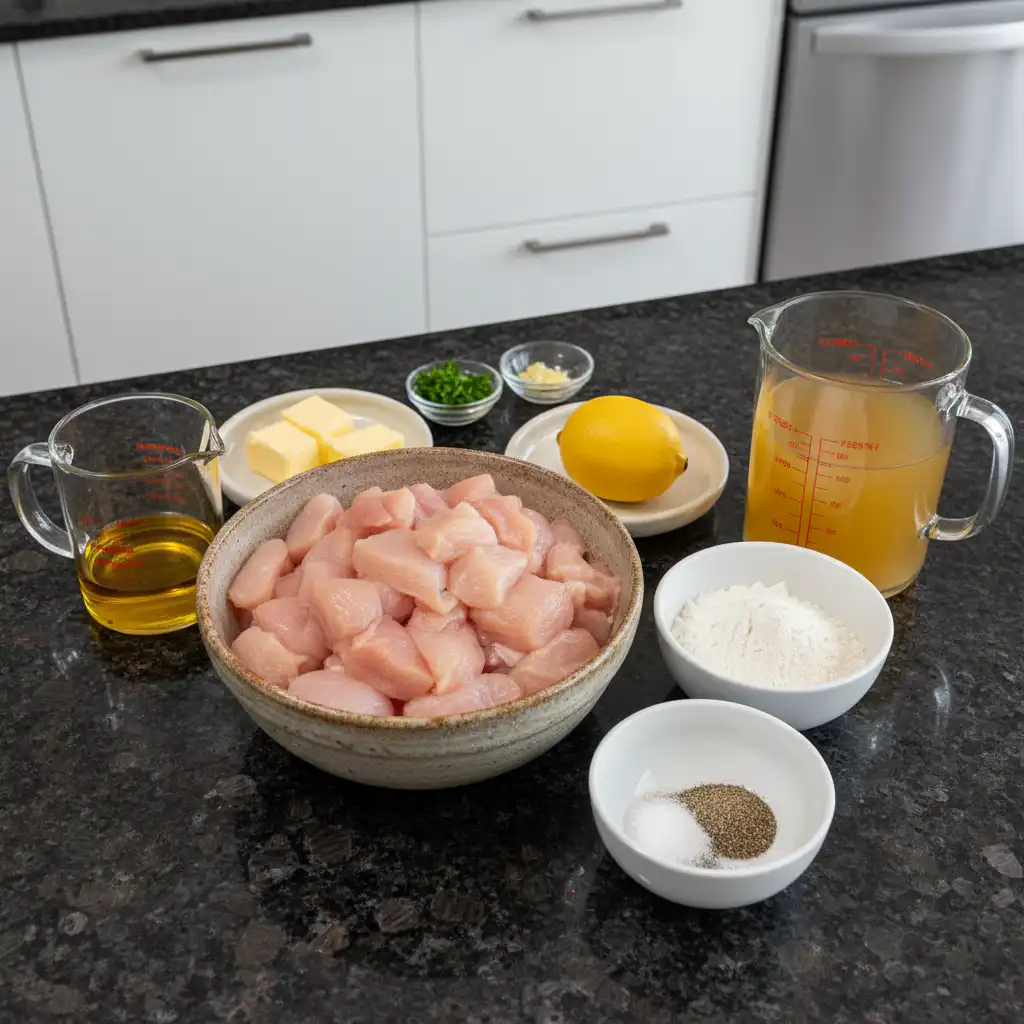
Here is what you will need to create this fantastic garlic chicken:
21 ounces boneless skinless chicken breast halves (about 3 large breasts, cut into 1- to 1-1/2 inch cubes)
1 tablespoon flour
1/2 teaspoon salt
1/2 teaspoon freshly ground black pepper
2 tablespoons good olive oil
1 tablespoon chopped garlic
3 tablespoons chopped fresh parsley
2 tablespoons unsalted butter
1 medium lemon (quartered (optional, serve on the side))
1 tablespoon unsalted butter
1 heaping Tablespoon of flour
1 cup chicken broth
1/4 cup dry white wine
1 teaspoon low-sodium soy sauce
Ingredient Notes & Substitutions
Let me walk you through some key ingredients and my thoughts on them.
Chicken: I typically use boneless skinless chicken breast halves cut into 1 to 1 1/2 inch chicken cubes for this recipe, as they cook quickly and evenly. However, you can absolutely use chicken thighs for a richer flavor; just be aware they may require a few extra minutes of cooking time. Chicken cutlets or whole chicken breasts can also work, but consider pounding thicker cuts thinner for more even cooking.
Flour: The flour is essential here for two reasons: it helps create a beautiful crust on the chicken and acts as a thickening agent for our gravy. If you need a gluten-free option, you can substitute the flour with cornstarch or xanthan gum. For cornstarch, I would use about half the amount mixed with a little cold water to create a slurry before adding it to the sauce.
Garlic: Always opt for fresh chopped garlic for the best, most vibrant flavor. Pre-minced garlic in a jar simply does not compare.
Herbs: Fresh parsley adds a wonderful brightness to this dish. However, if you are looking for herb substitution options, cilantro, rosemary, sage, or thyme would also pair beautifully with the robust garlic flavor.
Dry White Wine: For deglazing, a dry white wine is crucial. I recommend using something like a Sauvignon Blanc, Pinot Grigio, or an unoaked Chardonnay. These wines have the right acidity and flavor profile to complement the dish without adding unwanted sweetness.
Soy Sauce: I always reach for low-sodium soy sauce. This gives me better control over the overall saltiness of the dish, allowing the other flavors to shine without being overwhelmed.
Skillet: A heavy-bottomed skillet is your best friend for searing chicken and developing a great pan sauce. I prefer using a cast iron or a good quality stainless steel skillet because they distribute heat evenly and help create that delicious fond.
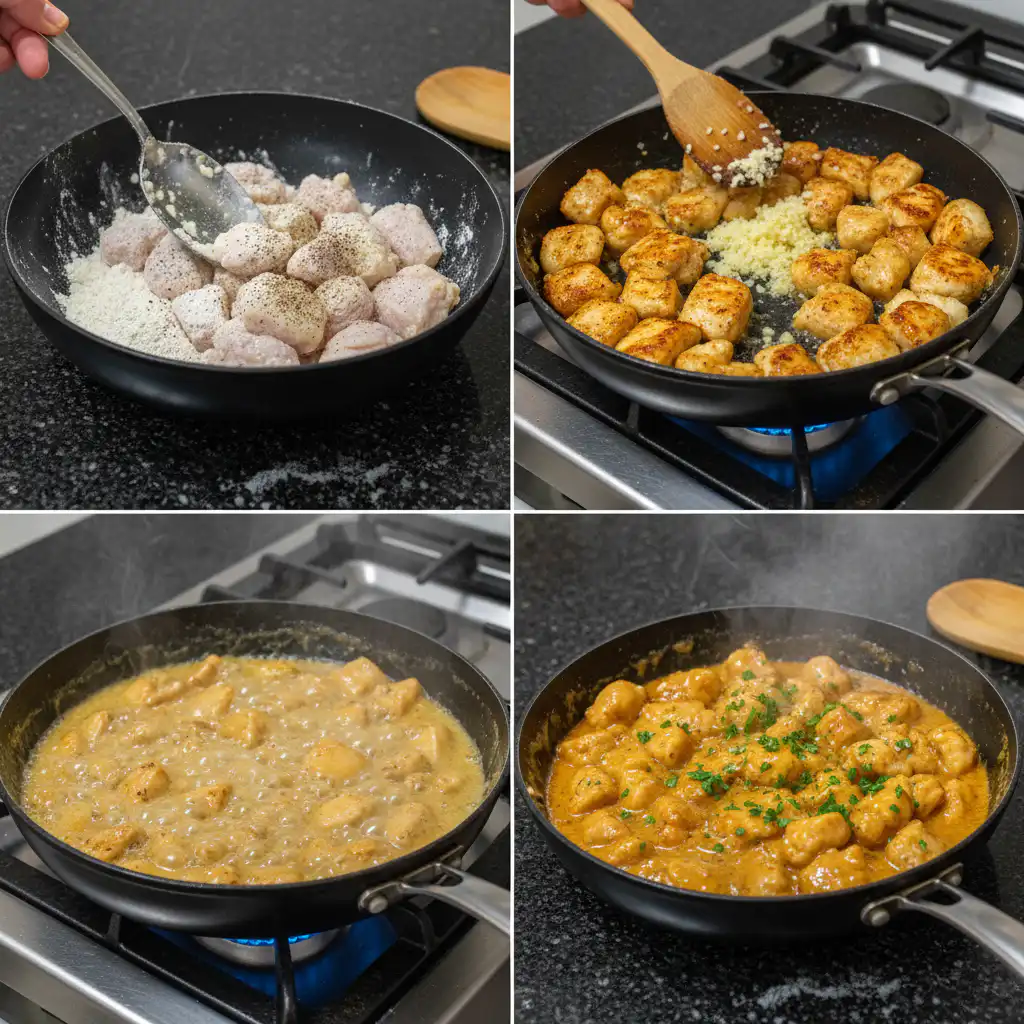
How to Make Easy Garlic Chicken
Creating this garlic chicken with its rich pan gravy is quite straightforward. Follow these steps for a truly rewarding meal.
Prepare and Sear the Chicken
1. Prepare the Chicken
Start by patting your chicken cubes very dry with paper towels. This step is essential for getting a beautiful, golden sear.
In a medium bowl, toss the chicken with 1 tablespoon of flour, 1/2 teaspoon salt, and 1/2 teaspoon freshly ground black pepper. Mix until evenly coated.
Stick with this amount of flour it’s just right and helps create that perfect crust.
2. Sear the Chicken
Heat 2 tablespoons of olive oil in a 12-inch skillet over high heat. The oil should be very hot but not smoking.
Add the chicken in a single layer. Avoid overcrowding the pan, as this can cause the chicken to steam instead of sear. Cook in batches if needed.
Let the chicken cook undisturbed for 4–5 minutes. This allows a golden-brown crust to form.
3. Finish Cooking
Turn the chicken pieces and cook for another 3–5 minutes. Make sure all sides are nicely browned.
The chicken is done when it reaches an internal temperature of 165°F (74°C).
Infuse with Aromatics and Deglaze the Pan
1. While the chicken finishes cooking, combine the chopped garlic and chopped fresh parsley in a small bowl.
2. Once the chicken is cooked, add the 2 tablespoons of unsalted butter and the garlic and parsley mixture to the skillet. Sauté for just 1 minute longer, shaking the skillet occasionally to coat the chicken beautifully with the aromatic herbs. The aroma in your kitchen will be incredible.
3. Using a spoon, carefully remove the cooked chicken from the skillet and transfer it to a plate. Be sure to leave all those delicious brown bits, or fond, along with any extra parsley and garlic, right in the pan.
Craft the Rich Pan Gravy
1. Adjust the Oil
If there is excess oil left in the pan after removing the chicken, spoon out most of it. Leave about 1 tablespoon in the pan.
In many cases, you will not have much oil to remove.
2. Deglaze the Pan
Now for the step that builds deep flavor deglazing. Pour in 1/4 cup of dry white wine and 1 teaspoon of low-sodium soy sauce.
Immediately scrape up the browned bits from the bottom of the pan using a wooden spoon or spatula. These bits add incredible flavor to the sauce.
Let the liquid simmer for 1–2 minutes. This allows the alcohol to cook off and the flavors to concentrate.
3. Make the Roux
Add 1 tablespoon of unsalted butter to the pan and let it melt over medium heat.
Sprinkle in a heaping tablespoon of flour. Stir well to combine it with the butter and pan drippings, forming a smooth roux.
Cook for about 1 minute, stirring continuously.
4. Build the Gravy
Slowly whisk in 1 cup of chicken broth. Add it gradually while whisking to keep the mixture smooth.
Continue cooking over medium-high heat, stirring constantly, until the gravy thickens to your desired consistency.
Serve and Enjoy
1. Return the cooked garlic chicken to the skillet, tossing gently to coat it in the luscious, rich brown gravy.
2. Serve immediately, perhaps with a squeeze of fresh lemon if you like.
Mastering Your Garlic Chicken: Tips for Success & Adaptations
Achieving Perfect Doneness and Preventing Dryness
The key to juicy chicken is not overcooking it. I always recommend using a meat thermometer to ensure your chicken reaches a safe internal temperature of 165°F (74°C). Visually, the chicken should have no pink in the center, and its juices should run clear. To prevent chicken drying out, remove it from the heat as soon as it reaches the target temperature and let it rest for a few minutes before serving; this allows the juices to redistribute.
Cut Variations: Chicken Thighs & More
This recipe is incredibly versatile. While I use chicken breasts, you can easily use chicken thighs instead for an even richer, more succulent flavor. Just remember that chicken thighs will typically require a slightly longer cooking time, usually an extra 3-5 minutes per side, depending on their thickness. If you opt for chicken cutlets, they will cook much faster, so keep a close eye on them to prevent overcooking. For whole chicken breasts, I suggest pounding them to an even thickness to ensure consistent cooking.
Seasoning to Taste
Always taste your food as you go. This is especially important for the gravy. After it has thickened, taste and adjust the seasoning with additional salt and freshly ground black pepper if needed. The low-sodium soy sauce in the deglazing step adds savory depth without making it overly salty, giving you more control.
Recommended Wine for Deglazing
For the best results when deglazing, stick to dry white wines. Sauvignon Blanc, Pinot Grigio, and unoaked Chardonnay are excellent choices because their acidity helps scrape up the fond efficiently, and their crisp, non-sweet flavor profiles enhance the sauce without adding any unwanted sugary notes. Avoid cooking wines, which often contain added salt and preservatives.
Pro Tips & Troubleshooting
Here are some of my expert insights to help you master this garlic chicken recipe and avoid common pitfalls.
Pro Tips
Dry Chicken for Sear: Ensure your chicken cubes are completely dry before tossing them with flour, salt, and pepper. This is non-negotiable for optimal crust development and a superior Maillard reaction. Excess moisture will steam the chicken instead of searing it, preventing that beautiful golden-brown exterior.
Flour Coating: Do not over-flour the chicken. The specified amount is truly sufficient. Too much flour will result in a gummy coating and can make your pan sauce taste floury rather than rich.
Undisturbed Sear: When you add the chicken to the hot skillet, resist the urge to move it around for the initial 4-5 minutes. Allowing it to sear undisturbed creates that ‘lovely crust’ and allows the fond, those flavorful browned bits, to develop properly on the bottom of the pan.
Gravy Freezing: If you want to freeze this recipe, make a little extra gravy and submerge the cooked chicken in it in a freezer bag. Squeeze out all air before sealing. This method helps protect the chicken from freezer burn and keeps it moist upon reheating. This is excellent for freezing chicken for future weeknight meals.
Thawing Chicken: When thawing frozen chicken, immediately remove it from its package or plastic wrapping. This simple step helps prevent sticking and ensures more even thawing.
Deglazing Technique: When you add the wine and soy sauce for deglazing, make sure to scrape up the fond aggressively from the bottom of the pan. All those browned bits are packed with flavor, and scraping them up effectively is key to a truly rich pan sauce.
Common Mistakes to Avoid
Too Much Flour: A common mistake is adding too much flour to the chicken coating. This can indeed lead to a gummy texture on the chicken and a ‘floury’ tasting sauce, making the gravy less appealing. Use only the recommended amount.
Poor Sear: Not allowing the chicken to sear undisturbed is another frequent error. This hinders crust formation and flavor development from the fond. A good sear is the foundation of this dish’s flavor.
Pale Gravy: Expecting the gravy to be naturally brown without the fond from the pan or proper deglazing is a misconception. Our unique twist of deglazing with wine and soy sauce directly addresses this, ensuring a rich, deep brown gravy every time.
Sticking to the Pan: If your chicken is sticking to the pan, it is usually because the pan was not hot enough when the chicken was added, or the chicken was not dry enough. Ensure your skillet is adequately preheated and your chicken is thoroughly patted dry.
Overcrowding the Skillet: Cooking too much chicken at once will lower the pan’s temperature, leading to steaming instead of searing. This prevents a good crust from forming and limits the development of delicious fond. Always cook in batches if necessary.
Serving & Storage
Serving Ideas
This easy garlic chicken is incredibly versatile and pairs well with many side dishes. It’s the kind of meal that fits right into any busy weeknight or cozy family dinner.
I love serving it with quick-cooking rice. It soaks up all that rich, flavorful gravy beautifully.
For a fresh contrast, try steamed green beans or asparagus. The light, crisp texture balances the dish perfectly.
Roasted potatoes or creamy mashed potatoes are also fantastic options. You can even make potato pancakes from mashed potatoes for a fun twist.
Don’t forget a slice of crusty bread. It’s perfect for soaking up every last bit of sauce.
For garnish, sprinkle some fresh parsley or cilantro on top. It adds a pop of color and a touch of freshness.
If you’re thinking about drinks, a sparkling water with lemon is a refreshing choice. It keeps the meal light and balanced.
Storage and Make-Ahead
Refrigeration: Leftover garlic chicken can be stored in an airtight container in the refrigerator for 3-4 days. This makes it a great option for meal prep.
Freezing: As mentioned in my pro tips, you can freeze this chicken. Place the cooked chicken, submerged in extra gravy, into a freezer-safe bag or airtight container, squeezing out all the air. It will keep well for up to 3 months. When it is time to enjoy, remember the rule about thawing chicken: remove it from its packaging immediately to prevent sticking and thaw overnight in the refrigerator.
Reheating: For the best results when reheating chicken, use low heat on the stovetop or in the oven. You may want to add a splash of chicken broth or water to keep the chicken moist and prevent it from drying out. Always ensure the reheated chicken reaches an internal temperature of 165°F (74°C) for food safety. Avoid microwaving if possible, as it can sometimes dry out the chicken.
Conclusion
There you have it my recipe for the most delicious easy garlic chicken with a rich pan gravy. It’s simple, comforting, and packed with flavor.
This dish shows how an everyday ingredient like chicken can turn into something truly special with just a few smart techniques.
The secret is in the pan sauce. Deglazing with dry white wine and low-sodium soy sauce creates a deep, rich flavor that really stands out.
The result is a beautiful brown gravy that tastes like it came straight from a restaurant kitchen.
The best part? This recipe is easy enough for cooks of all levels. You don’t need fancy skills to get amazing results at home.
Feel free to make it your own. Try different herbs or pair it with your favorite sides.
I’d love for you to give this garlic chicken a try soon. I have a feeling it will become a regular in your kitchen.
And if you’re looking for more quick dinner ideas, be sure to explore my other recipes like my easy cream cheese chicken for more weeknight inspiration!
FAQ
How do I ensure my garlic chicken gravy gets a rich, brown color?
My secret for a rich, brown gravy is to deglaze the pan with dry white wine and a hint of low-sodium soy sauce after searing the chicken. This lifts the flavorful fond from the pan, which are the browned bits from the Maillard reaction, and the soy sauce further boosts the color and umami.
Can I adapt this garlic chicken recipe to be gluten-free?
Absolutely! To make this garlic chicken gluten-free, simply substitute the regular flour with cornstarch or xanthan gum. For cornstarch, I recommend using about half the amount, mixed with a little cold water to form a slurry, then whisked into the sauce.
What are the best side dishes to serve with garlic chicken?
This garlic chicken pairs beautifully with quick-cooking rice, creamy mashed potatoes, or roasted potatoes. Steamed vegetables like green beans or asparagus, a simple pasta, or a cozy starter like garlic herb potato soup also make fantastic accompaniments. Do not forget some crusty bread for soaking up the delicious gravy!
How long does garlic chicken last, and what’s the best way to store and reheat it?
Leftover garlic chicken can be stored in an airtight container in the refrigerator for 3-4 days. For longer storage, you can freeze it for up to 3 months, ideally submerged in a little extra gravy to prevent drying. To reheat, warm gently on the stovetop or in the oven with a splash of broth until it reaches 165°F (74°C) to prevent it from drying out.
Are there any other herbs that pair well with garlic chicken?
Yes, while fresh parsley is wonderful, you can easily substitute or add other fresh herbs. Cilantro, rosemary, sage, or thyme would all complement the garlic chicken beautifully and add different aromatic dimensions to the dish.
What is the proper internal temperature for cooked chicken?
For food safety, all cooked chicken, including chicken breasts or thighs, should reach an internal temperature of 165°F (74°C). I always recommend using a meat thermometer to ensure accuracy.
What kind of skillet is best for cooking garlic chicken?
A heavy-bottomed skillet is best for cooking garlic chicken. I prefer a good quality stainless steel or cast iron skillet because they distribute heat evenly, which is essential for achieving a good sear and developing flavorful fond.
Can I use chicken thighs instead of breasts for this recipe?
Yes, you can absolutely use chicken thighs instead of breasts for this recipe. Chicken thighs will offer a richer flavor and may require a few extra minutes of cooking time compared to breasts, so adjust accordingly.
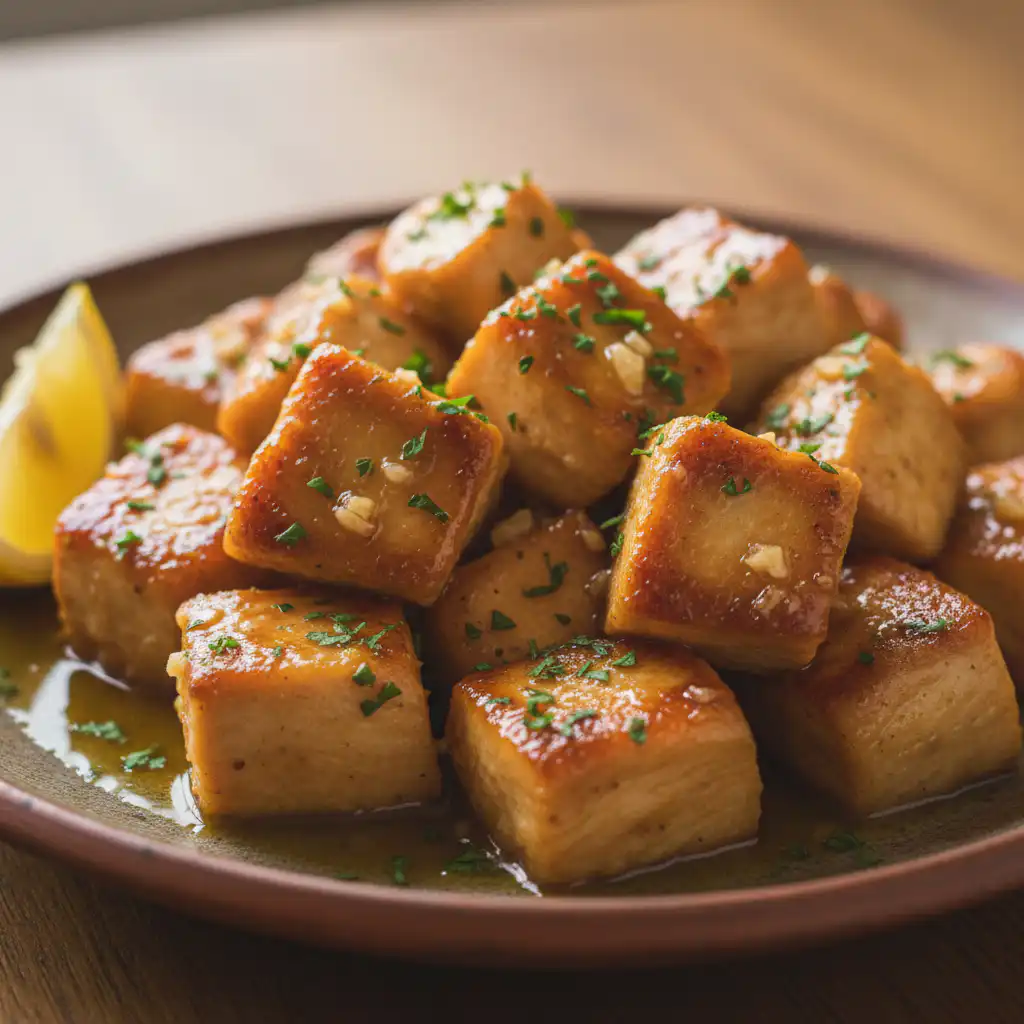
Easy Garlic Chicken with Rich Pan Gravy
Ingredients
Equipment
Method
- Begin by patting your chicken cubes very dry with paper towels. This crucial step ensures a superior sear.
- In a medium bowl, toss the dried chicken cubes with the first tablespoon of flour, 1/2 teaspoon of salt, and 1/2 teaspoon of freshly ground black pepper until evenly coated. Trust the flour amount; it is perfect, and you do not want to add more.
- Heat 2 tablespoons of good olive oil in a 12-inch skillet over high heat until it is very hot but not smoking. Gently add the floured chicken cubes to the hot oil, ensuring they are in a single layer. You might need to cook the chicken in batches to avoid overcrowding the skillet, which would steam the chicken instead of searing it. Let the chicken cook undisturbed for about 4-5 minutes on one side. You will see a lovely golden-brown crust beginning to form.
- Turn the pieces of chicken and continue cooking for another 3-5 minutes, until they are golden brown on all sides and cooked through. The internal temperature should reach 165°F (74°C).
- While the chicken finishes cooking, combine the chopped garlic and chopped fresh parsley in a small bowl.
- Once the chicken is cooked, add the 2 tablespoons of unsalted butter and the garlic and parsley mixture to the skillet. Sauté for just 1 minute longer, shaking the skillet occasionally to coat the chicken beautifully with the aromatic herbs.
- Using a spoon, carefully remove the cooked chicken from the skillet and transfer it to a plate. Be sure to leave all those delicious brown bits, or fond, along with any extra parsley and garlic, right in the pan.
- If there is a lot of excess oil in the pan after removing the chicken, spoon out all but about a tablespoon. Most likely, you will not have much to remove.
- Now for the unique twist that makes this pan sauce so special: deglazing. Pour in the 1/4 cup of dry white wine and 1 teaspoon of low-sodium soy sauce. Immediately scrape up all the flavorful fond from the bottom of the pan with a wooden spoon or spatula. Stir and let this liquid simmer for 1-2 minutes, allowing the alcohol to evaporate and the flavors to deepen.
- Add the second tablespoon of unsalted butter to the deglazed pan and cook over medium heat until melted. Sprinkle in the heaping tablespoon of flour and mix it together with the butter and pan drippings, creating a roux. Cook for about a minute, stirring continuously.
- Slowly whisk in the 1 cup of chicken broth, combining thoroughly until all the broth has been added and the mixture is smooth. Continue cooking over medium-high heat, stirring constantly, until the gravy has cooked down a bit and thickened to your desired consistency.
- Return the cooked garlic chicken to the skillet, tossing gently to coat it in the luscious, rich brown gravy.
- Serve immediately, perhaps with a squeeze of fresh lemon if you like.